
Oil Market Reversal Sparks Broad Equity Rally as Inflation Fears Ease
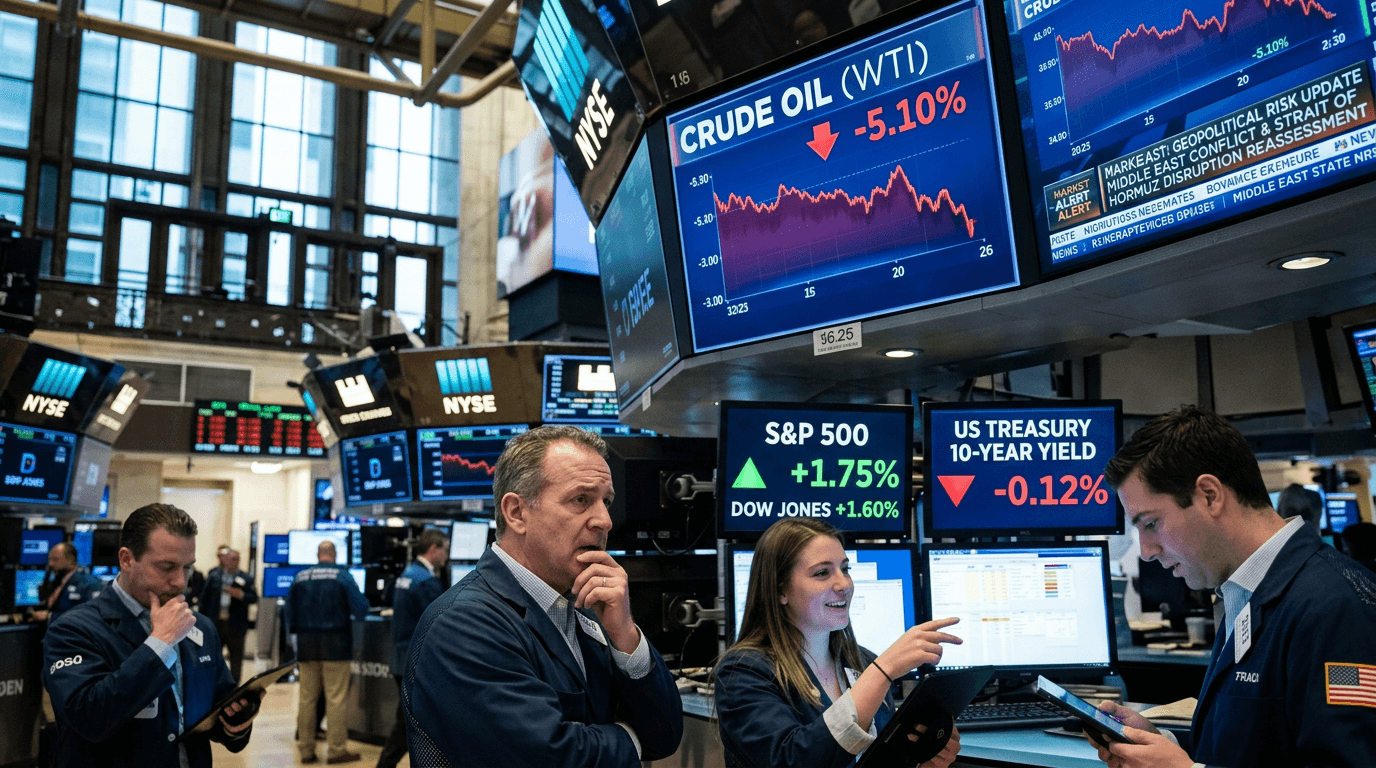
On Monday, March 16, the oil market experienced a significant shift as crude prices plummeted from their war-induced peaks, igniting a broad-based rally across equity and currency markets. Benchmark U.S. crude dropped 5.3% to settle at $93.50 after surpassing $102 earlier, while Brent crude fell 2.8% to $100.21 per barrel. This downturn marked a pivotal moment for financial markets, which had been gripped by geopolitical tensions and stagflation fears following escalations involving the United States, Israel, and Iran. The sharp decline in crude underscored the market's sensitivity to energy supply dynamics.
Equity Markets Surge on Oil Price Relief
The stock market responded robustly to the drop in oil prices, marking its strongest performance since the onset of the conflict. The S&P 500 rose 1%, the Dow Jones Industrial Average gained 387 points or 0.8%, and the Nasdaq composite increased by 1.2%. This synchronized rally across major indices signified widespread relief as investors reassessed the inflation risks that had dominated market sentiment. After the S&P 500's third consecutive losing week, this rebound provided much-needed momentum for risk assets.
Sectors most affected by high oil prices showed significant strength. Norwegian Cruise Line Holdings surged 5.1%, and United Airlines climbed 4.2%, highlighting the swift shift in market sentiment as fuel costs decreased. Additionally, National Storage Affiliates saw a 30% jump following news of Public Storage's $10.5 billion all-stock acquisition, indicating renewed investor confidence in large-scale corporate transactions.
The Strait of Hormuz: A Critical Factor
Understanding the rally requires examining the factors that triggered the preceding sell-off. Iran's near-closure of the Strait of Hormuz, a vital passage for a fifth of the world's oil, created serious supply concerns, driving crude prices from around $70 to over $102. This disruption forced oil producers to cut production due to a lack of transport options, threatening global inflation. However, Monday's price action suggested markets might be re-evaluating the likelihood of a prolonged closure or that behind-the-scenes supply negotiations could be underway.
Financial markets remain concerned that a prolonged closure of the strait could severely limit oil availability, driving inflation to levels detrimental to the global economy. Traders have adjusted expectations for Federal Reserve interest rate cuts, with CME Group data indicating little chance of a rate cut announcement following the Fed's upcoming meeting. This situation poses a risk for equity bulls: even if oil prices stabilize, inflationary pressures could persist, especially in food and transportation costs, maintaining pressure on the Federal Reserve.
Treasury Yields Ease, Shifting Rate Cut Expectations
The decline in oil prices immediately relieved pressure on Treasury yields as inflation concerns diminished. The 10-year Treasury yield fell to 4.22% from 4.28% late Friday, reflecting a sudden shift in the inflation outlook. Lower real interest rate expectations generally support higher equity valuations. However, the 10-year yield remains above the pre-conflict level of 3.97%, indicating that the war risk premium lingers in the yield curve.
The easing of yields also coincided with weak manufacturing data from New York state, reinforcing the view that oil price relief represents genuine economic benefit rather than mere commodity speculation reversal. This mix of falling energy prices and softening economic data creates a unique environment where equity investors feel relief about inflation while remaining cautious about economic growth. For forex traders, this dynamic typically supports risk currencies as investors reduce safe-haven positions, though any new escalation could quickly reverse these flows.
Key Takeaways for Traders
This market reversal offers several lessons for participants navigating the current landscape. First, crude oil prices remain a key driver of broad equity market direction in this geopolitical context, with significant moves in crude prices translating directly into percentage changes in major indices. Second, the market still prices a high likelihood that the Strait of Hormuz issue could be resolved or that supply arrangements will avert the worst-case inflation scenario. Third, Treasury yields remain elevated by historical standards, meaning any equity rally could face headwinds from normalized rate expectations if inflation fears subside too quickly.
For forex market traders, the oil-driven rebound temporarily weakens the USD's safe-haven strength accumulated during geopolitical tensions. However, underlying uncertainty remains, and positions should consider the possibility that new escalation headlines could swiftly reverse both commodity prices and currency flows. The S&P 500's 4% discount to all-time highs leaves room for further gains if tensions ease or additional losses if conflict dynamics shift unexpectedly.
The oil price reversal represents a tactical reprieve rather than a fundamental resolution of Middle East risks. Traders should remain vigilant to supply flow data, shipping updates, and policy announcements regarding the Strait of Hormuz, as these factors will ultimately determine whether Monday's relief rally is the start of a sustained recovery or merely a temporary pullback in a volatile market still seeking direction and clarity.
NEWSIMPACTSCORE: 7