
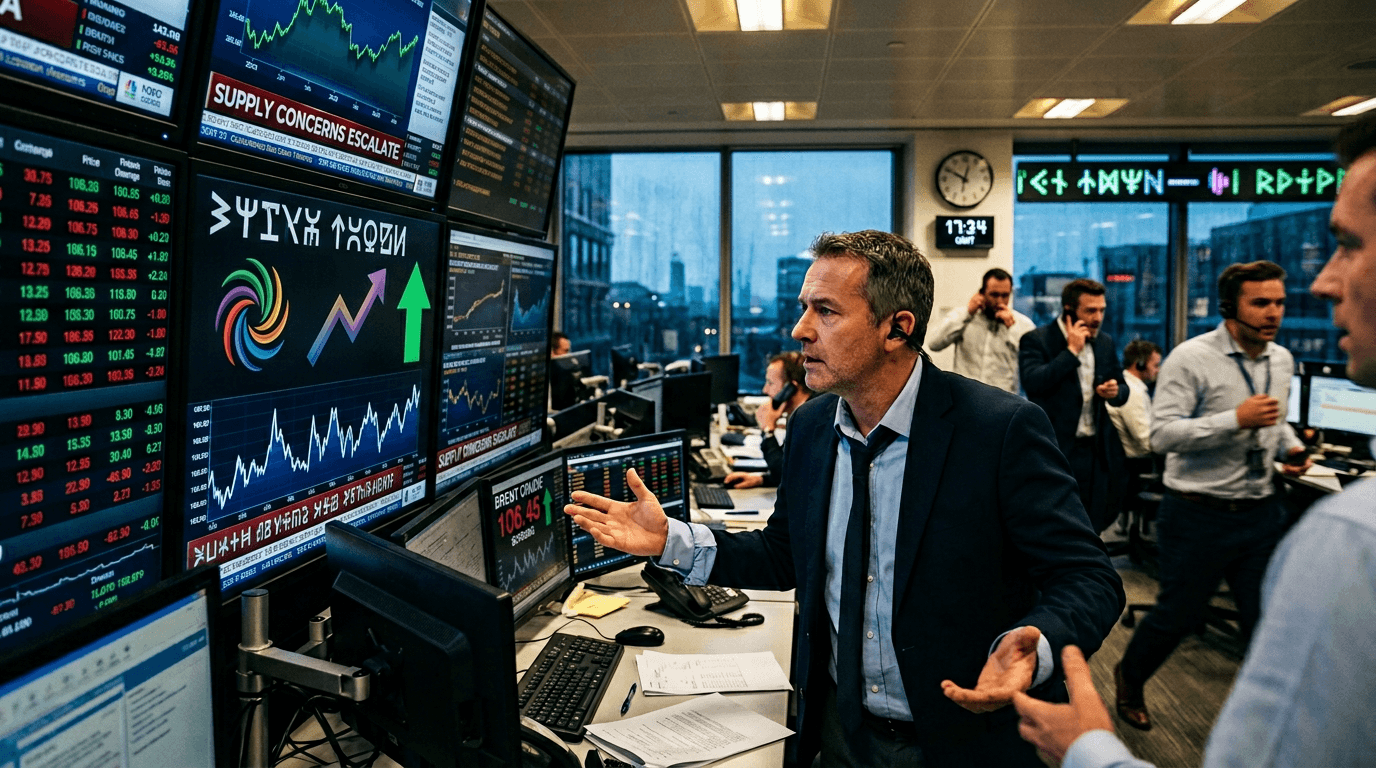
Crude oil markets are experiencing extreme volatility as the ongoing Iran conflict sends shockwaves through global energy sectors. Brent crude, the international oil pricing benchmark, has fluctuated dramatically from below $100 to above $106 per barrel in mere days. This volatility underscores a significant truth for traders, energy consumers, and policymakers: geopolitical tensions in the Middle East are a formidable force in shaping both commodity markets and global financial stability.
The Perfect Storm: Geopolitical Tensions And Energy Markets
Four weeks into the Middle East conflict, crude markets have seen dramatic shifts. Brent crude skyrocketed from about $73 per barrel on February 27, 2026, to $120 by March 9, marking a staggering 65% increase in just over a week. This surge rivals the price spike post-Russia's invasion of Ukraine in 2022. The core driver? The Strait of Hormuz, a crucial passage for nearly 20% of global oil and liquefied natural gas shipments, is largely blocked by Iran amid the conflict. This supply shock has traders reassessing portfolios and energy companies scrambling to adjust production strategies.
Volatility isn’t one-sided. On March 25, oil prices pulled back significantly, with Brent falling to $98.28 per barrel and West Texas Intermediate to $87.68, down 5.9% and 5.1% respectively. This dip followed reports of a U.S.-proposed 15-point plan to Iran aimed at conflict resolution. President Donald Trump suggested that a peace deal could cause oil prices to "drop like a rock." Yet, by March 26, prices rebounded sharply, with Brent above $106 and WTI near $94, as conflicting statements from both sides fueled fresh uncertainty about a diplomatic breakthrough.
Implications For Futures Traders
For futures traders, this volatile environment offers both opportunities and risks. The broad price swings provide the directional momentum that active traders seek, but the geopolitical uncertainty makes it challenging to establish confidence in any particular forecast. When ceasefire hopes rise, selling accelerates. When negotiations falter or mixed messages emerge, buying intensifies. This whipsaw pattern has persisted since early March, with no clear end unless a diplomatic resolution or escalation sets a new equilibrium.
In response, major brokerages have revised their oil price forecasts for 2026. Macquarie raised its full-year forecast for West Texas Intermediate crude to an average of $82.93 per barrel, up from $58, citing significant supply disruptions. Goldman Sachs expects Brent to average $110 per barrel in March and April, while J.P. Morgan projects Brent prices to average $100 per barrel in the second quarter. These forecasts reflect a consensus that even if the conflict stabilizes, structural tightness in global oil markets will persist.
Consumer Impact: Rising Costs
As traders debate forecasts, consumers face the real-world impact of market upheaval. Gasoline prices have surged to a national average of $3.98 per gallon, a 34% increase since the conflict began. Diesel prices have risen even more sharply, reaching $5.35 per gallon, up 42%. These increases affect global supply chains, elevating costs for transportation, heating, and manufacturing. Businesses relying on energy-intensive operations are experiencing significantly squeezed margins.
Scenarios And Strategic Outlook
Looking forward, oil price trajectories hinge on how quickly the conflict resolves. If a ceasefire occurs soon, Macquarie suggests prices could stabilize between $85 and $90 before gradually rising toward $110 as normal flows through the Strait of Hormuz resume. However, if disruptions continue, Brent could surge to $150 per barrel. Kotak Securities forecasts prices could reach $120 in the near term and potentially $150 if the conflict persists.
For traders and energy market participants, staying nimble and responsive to developments is crucial. The market currently balances a modest probability of escalation against hopes for de-escalation. Any decisive signals could trigger sharp repricing. Until then, expect continued volatility and wide intraday swings as traders adjust positions based on diplomatic news.