
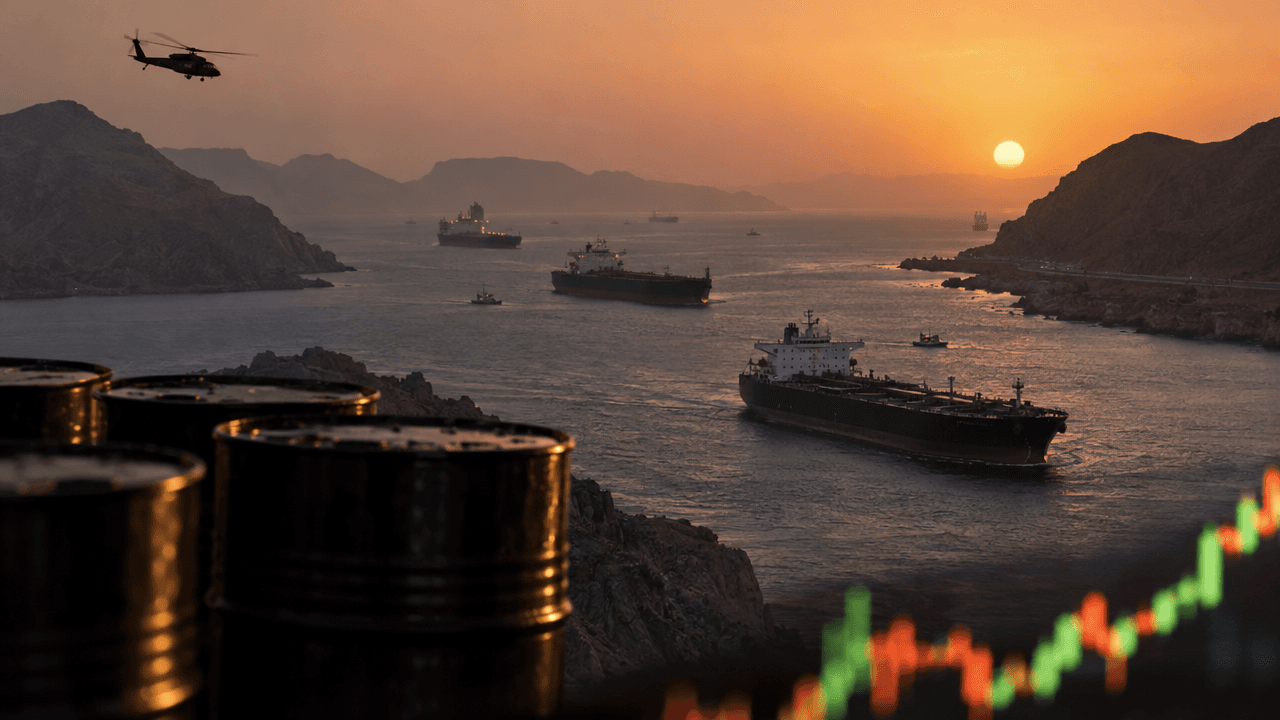
Oil futures are holding near the psychologically important $100-per-barrel level as attacks around the Strait of Hormuz keep traders focused on the risk of further supply disruptions. Brent crude, the international benchmark, has recently traded above $110, while U.S. West Texas Intermediate has remained near or above $100 as tensions involving Iran, Saudi Arabia, commercial shipping and regional energy infrastructure continue. [1][12]
The market is reacting to more than the possibility of damaged oil facilities. Tankers face higher insurance and freight costs, some vessels are avoiding key routes, and buyers are competing for alternative supplies. That combination has created a risk premium in crude prices: a layer of additional value based on uncertainty rather than current physical shortages alone.
Why The Strait Of Hormuz Matters
The Strait of Hormuz is one of the most important energy chokepoints in the world. Oil and petroleum products moving through the waterway supply consumers across Asia, Europe and other major markets. When shipping activity is disrupted, even temporarily, the market immediately begins pricing in the possibility that producers will be unable to deliver normal volumes.
The disruption does not need to become a complete blockade to influence prices. A smaller number of tankers, longer routes, delayed cargoes and increased security checks can reduce effective supply and raise costs throughout the distribution chain.
Recent attacks on shipping and infrastructure have made the situation more complicated. The U.S. Energy Information Administration said disruptions through the Strait of Hormuz contributed to higher and more volatile crude prices during the second quarter, while alternative routes and changes in regional production affected refinery and export activity. [3]
For traders, the central question is whether the latest attacks represent a temporary escalation or the beginning of a prolonged reduction in export capacity.
The Supply Risk Premium
Oil futures are forward-looking instruments. Prices reflect expectations about future supply, demand and inventories rather than simply the number of barrels available today. That is why crude can rise sharply even when physical supplies have not yet disappeared from the market.
A sustained disruption could force consuming nations to draw down commercial inventories. Stockpiles provide an important buffer, but they are not unlimited. If inventories decline rapidly while Gulf production and exports remain constrained, buyers may be willing to pay increasingly higher prices to secure prompt cargoes.
The International Energy Agency has warned that renewed hostilities and reduced regional exports could widen the supply-demand gap. If commercial inventory buffers continue to fall, the market may require higher prices and weaker demand to restore balance. [4]
That helps explain why oil remains elevated despite diplomatic efforts and occasional signs of improving tanker movements. Traders are weighing possible de-escalation against the risk that a single attack could interrupt a major pipeline, port or shipping route.
WHY $100 OIL MATTERS FOR INFLATION
Oil prices affect inflation through more than gasoline. Higher crude costs increase the price of transportation, aviation, petrochemicals, plastics, industrial materials and many consumer goods. Businesses facing larger fuel and logistics bills may eventually pass those expenses on to customers.
The impact is particularly important when inflation is already above central-bank targets. A new energy shock can slow the pace of disinflation and make interest-rate decisions more difficult. Central banks must judge whether higher prices are temporary or likely to spread into wages, services and longer-term inflation expectations.
The European Central Bank has noted that the closure of the Strait of Hormuz interrupted the transit of roughly 20 million barrels per day, equivalent to about one-fifth of global oil supply. Although prices later retreated from their peak as markets adapted, crude remained materially above pre-conflict levels. [6]
For households, the first visible effect may be higher fuel prices. For companies, the impact may appear in margins, freight costs and production decisions. For investors, the broader concern is that persistent energy inflation could weaken economic growth while limiting the ability of policymakers to cut interest rates.
What Traders Should Watch Next
The most important signal is not one daily price move but the behavior of the physical market. Traders should monitor tanker traffic through the Strait, insurance premiums, shipping rates, export schedules, refinery margins and official statements from major producers.
Inventory data also deserve close attention. Falling stockpiles combined with restricted exports would suggest that the price pressure is becoming more fundamental. By contrast, stable inventories, improving tanker movements and restored pipeline flows could reduce the risk premium.
The futures curve can provide another useful clue. If near-term contracts trade at a significant premium to later deliveries, the market may be signaling immediate scarcity. If that premium narrows, traders may be gaining confidence that supplies will normalize.
The U.S. Energy Information Administration expects Brent to average about $105 per barrel in the fourth quarter of 2026, while warning that continued disruptions could produce even greater short-term volatility. [7] Forecasts are not guarantees, but they demonstrate how deeply the conflict has altered expectations.
Practical Takeaways For Simfi Traders
First, avoid treating $100 as a guaranteed floor. Psychological price levels can attract buyers, but they can also fail quickly if diplomacy improves or supply routes reopen.
Second, distinguish headline risk from confirmed physical disruption. A military statement may cause an immediate futures rally, but the move can reverse if cargoes continue reaching buyers.
Third, manage leverage carefully. Geopolitical markets can move sharply in both directions, and crude futures may react to negotiations, sanctions, attacks or inventory reports within minutes.
Finally, consider second-order effects. Oil strength may support energy producers and some commodity currencies, while pressuring airlines, transport companies, fuel-intensive manufacturers and inflation-sensitive bonds.
Conclusion
Oil futures are holding near $100 because the market is pricing uncertainty around one of the world’s most important energy corridors. Continued attacks near the Strait of Hormuz raise the possibility of tighter supplies, higher shipping costs and renewed inflation pressure.
The next major move will depend on whether tensions spread or ease. A sustained export disruption could push prices higher, while restored shipping flows and credible diplomacy could remove part of the risk premium. For SimFi traders, the best approach is to follow the physical evidence, respect volatility and build decisions around scenarios rather than headlines alone.