
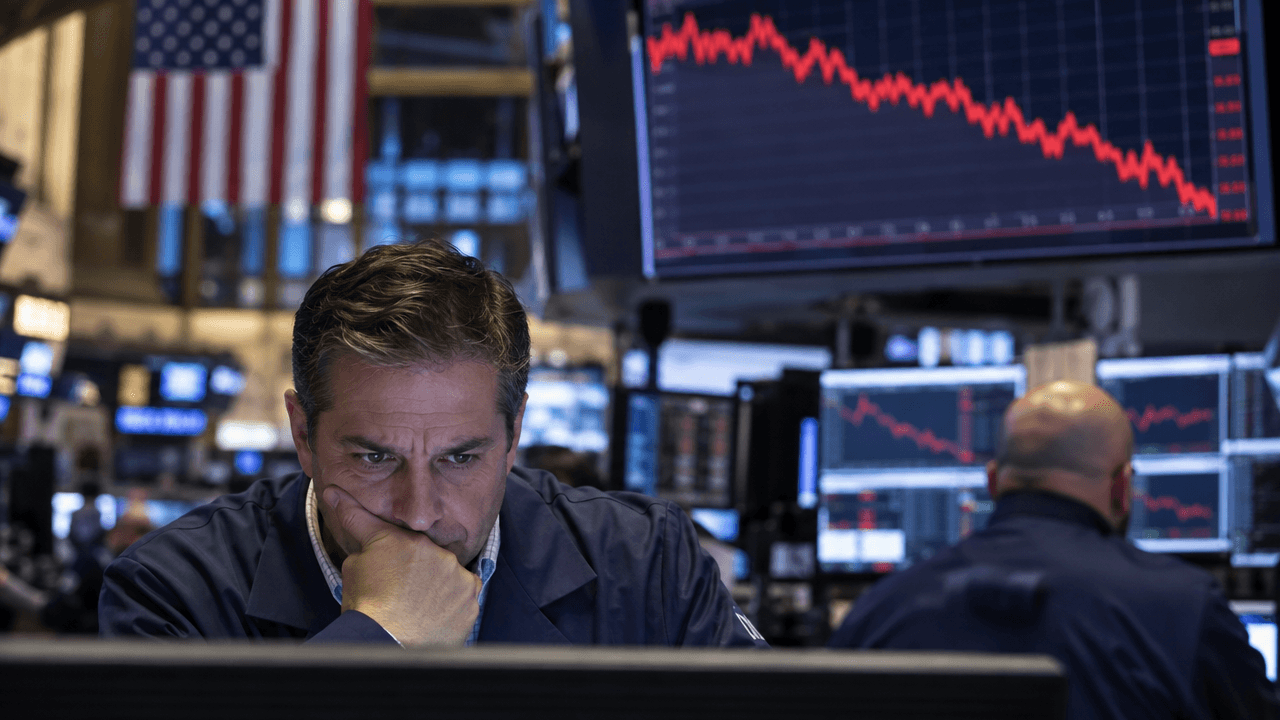
Equity-index futures are pointing to a weaker U.S. open, with S&P 500 and Nasdaq futures indicating declines of more than 1% and Dow futures also trading lower. The uneven pressure is especially notable because technology-heavy contracts are leading the retreat, suggesting that investors are reducing exposure to high-growth and higher-risk assets rather than simply selling the entire market indiscriminately. [1]
For traders, the futures move is an important early signal—but not a guarantee of where the cash market will finish. Overnight prices reflect changing expectations, global trading activity, company news, interest-rate concerns, and position adjustments before the New York Stock Exchange opens. The key question is whether the weakness remains concentrated in technology or broadens into a deeper risk-off session.
What The Futures Signal
Index futures trade for much of the day and night, allowing investors to respond to news while the regular U.S. stock market is closed. S&P 500 futures provide a broad view of large-cap sentiment, Nasdaq futures offer a more concentrated look at technology and growth stocks, and Dow futures tend to be more influenced by established industrial and defensive companies.
When Nasdaq futures decline more sharply than S&P 500 futures, the market is often signaling specific concern about technology valuations, semiconductors, artificial intelligence spending, or the outlook for future growth. Recent market reporting showed Nasdaq 100 futures down roughly 1.5%, compared with a decline of about 0.7% for S&P 500 futures and only 0.1% for Dow futures. [2]
That gap matters. The S&P 500 is heavily influenced by its largest technology companies, but it also includes financial, health care, energy, industrial, and consumer businesses. A sharper Nasdaq decline therefore points toward concentrated selling in growth-oriented shares rather than uniform weakness across all sectors.
Why Technology Is Under Pressure
Technology stocks are particularly sensitive to changes in investor expectations. Many companies in the sector are valued on the basis of earnings they may generate years into the future. When investors become more cautious about economic growth, interest rates, competition, or the cost of artificial intelligence investment, those distant earnings become less attractive.
The recent weakness has also renewed concerns about the AI trade. Investors have been closely watching whether enormous spending on data centers, chips, and cloud infrastructure will produce sufficient revenue and profits. Any sign that capital spending may take longer to generate returns can trigger selling across semiconductor companies, software firms, and other businesses associated with the theme.
High valuations can amplify the reaction. When a stock has already risen sharply, traders may have less tolerance for disappointing guidance, weaker margins, leadership uncertainty, or a change in market sentiment. Selling in a few highly weighted technology companies can then pull index futures lower even if many smaller companies are relatively stable.
The market is also sensitive to interest-rate expectations. Higher expected rates reduce the present value of future profits, which tends to affect growth stocks more heavily. Even when Treasury yields are not rising dramatically, uncertainty about monetary policy can encourage investors to reduce risk.
The Link Between Stocks And Crypto
The pressure is extending beyond equities into crypto and other risk-sensitive assets. Bitcoin and other digital assets often trade as part of the broader speculative environment, particularly when investors are willing to accept volatility in pursuit of higher returns. When that appetite fades, crypto can experience larger and faster moves than traditional stock indexes.
Recent reporting connected technology weakness with declines in crypto-related assets, including bitcoin and listed companies with significant exposure to digital assets. [11] This does not mean stocks directly determine crypto prices. Instead, both markets can respond to common forces such as liquidity, interest-rate expectations, leverage, and investor confidence.
The relationship can be especially visible during sudden risk reduction. Traders may sell technology shares, cryptocurrency positions, small-cap stocks, and leveraged exchange-traded products at the same time. Falling prices can then produce margin calls or stop-loss orders, creating additional short-term momentum.
For that reason, crypto volatility can serve as a useful sentiment indicator—but it should not be treated as a standalone forecast for the S&P 500 or Nasdaq.
How Traders Can Approach The Open
A lower futures reading should encourage preparation, not impulsive trading. Futures can change substantially before the opening bell as new headlines emerge, overseas markets close, and institutional orders are entered. The regular session may also reverse the overnight direction.
Traders should monitor market breadth, sector performance, volatility, Treasury yields, and trading volume after the open. If technology shares fall while defensive sectors remain resilient, the move may represent a rotation. If most sectors decline and volatility rises, the market is showing broader risk aversion.
It is also important to distinguish between a gap lower and a sustained downtrend. A sharp opening decline may reflect overnight positioning and can be followed by stabilization. Conversely, continued selling after the first 30 to 60 minutes may indicate that investors are accepting lower prices rather than simply adjusting orders.
On a SimFi platform, this environment provides a valuable opportunity to practice disciplined execution without exposing real capital. Traders can build scenarios around a weak open, define entry and exit levels in advance, reduce position size, and evaluate whether their decisions were based on evidence or emotion.
Key Takeaways
The weaker futures point to elevated caution ahead of the U.S. session, with technology shares facing more intense pressure than the broader market. Investors are reassessing valuations, AI-related spending, interest-rate expectations, and their willingness to hold speculative assets.
The futures signal is important, but confirmation must come from the cash session. Watch whether selling broadens, whether defensive sectors outperform, and whether volume supports the move. Avoid treating a single premarket percentage as a complete market forecast.
For traders, the most reliable response is a measured one: plan for multiple outcomes, control leverage, and let price action confirm the initial signal. Markets often reward preparation more consistently than prediction.