
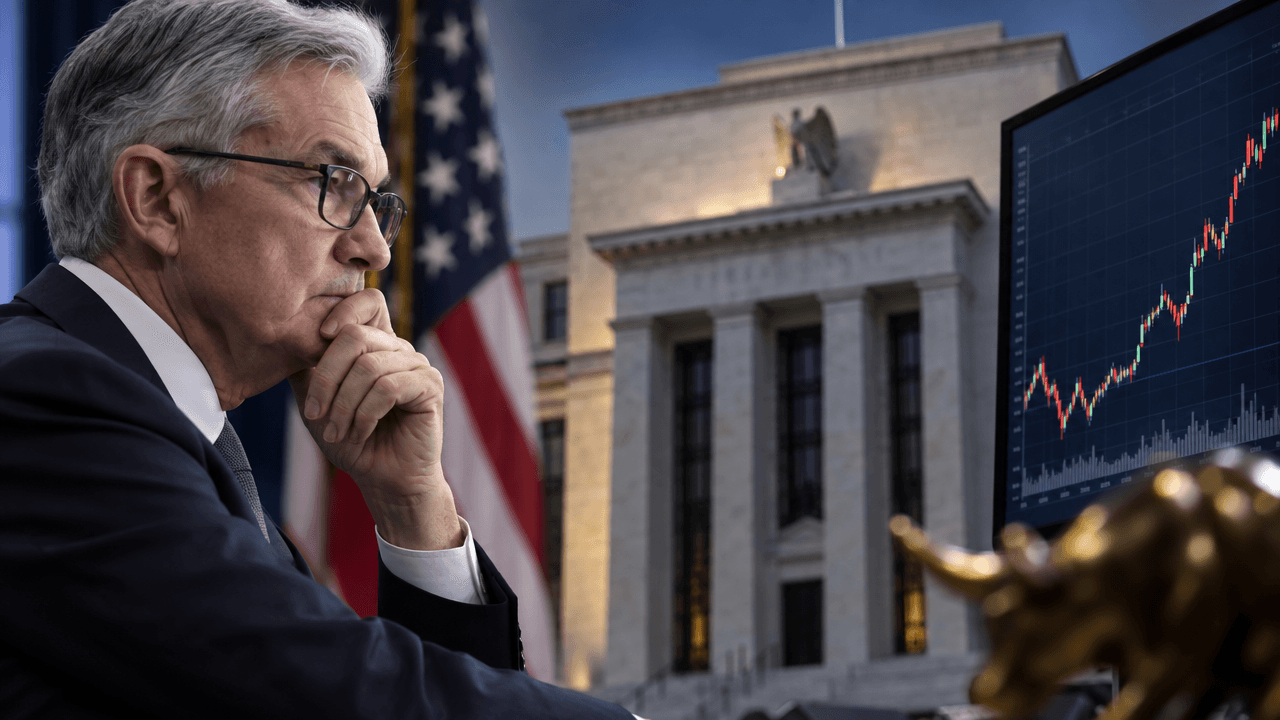
Federal Reserve tightening concerns are re-emerging as a significant macro headwind for financial markets. After holding interest rates steady at its October meeting, the central bank’s latest minutes showed that almost all policymakers considered additional rate increases likely to be appropriate if inflation remains above target. That message has challenged expectations for easier liquidity and placed renewed pressure on speculative assets, including growth stocks, cryptocurrencies, and leveraged trading strategies. [1]
The market’s central question is no longer simply whether the Federal Reserve will cut rates. Instead, investors are assessing how high rates may need to go, how long they could remain elevated, and whether tighter policy will eventually weaken economic growth.
Why Fed Tightening Expectations Have Returned
The Federal Reserve’s policy dilemma is being driven by the persistence of inflation alongside relatively resilient economic activity. Policymakers have indicated that price pressures remain too high to justify a rapid shift toward easier monetary policy. Some officials reportedly believed that current rates were not restrictive enough and warned that delaying further action could allow inflation to become entrenched. [1]
That concern is important because monetary policy works with a lag. The Fed must decide how much additional restraint is necessary before the full impact of previous rate increases becomes visible in consumer demand, employment, housing, and business investment.
Recent communications have therefore shifted the tone from “when will rate cuts begin?” to “how much more tightening may be required?” Federal Reserve Governor Christopher Waller has argued that further tightening may be needed sooner rather than later, while also emphasizing that clear communication can influence financial conditions before an actual rate increase occurs. [5]
Even when the Fed leaves its benchmark rate unchanged, markets can tighten if investors raise their expectations for future rates. Bond yields may rise, the dollar may strengthen, and borrowing conditions may become less favorable across the economy.
Why Speculative Assets Are Vulnerable
Higher interest rates affect asset prices through several channels. First, they increase the discount rate used to value future earnings. This tends to weigh most heavily on companies whose expected cash flows are far in the future, such as early-stage technology firms and businesses dependent on rapid expansion.
Second, higher rates raise the opportunity cost of holding assets that do not generate income. Investors may become less willing to hold speculative positions when cash, Treasury securities, or other interest-bearing instruments offer more attractive returns.
Third, tightening conditions can reduce leverage. Traders and institutions may scale back borrowed positions as financing costs increase and risk limits become more restrictive. Forced deleveraging can amplify price declines, particularly in markets where positioning is crowded.
This does not mean every risk asset must fall whenever the Fed signals tighter policy. Strong earnings, improving productivity, or favorable industry-specific developments can offset macro pressure. However, the broad liquidity environment becomes less supportive, making markets more sensitive to disappointing economic data, weak corporate guidance, or sudden changes in sentiment.
The Liquidity Channel And Market Expectations
Financial markets respond not only to the federal funds rate but also to expectations about the path of policy. If traders had anticipated rate cuts and those cuts are pushed further into the future, the repricing can be substantial even without an immediate policy move.
A higher expected rate path can lift government bond yields and corporate borrowing costs. Companies refinancing debt may face greater interest expenses, while households encounter higher costs for mortgages, credit cards, and auto loans. Over time, these pressures can reduce discretionary spending and discourage business investment.
The latest Fed minutes also highlighted concerns that inflation could remain persistent despite easing energy prices and the fading impact of certain temporary factors. Policymakers reportedly considered the possibility that tariffs and the expansion of artificial intelligence infrastructure could contribute to broader and more durable price pressures. [4]
For markets, the implication is that inflation data will remain highly influential. A series of softer readings could restore confidence that tightening is nearing its end. Conversely, evidence of sticky services inflation, stronger wages, or accelerating demand could push rate expectations higher again.
What Traders Should Watch
Traders should focus on the interaction between inflation, employment, and financial conditions rather than treating any single headline as decisive.
The first priority is inflation data, particularly measures that reveal whether price pressures are broadening or becoming embedded in wages and services. Temporary declines in energy or goods prices may not be enough to change the Fed’s outlook if underlying inflation remains elevated.
The second priority is labor-market resilience. Strong employment and wage growth can give policymakers more room to raise rates, while a rapid deterioration in jobs may encourage a slower approach even if inflation remains uncomfortable.
The third is the bond market. Rising Treasury yields often signal that investors are pricing in tighter policy, stronger growth, or greater inflation risk. Credit spreads also deserve attention because widening spreads can indicate that markets are becoming more concerned about corporate defaults and refinancing pressure.
Finally, traders should monitor market positioning and leverage. When expectations are heavily concentrated around rate cuts, even a modestly hawkish Fed communication can produce an outsized reaction.
Practical Takeaways For Simfi Traders
In a simulated finance environment, this backdrop provides a useful opportunity to practice disciplined risk management without real-money exposure.
Avoid building a strategy around a single expected Fed outcome. Instead, create scenarios for a pause, a gradual hike, and a more aggressive tightening cycle. Consider how each scenario could affect equities, currencies, bonds, commodities, and digital assets differently.
Reduce unnecessary leverage when volatility is rising. Define maximum loss levels before entering a position, and remember that correlated assets can decline together when the dominant market theme is higher rates.
Pay attention to event risk. Inflation releases, employment reports, Fed speeches, and policy minutes can all trigger rapid repricing. Keeping position sizes smaller ahead of these events can help prevent a correct long-term view from becoming a short-term trading loss.
The broader lesson is that macroeconomic narratives often develop gradually but reprice markets quickly. The Federal Reserve’s renewed focus on inflation means easier liquidity should not be treated as the default assumption. Until price pressures convincingly move toward the central bank’s target, tightening concerns are likely to remain a persistent headwind for speculative assets.
For traders, the most durable advantage is not predicting every Fed decision. It is understanding how rate expectations affect liquidity, valuations, leverage, and sentiment—and then building flexible strategies that can adapt as the evidence changes.