
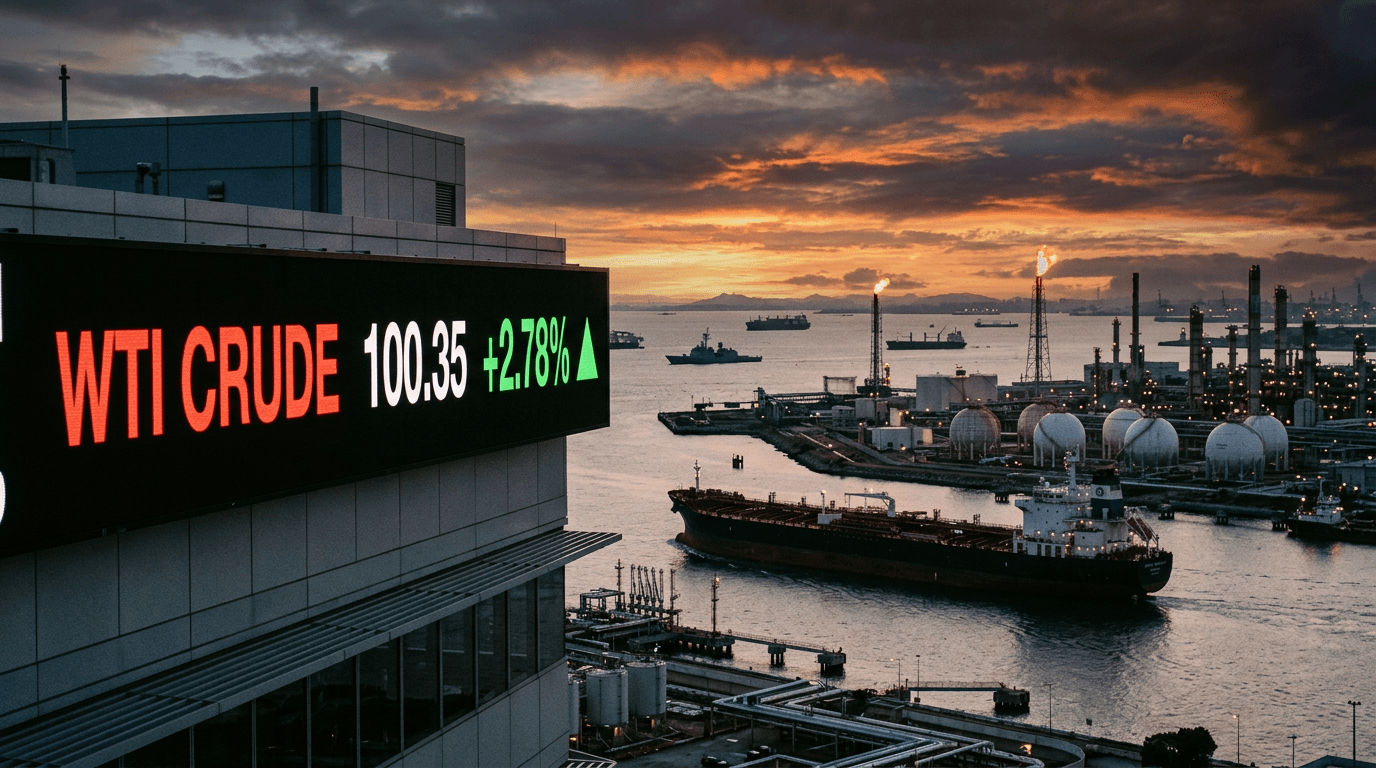
Oil Prices Soar Amid Rising Middle East Tensions: What It Means for Global Markets
Oil prices have surged to their highest levels since the summer of 2024, driven by escalating tensions in the Middle East. These tensions pose significant threats to critical energy infrastructure and vital shipping routes, marking a pivotal shift from mere geopolitical concerns to genuine fears of energy supply disruptions that could impact global economies.
Understanding the Current Price Surge
In recent weeks, crude oil prices have experienced a dramatic and sustained increase. Brent crude has soared above $100 per barrel, while West Texas Intermediate (WTI) trades near $98-99 per barrel, reflecting a significant rise of 40 to 50 percent.[1] This surge underscores the seriousness with which investors view the current Middle East developments. Unlike previous volatility, this price movement is a measured response to tangible threats to energy production and distribution.
The escalation goes beyond military posturing, with direct attacks on energy infrastructure becoming a focal point. The conflict involving Israel, Hezbollah, and broader regional actors has seen coordinated assaults on oil and gas facilities.[1][2] The Iranian missile strike on the Ras Laffan complex in Qatar—a major liquefied natural gas hub—served as a clear indication that energy infrastructure is now a target in regional disputes.[2] Iran's warnings of further attacks on refineries and gas fields in Saudi Arabia, the UAE, and Qatar only amplify these concerns.[2]
Supply Chain Vulnerabilities
Gulf region oil producers have responded by evacuating personnel from refineries, petrochemical plants, and gas fields as a precautionary measure.[2] This defensive stance not only reduces near-term production capacity but also signals genuine concern about potential future disruptions. The threat extends to maritime routes, particularly the Strait of Hormuz, which facilitates about 20 percent of the world's oil supply. Increasing tensions have led to at least four tankers being diverted or anchored, with shipments disrupted as missiles traverse contested waters.[4]
These compounding factors—direct attacks, personnel evacuations, and shipping route disruptions—have fundamentally changed market perceptions of energy security. What began as geopolitical tension has evolved into a genuine energy supply crisis with immediate operational implications.[2]
Impacts on Consumers and Markets
The effects of elevated oil prices ripple beyond industry insiders and investors. Gasoline prices have risen sharply, with the national average for regular gasoline in the United States hitting $3 per gallon as crude prices jumped over 6 percent.[4] This increase in consumer costs intensifies political and economic pressure on policymakers to devise solutions. However, as long as Middle East violence persists, gas prices are likely to remain high, despite uncertain forecasts for specific price levels.[4]
Regions have approached the crisis with varying preparedness. For instance, India has strategically stocked crude oil and LPG by sourcing imports from non-Gulf countries, effectively hedging against Gulf supply disruptions.[3] This proactive stance reflects how market participants are adapting to elevated supply risks.
Policy Responses and Market Expectations
In response, the U.S. government has mobilized efforts to address the situation. Vice President JD Vance acknowledged the challenging weeks ahead, suggesting eventual price stabilization.[2] Energy Secretary Chris Wright, alongside congressional and state representatives, participated in an emergency meeting organized by the American Petroleum Institute to discuss energy supply stabilization measures.[2] While these policy responses provide some reassurance, they also acknowledge ongoing challenges in the near-term outlook.
What Investors Should Consider
For traders and investors in energy markets, several key takeaways emerge from the current conditions. Firstly, the link between Middle East geopolitical events and oil price movements has significantly strengthened, making regional intelligence crucial. Secondly, the direct targeting of energy infrastructure introduces a new risk dimension that traditional models may underestimate. Lastly, supply chain resilience has become a top priority, with companies and nations actively diversifying sourcing strategies.
This environment underscores why energy markets remain highly sensitive to geopolitical developments. With oil prices at their highest since 2024, market participants are factoring in genuine concerns about supply disruptions that could last for weeks. Whether prices stabilize depends largely on the resolution of Middle East tensions and their impact on energy production and transportation infrastructure.
News Impact Score: 8