
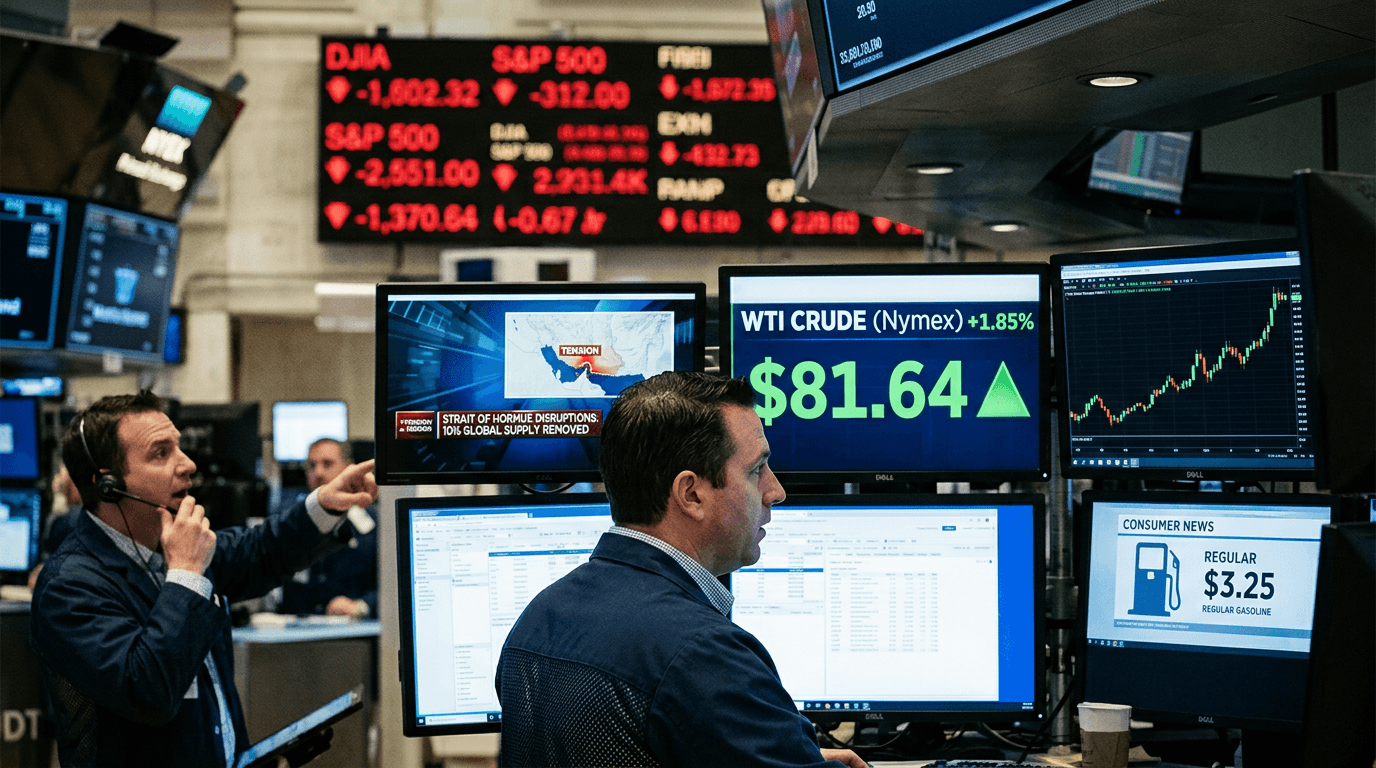
The global oil market is experiencing a period of pronounced volatility, with crude prices soaring to heights not observed since the middle of 2024. This surge is primarily attributed to escalating geopolitical tensions between the United States and Iran. West Texas Intermediate (WTI) crude has reached $81.64 per barrel, while Brent crude has climbed to $85.85. These increases, nearly 9% higher than previous levels, are propelled by real supply disruptions rather than speculative forces. For traders, investors, and other market participants, understanding these dynamics is crucial, as the effects extend beyond energy markets, impacting equities, currencies, and broader risk sentiment across global financial systems.
The Strait Of Hormuz: A Critical Chokepoint
The Strait of Hormuz, a narrow yet strategically vital waterway, is central to this market turmoil, as it is responsible for the transit of approximately 20% of the world’s daily oil supply. Recent military escalations between the U.S. and Iran have turned this corridor into a flashpoint for energy security. Iranian countermeasures against U.S. airstrikes have targeted key oil infrastructure and disrupted essential shipping routes, leading to a physical supply shock rather than a mere psychological one. This distinction is significant for traders evaluating the sustainability of current price levels.
The repercussions are both measurable and severe. Military activities and infrastructure damage have effectively removed between 10 and 11 million barrels per day from global availability—approximately 10% of the roughly 100 million barrels traded daily. Tanker operations have nearly ceased, port functions are hindered, and the uncertainty regarding future access has compelled traders to incorporate significant risk premiums into all crude benchmarks. This price surge is not driven by speculation; it is a genuine supply disruption meeting an inelastic global demand.
Financial Markets In Turmoil
The energy crisis has precipitated a sharp repricing in equity markets as investors face stagflation concerns. The Dow Jones Industrial Average has dropped by 2.25%, while the S&P 500 and Nasdaq have each declined over 1%, reflecting widespread anxiety about corporate profitability amid rising input costs. The airline sector has been particularly hard-hit, suffering substantial sell-offs as elevated fuel expenses threaten already slim profit margins. Financial markets are contending with a fundamental economic reality: rising oil prices suppress growth by increasing business costs and reducing consumer purchasing power simultaneously.
The reaction in fixed income markets is equally revealing. Treasury yields have increased as inflation expectations recalibrate sharply upward, and market participants now predict that enduring high energy prices could limit central banks’ ability to lower interest rates as aggressively as previously anticipated. This dynamic poses challenges for bond investors and recalibrates the calculus for equity valuations. Safe-haven assets, especially gold, have exhibited increased volatility as risk-averse investors adjust their portfolios amid heightened geopolitical uncertainty.
The Impact On Consumers: Rising Costs
Energy shocks swiftly translate into consumer prices through one of the most rapid inflation channels in any economy. U.S. gasoline prices have surged to $3.25 per gallon, marking a 9% increase from $2.98 just a week prior, with certain regions experiencing prices soaring to $3.58 per gallon within a month. In some areas, prices have already surpassed $4 per gallon, reaching levels not seen since August 2022. This rapid escalation directly affects household budgets and consumer spending patterns, posing challenges for retail sales and broader economic growth.
The physical crude oil market reflects the desperation of energy buyers seeking secure supplies. Asian refiners are paying record premiums for alternative crude sources, with Norwegian Johan Sverdrup crude trading at a premium of $11.80 per barrel over Brent—an unprecedented level that underscores the urgency of securing reliable oil amid market disruptions.
Trading Implications: What To Watch
Several critical factors will determine whether elevated oil prices represent a transient shock or an extended period of sustained elevation through 2026 and beyond. First, observe whether OPEC's planned output increase of over 200,000 barrels per day in April—following substantial monthly increases exceeding 400,000 barrels—can effectively ease market pressures. Second, closely monitor if oil prices approach and maintain the $100 per barrel threshold, a level that analysts warn could impose unsustainable pressure on global economic growth.
Peace negotiations between U.S. and Iranian officials have yet to yield binding agreements, leaving resolution timelines uncertain. The upcoming earnings season will provide vital insights into how companies have managed this energy crisis and how consumer demand has responded to higher costs. These reports may serve as the most significant market catalyst beyond the conflict itself, potentially clarifying the economic trajectory ahead.
In this environment, risk management becomes paramount. Traders should consider diversifying beyond traditional equity exposure and carefully monitor geopolitical developments alongside technical price levels. The distinction between this supply shock and past speculative rallies suggests that this volatility is substantive, demanding respect and disciplined portfolio positioning.