
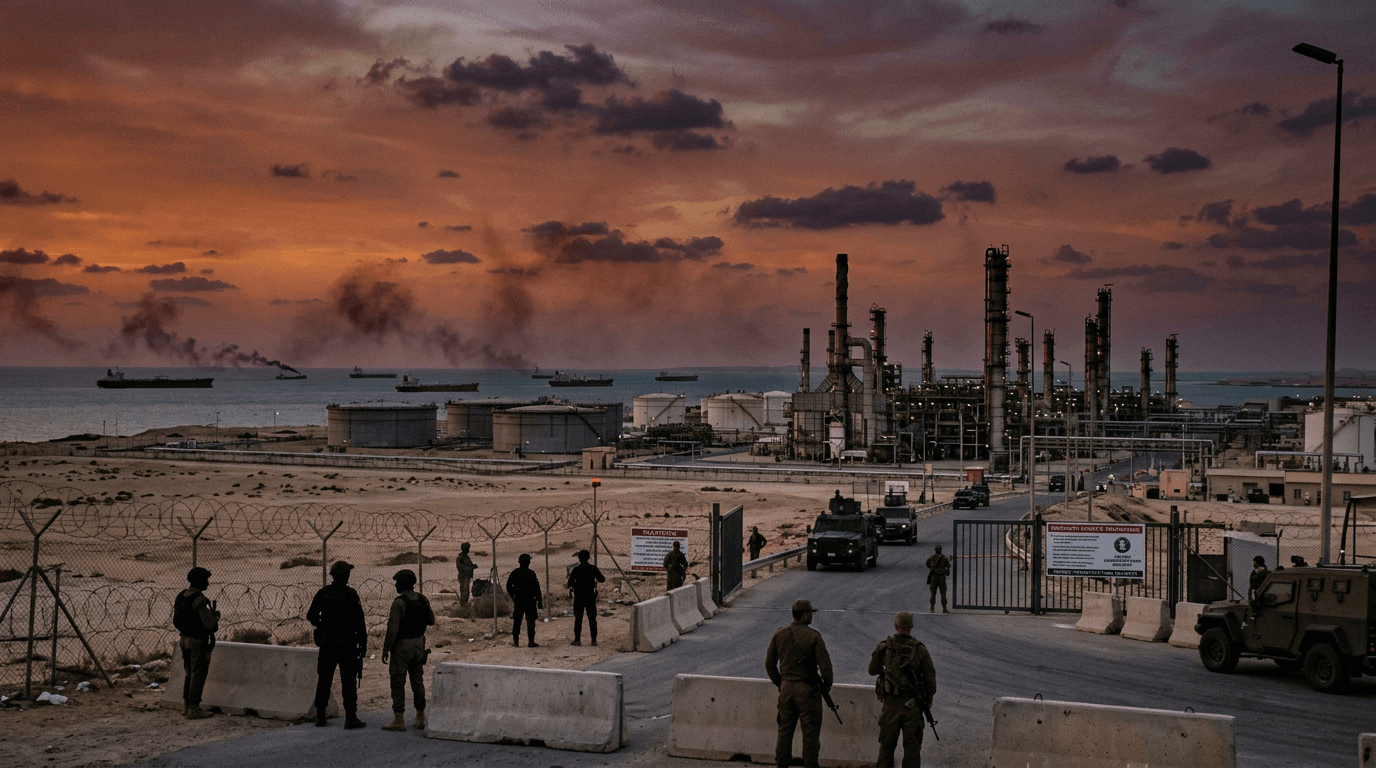
Oil prices have skyrocketed amid escalating tensions between the US and Iran, with West Texas Intermediate crude reaching $81.64 per barrel and Brent crude soaring to $85.85. This 9% surge marks the highest levels since the summer of 2024 and is not just a temporary spike. The real supply disruptions are transforming energy markets and influencing financial portfolios and inflation worldwide. For traders and investors, understanding these dynamics is crucial to managing the uncertainty that lies ahead.
The Geopolitical Powder Keg
The current oil shock stems from the intensifying conflict between the US and Iran. After President Trump's threats against Iran's energy infrastructure, Iran retaliated by targeting crucial oil facilities and shipping routes. The situation intensified when Iran closed the Strait of Hormuz, a critical chokepoint through which nearly 20% of the world's oil supply passes each day. With US airstrikes continuing into a second week, this conflict has escalated into a full-blown global supply crisis.
The scale of disruption is unprecedented. According to the International Energy Agency, this is the largest supply disruption in the history of the global oil market. Oil production from Kuwait, Iraq, Saudi Arabia, and the United Arab Emirates has collectively declined by at least 10 million barrels per day by mid-March. Considering that global crude oil production hovers around 100 million barrels daily, losing 10% of the supply overnight is a seismic event that strategic reserves cannot easily mitigate.
Immediate Market Convulsions
Financial markets have reacted with sharp and predictable moves. US stock indexes have dropped approximately 1% as investors reassess profit margins and consumer spending in an inflationary environment. Safe-haven assets have rallied—gold has surged as investors seek refuge from stagflationary risks, and Treasury bonds have gained traction as portfolios shift from equities to perceived safer fixed-income alternatives. This mirrors classic risk-off behavior: when energy prices spike and growth concerns rise, stocks become less attractive.
For consumers, the impact is already evident. Gasoline prices have risen to $3.58 per gallon, a 60-cent increase in just one month. In California, prices have surpassed $5 per gallon, the highest since late 2023. Gasoline is arguably the most visible price metric in everyday American life—when drivers fill their tanks, they immediately grasp inflation in concrete terms, which affects consumer sentiment and spending patterns.
The Stagflation Specter
Perhaps most concerning for policymakers and investors is the stagflation scenario now being priced into markets. Initial hopes for economic resilience and potential Federal Reserve rate cuts have faded, replaced by fears that the economy could face both rising inflation and slowing growth. Federal Reserve Chair Jerome Powell has acknowledged this uncertainty, stating that it is still too early to predict how the conflict will impact inflation and economic effects.
Analysts warn that if the conflict continues and the Strait of Hormuz remains closed through June, crude oil could spike to $200 per barrel. Goldman Sachs predicts that in such a scenario, US gasoline prices could reach $3.50 per gallon, and inflation could become a persistent problem. This isn't alarmism—it's a logical extrapolation from genuine supply losses that have no immediate replacement.
Key Takeaways For Traders And Investors
Firstly, this is about real supply constraints, not speculation. The oil infrastructure disruptions and port closures are tangible, not theoretical. This underpins the staying power of elevated energy prices.
Secondly, expect volatility to persist as long as the Strait of Hormuz remains closed. Every headline about escalation or negotiation will trigger sharp market swings. Risk management and position sizing become paramount.
Thirdly, prepare for broader inflation pressures. Energy costs ripple through supply chains, transportation, and consumer goods pricing. Inflation expectations will likely remain elevated, complicating Fed policy decisions and weighing on multiple asset classes.
Fourthly, sector rotation is likely to accelerate. Energy stocks may benefit from higher prices, but consumer discretionary stocks face margin pressure. Defensive sectors and bonds may continue attracting capital.
Finally, geopolitical risk premiums are now a permanent fixture of market pricing. The old assumption that Middle East tensions were compartmentalized has been proven wrong. Investors need to actively monitor developments and stress-test portfolios for further escalation.
The 9% surge in oil prices is just the beginning of a significant market adjustment. As supply remains constrained and uncertainty persists, the financial landscape will continue to shift. For traders, this creates both risks and opportunities—but only for those who understand the underlying dynamics.