
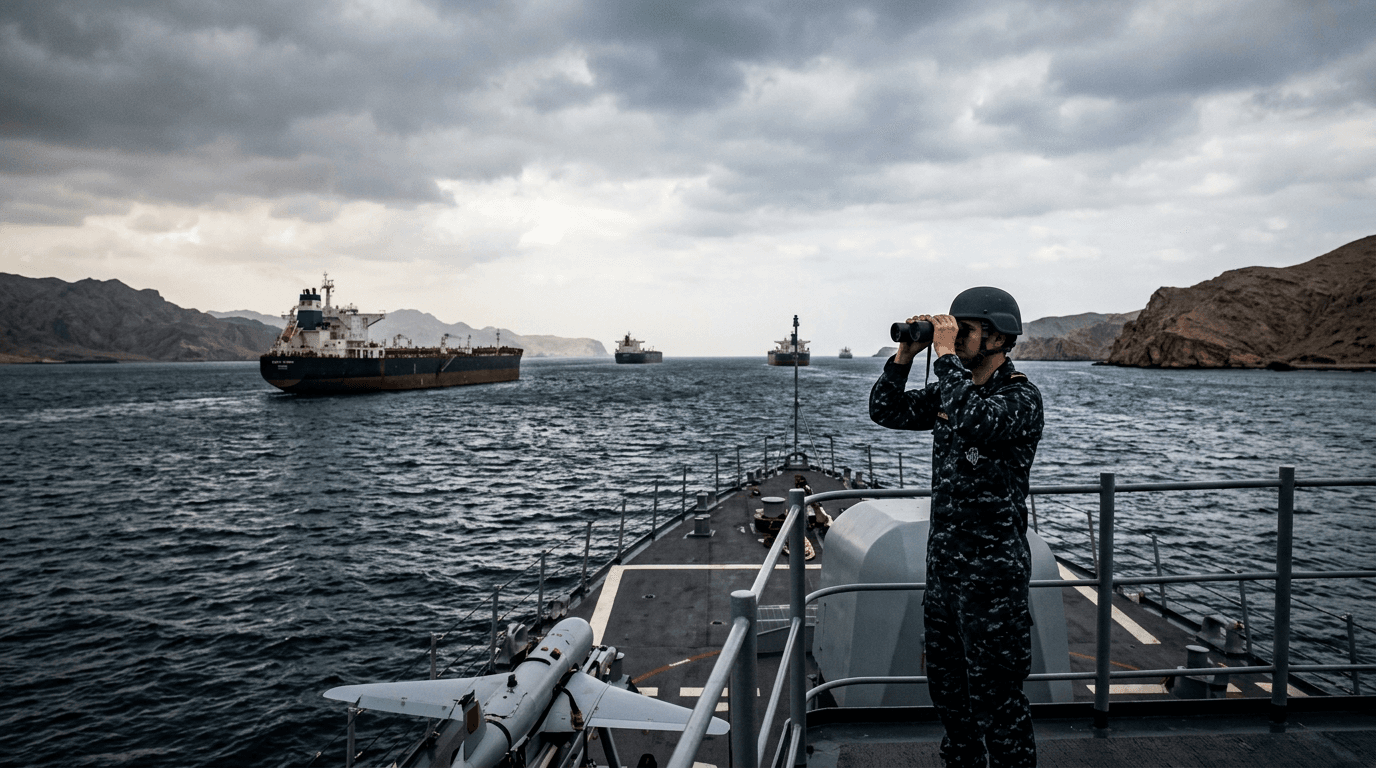
Unprecedented Disruption in the Strait of Hormuz: Iran's Strategic Mine-Laying
The Strait of Hormuz, a pivotal maritime chokepoint, is under severe disruption as reports confirm Iran's mine-laying operations. On March 13, 2026, intelligence revealed that Iran had deployed mines in this crucial shipping lane, causing a sharp rise in crude oil prices and heightening futures market volatility. With about 20% of the world's oil supply passing through this narrow passage, the geopolitical tensions seep into economic arenas, influencing everything from energy costs to currency values.
Iran's Strategic Chess Move: The Mine-Laying Tactic
To grasp the market's reaction, one must understand Iran's strategic use of mine-laying. Malcolm Davis from the Australian Strategic Policy Institute explains that Iran possesses thousands of mines, easily deployable via small vessels or rocket-based systems[1]. Though inexpensive to produce, these mines wield immense strategic power. The aim isn't necessarily to destroy every passing vessel but to instigate economic turmoil and interrupt oil flows to Western markets[1].
What amplifies this strategy's potency is the extensive response required for mine clearance. Davis notes that it could take weeks, if not months, to clear the Strait of Hormuz, necessitating American air superiority and control of surrounding waters—a prolonged and risky operation[1]. This protracted process means enduring market uncertainty.
The Hidden Economic Leverage: Insurance Crisis and Shipping Halt
Beyond the physical challenge of mine clearance lies a critical economic factor: maritime insurance. When insurers perceive the risk of mines, they cease covering vessels navigating the Strait. Davis asserts, "insurers simply won't insure commercial ships to go into the Strait of Hormuz," effectively creating a blockade before any vessel incurs mine damage[1]. The U.S. military has indicated it's unable to escort commercial ships for several weeks, meaning those ready to take physical risks face insurmountable insurance hurdles[1].
This insurance void is crucial for traders. Without coverage, few shipping companies will traverse the Strait, leading to supply bottlenecks and rising prices. The mere threat of mines is enough to disrupt crude flow, explaining why oil markets have reacted so dramatically, despite limited confirmed damage.
Oil Market Turmoil and Futures Volatility
Crude oil prices have soared following these events, reflecting traders' concerns over prolonged supply disruptions. The market isn't just factoring in the immediate threat but also the extensive time needed to restore normal passage through the Strait. With a fifth of global crude supply at risk, even minor assumptions about supply loss lead to significant price shifts[1].
Volatility extends beyond spot prices, with widened futures contracts signaling uncertainty over the disruption's duration and severity. Options markets show increased demand for protection as traders hedge against further escalation. This volatility aids some—those positioned for energy price rises—while presenting challenges for others managing energy costs.
President Trump has initiated military operations targeting Iranian mine-laying vessels and mine production facilities. These military actions add another uncertainty layer: the potential for a broader naval conflict that could further disrupt regional shipping.
Wider Market Implications
The oil price surge has cascading effects across financial markets. Rising energy costs elevate inflation expectations, influencing bond yields and currency valuations. A shift toward safe-haven assets has bolstered the U.S. dollar, as investors seek stability amid geopolitical uncertainty. For traders in energy-intensive sectors—like transportation, chemicals, and utilities—this creates a significant margin and profitability challenge.
Interestingly, not all sources confirm active mine deployment. Secretary Hegseth has questioned whether mines have been laid, noting Iranians continue moving their tankers through the Strait[2]. This official disagreement highlights the intelligence ambiguity surrounding the situation, exacerbating market volatility. When facts are unclear, traders often anticipate worst-case scenarios.
Investor Insights: Navigating the Strait Crisis
Investors should monitor insurance market indicators alongside crude prices, as they often foreshadow actual supply disruptions. Keep an eye on U.S. military actions in the region, as escalation could extend beyond mine-clearing. Consider the blockade's duration; weeks of disruption create different conditions than months. Finally, observe spillover effects in currency and bond markets, where risk-off sentiment is evident.
The Strait of Hormuz mining crisis is a high-impact market event with real supply-side repercussions. Unlike many theoretical geopolitical risks, this threat directly affects the physical flow of a commodity essential to global economies.
NEWS IMPACT SCORE: 8