
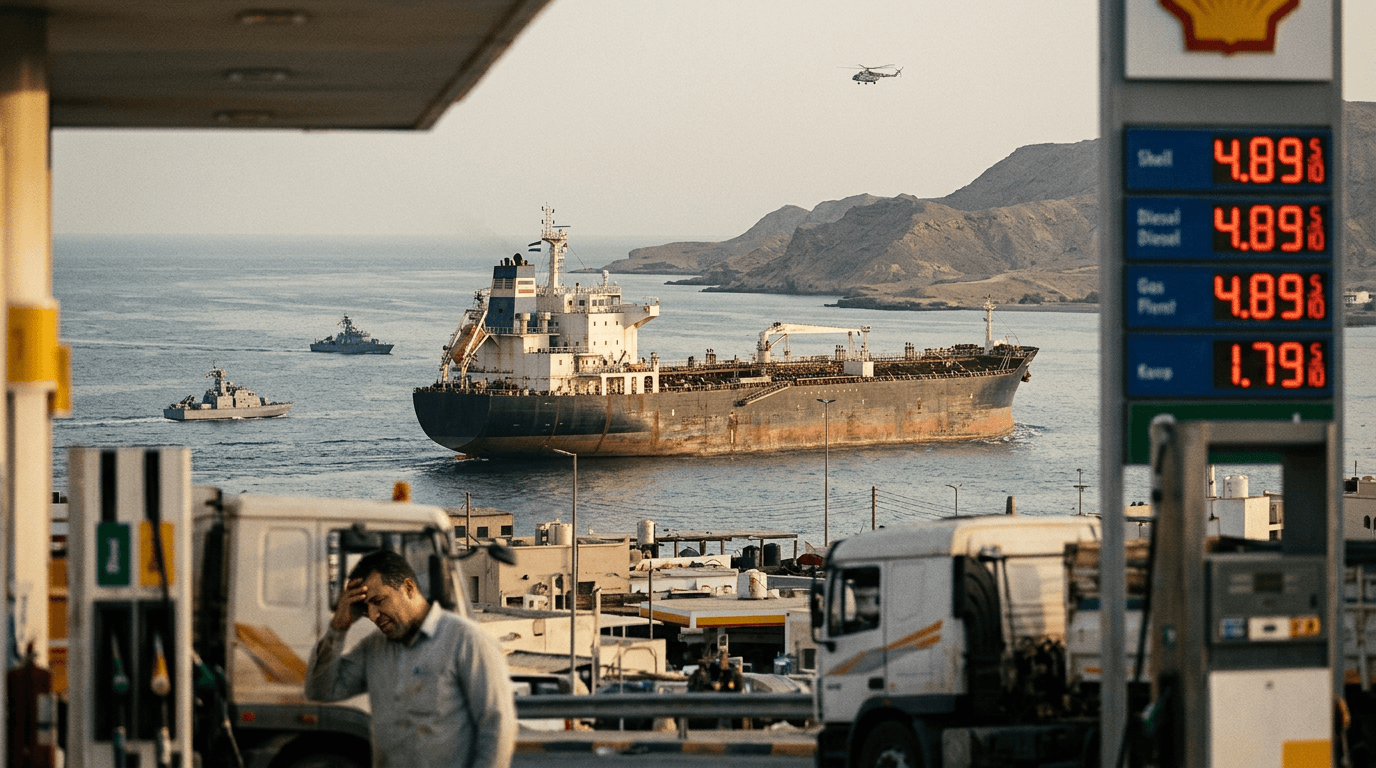
Crude oil markets are experiencing a significant surge, reaching heights not seen since July 2024. Brent crude is trading between $109 and $113 per barrel, while West Texas Intermediate is nearing $99. This escalation is driven by geopolitical tensions in the Middle East, posing substantial risks of supply disruptions. Traders are particularly concerned about military conflicts and potential further disruptions to the Strait of Hormuz, a crucial conduit for global energy supply. The recent escalation of US military actions in the region has resulted in a roughly 55% increase in oil prices, highlighting a dramatic re-evaluation of risk in energy markets.
The Strait Of Hormuz: A Vital Energy Lifeline
The Strait of Hormuz has emerged as the focal point of market attention and is the primary catalyst for the current oil price rally. This strategic waterway is responsible for approximately one-third of all seaborne oil trade and serves as the main export route for Persian Gulf crude. As of late March 2026, the Strait has been effectively shut or severely disrupted for three to four weeks, with crude vessel traffic nearly grinding to a halt and major shipping companies halting operations through this passage.
This disruption has triggered a series of market responses. Large shipping operators, including Maersk, NYK Line, and Mitsui O.S.K. Lines, have suspended transits through the Strait, forcing vessels to reroute via the longer Cape of Good Hope around Africa. This operational shift increases transit times, raises shipping costs, and effectively removes barrels from the market during transit. Additionally, protection and indemnity insurance clubs have rolled back war risk coverage for ships in the Persian Gulf and Iranian waters, further complicating maritime commerce.
Geopolitical Drivers And Supply Challenges
The current crisis is fueled by escalating US-Israeli military actions against Iran, creating a complex geopolitical landscape that has fundamentally altered energy market dynamics. President Trump issued a 48-hour ultimatum to Iran to reopen the Strait of Hormuz, heightening uncertainty about whether the disruption will persist or intensify. This explicit political leverage, combined with military conflict, drives oil traders toward defensive positioning and higher risk premiums.
Supply disruptions are not limited to Strait closures. Saudi Arabia's Ras Tanura refinery, one of the world's largest with a capacity of 550,000 barrels per day, has suspended operations following attacks on regional infrastructure. The Yanbu refinery on Saudi Arabia's Red Sea coast has also faced disruptions due to drone strikes. These cascading infrastructure challenges compound concerns about crude availability and refining capacity, prompting traders to aggressively bid for available barrels.
The market's assessment of Iran's production capabilities adds another layer to price dynamics. Goldman Sachs analysts estimate that a potential 1 million barrels per day supply disruption, equivalent to roughly half of Iran's crude exports, could raise oil's fair value by $8 per barrel. With multiple supply sources already constrained, the incremental impact of additional disruptions becomes mathematically significant for price levels.
Market Signaling And Trader Expectations
Current price levels exceeding $100 per barrel indicate that traders do not expect a swift resolution to current hostilities. The market is pricing in an extended disruption period rather than anticipating a quick de-escalation. However, recent developments suggest some optimism may be emerging. Reports that Iran allowed certain vessels to transit the Strait, coupled with Pakistan's offer to host negotiations between Washington and Tehran, sparked a 4% decline in oil prices on March 25-26 as traders reassessed de-escalation risks.
This price volatility underscores the sensitivity of oil markets to geopolitical headlines. When Trump suggested potentially "winding down" the conflict on Friday, markets took notice. Former Energy Secretary Dan Brouillette indicated that if the conflict resolves within weeks, traders expect oil prices to "drop quite rapidly." This reflects the market's view that current elevated prices are conflict premiums rather than fundamental supply-demand equilibrium levels.
Consumer And Economic Implications
The surge in crude prices has direct consequences for consumers at the pump. US gasoline prices have approached $4 per gallon, with AAA reporting prices near $3.94 in late March. While elevated, these prices remain below historical peaks but create headwinds for consumer spending and transportation costs. Global shipping companies have warned of emerging bunkering fuel shortages in Asia and West Africa, with Singapore rationing fuel and prices in the region exceeding $1,000 per metric tonne—the highest levels since 2022.
The Trump administration has attempted to mitigate price pressures through policy measures including Jones Act waivers, further Russian sanctions relief, and de-sanctioning Iranian oil on water. These interventions signal policymaker concern about sustained elevated prices and their broader economic impact, though their effectiveness remains limited when fundamental supply constraints persist.
Key Takeaways For Market Participants
Oil traders and energy consumers should monitor three critical developments. First, the status of Strait of Hormuz navigation will remain the primary price driver. Second, any diplomatic progress or setbacks regarding US-Iran negotiations will trigger significant short-term volatility. Finally, watch for additional infrastructure damage reports from the region that could force new assessments of available supply.
Current price levels reflect genuine supply risks rather than speculation, supporting the case for extended elevated oil prices unless geopolitical conditions stabilize meaningfully.