
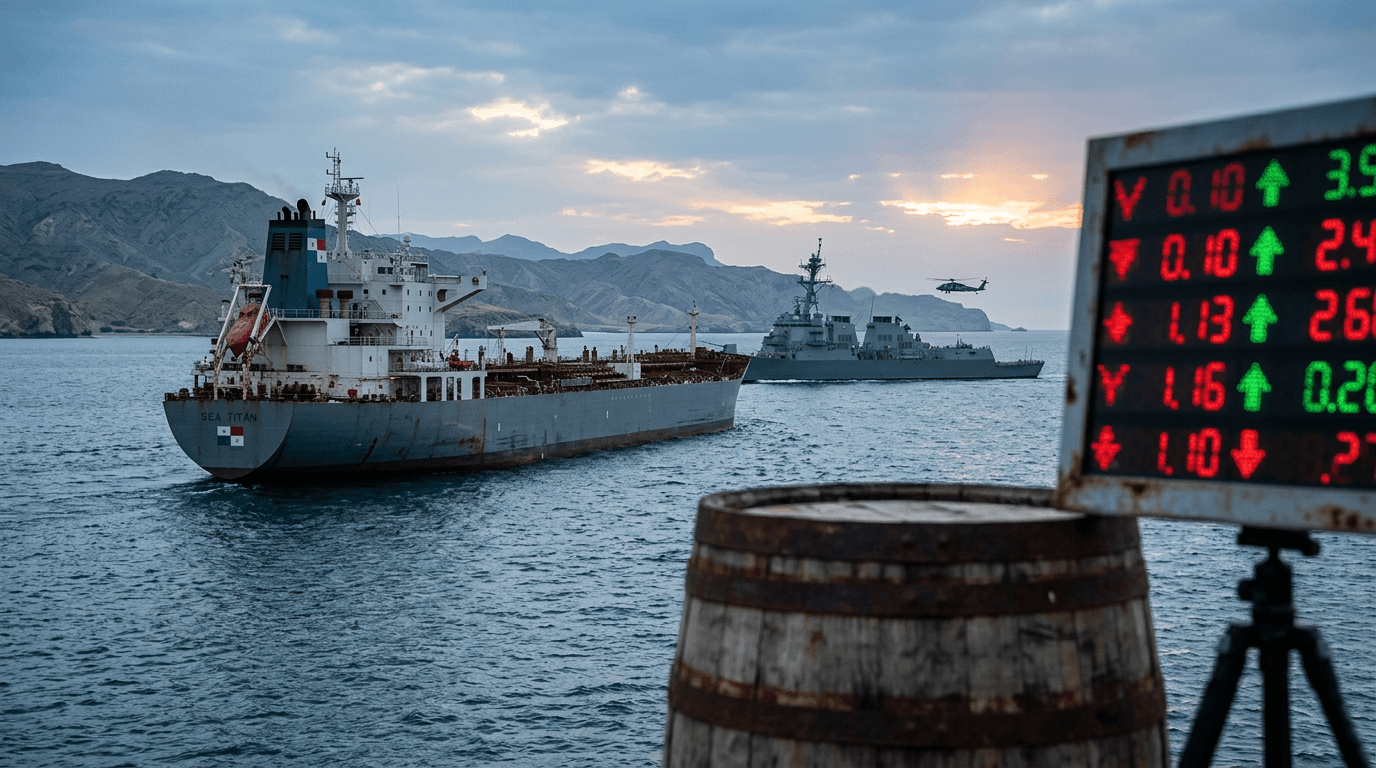
Crude oil markets have jolted higher on renewed US-Iran tensions, with West Texas Intermediate crude climbing to $81.64 per barrel and Brent crude reaching $85.85—marking the highest levels since the summer of 2024. This 9% surge reflects the market's immediate reaction to military escalation and the deployment of US military vessels escorting commercial shipping through the Strait of Hormuz, one of the world's most critical energy chokepoints. For traders, investors, and anyone monitoring global economic conditions, this price movement signals more than a simple commodity spike—it represents a collision between geopolitical risk and fragile energy markets that could have cascading effects across inflation, equity valuations, and supply chains worldwide.
What's Driving The Oil Price Surge
The Strait of Hormuz handles approximately one-fifth of global petroleum trade, making it arguably the most vital energy corridor on the planet. When tensions between the US and Iran escalate to the point where military escorts become necessary for commercial vessels, markets immediately price in disruption risk. The current tensions are creating a dual concern: the direct risk of physical supply disruption if the strait becomes impassable, and the secondary risk of regional infrastructure damage affecting multiple producers simultaneously.
What makes this situation particularly acute is that global oil markets are already operating under tighter-than-normal supply conditions. US rig counts have declined significantly over recent years, limiting America's ability to rapidly increase production to offset any Middle Eastern supply losses. This structural supply tightness means the market has less cushion to absorb geopolitical shocks. When a potential disruption threatens 20% of global supply—even as a tail risk rather than immediate certainty—crude prices respond dramatically. The 9% move in just a few days demonstrates how sensitized energy markets have become to Middle East tensions.
Inflation And Interest Rate Implications
Oil price volatility directly feeds into inflation concerns, and this matters enormously for monetary policy. Higher crude prices increase transportation costs across the economy, pushing up prices for trucking, shipping, and aviation. Refineries face elevated diesel and jet fuel costs, which then ripple through supply chains affecting everything from food to manufactured goods. The Argus crack spreads for refined products have already shown pressure, indicating that downstream energy products are following crude higher.
This inflation transmission mechanism creates a dilemma for policymakers and central banks. Supply-side shocks like energy disruptions are particularly tricky because they push inflation higher while potentially dampening economic growth—the stagflation scenario that markets fear most. If crude prices remain elevated for an extended period, bond markets may reprice interest rate expectations, affecting mortgage rates, corporate borrowing costs, and consumer purchasing power. Equity markets are already showing sensitivity to this risk, with stock indices retreating from recent highs as investors weigh the dual threat of higher inflation and potential economic slowdown.
Supply Chain Transmission Mechanisms
The impact of oil price increases extends far beyond the energy sector itself. Transportation and logistics costs rise immediately, affecting industries that depend on just-in-time supply chains. Manufacturing sectors particularly sensitive to energy costs—including chemicals, petrochemicals, and metals production—face compressed margins if they cannot pass through cost increases to customers. Aluminum prices could face particular upward pressure given that the Middle East is a major producer of this industrial metal.
Strategic Petroleum Reserve releases and temporary measures like naval escort coordination can provide some relief, but their impact tends to be limited relative to the size of global oil markets. The Trump administration's stated commitment to boosting oil supply through increased domestic production faces the practical constraint of limited spare rig capacity. Any meaningful production response could take months to materialize, leaving markets to navigate weeks or longer of potential supply uncertainty.
What Traders And Investors Should Watch
The key variable determining whether this becomes a sustained energy crisis or a temporary spike is duration. A rapid de-escalation could see prices moderate back toward $75-85 per barrel within a few weeks. An extended regional conflict could push Brent toward $110+ per barrel and create prolonged supply chain disruption. The distinction matters enormously for portfolio positioning and trading strategy.
Monitor Strait of Hormuz transit data closely—any actual closure would immediately validate market concerns and likely trigger sharp additional moves. Watch for OPEC policy responses, particularly whether Saudi Arabia and UAE signal willingness to increase output. Track Strategic Petroleum Reserve releases and government policy announcements, as these can provide temporary relief and signal confidence about the situation's trajectory. Finally, pay attention to equity market breadth—a significant unraveling in stocks would suggest markets are pricing in stagflation risk rather than viewing this as isolated energy volatility.
Navigating The Uncertainty
The current oil price surge reflects genuine supply-side risk in an already-tight market. Whether this becomes a major market-moving event depends heavily on what happens next with US-Iran tensions. Traders should maintain appropriate risk management positioning given the elevated tail risks in energy markets and the potential for significant downstream inflation effects.