
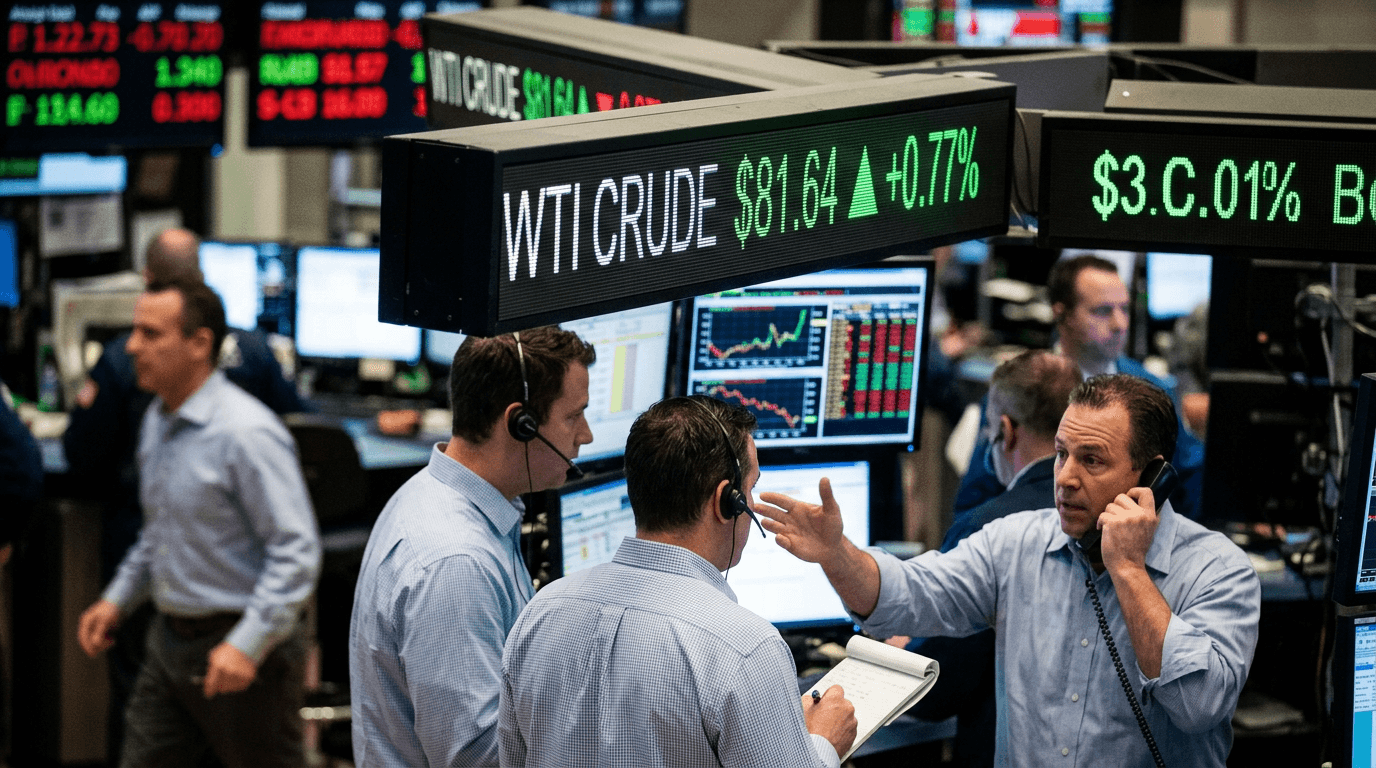
Oil prices are witnessing a dramatic surge, with crude reaching $81.64 per barrel, marking its highest since the summer of 2024. This spike, mirrored by Brent crude's rise to $85.85 per barrel, signals more than just a routine market fluctuation. It is a profound supply shock that has far-reaching implications for equity markets, inflation trends, and overall economic stability. Understanding the underlying causes and implications of these changes is crucial for traders and investors aiming to navigate the volatile landscape ahead.
The Supply Shock Reality
The recent surge in oil prices is rooted in escalating military tensions between the United States and Iran, which have disrupted critical energy supply routes. Iranian military actions have targeted oil facilities and shipping routes, while U.S. airstrikes have added to the tension. A pivotal development is the closure of the Strait of Hormuz by Iran, a strategic chokepoint that handles about 20% of the world's daily oil flow.
Unlike previous price hikes driven by market speculation, this surge stems from tangible infrastructure damage. Iranian strikes have severely impacted oil refineries, incapacitating them from meeting supply commitments. Current estimates suggest that military operations have removed around 10 to 11 million barrels per day from global markets. Considering that the world trades approximately 100 million barrels daily, this represents a staggering 10% disruption—a shock that the market cannot easily compensate for with existing resources or alternative supplies.
The physical oil market is under immense pressure. Asian refiners are paying unprecedented premiums for alternative sources, with Norwegian Johan Sverdrup crude commanding an $11.80 per barrel premium over Brent. This desperation highlights the acute scramble for energy stability amidst market chaos.
The Inflation Transmission Mechanism
Energy costs are one of the fastest pathways for inflation to seep into consumer prices, and this surge is already evident in the U.S. economy. Gasoline prices have jumped to $3.25 per gallon, up 9% from $2.98 a week earlier. The trend is worrisome, with prices hitting $3.58 per gallon by mid-March—a 60-cent rise in just one month. In some areas, prices have exceeded $4 per gallon, levels not seen since August 2022.
This energy shock arrives at a critical juncture for monetary policy. Recently, markets anticipated Federal Reserve rate cuts due to easing inflation expectations. However, rising energy costs challenge this notion, as they feed into transport, manufacturing, and consumer budgets. This inflation is particularly persistent because it stems from real supply constraints, not just demand fluctuations.
What This Means For Traders
The recent equity market downturn is a reflection of genuine concerns over stagflation—the dreaded mix of stagnant growth and ongoing inflation. Energy shocks not only increase corporate costs but also dampen consumer spending, slow economic activity, and raise financing expenses. Markets are adjusting to these realities.
Traders should note that the current oil dynamics are grounded in real supply disruptions, lending weight to sustained energy cost elevation. Inflation implications are challenging narratives of economic softening and easier monetary policy. Equity market weakness reflects real economic concerns, not mere panic. By distinguishing between temporary noise and structural shifts, traders can better position their portfolios.
Attention should be directed towards defensive sectors, commodities, and inflation-hedging strategies. Conversely, highly leveraged financial plays and growth stocks reliant on low interest rates face significant challenges.
Government Intervention: A Limited Tool
In response to the crisis, authorities are attempting to stabilize markets. The International Energy Agency has announced a release of 400 million barrels from strategic reserves, with the U.S. contributing 172 million barrels over four months. This represents an extraordinary policy intervention to counter supply disruptions and temper price rises.
Despite these efforts, interventions are limited by timing constraints. Strategic reserve releases unfold over months, while geopolitical tensions can fluctuate rapidly. Officials express optimism about declining oil prices, yet the duration of military conflict remains uncertain. If prices approach or exceed $100 per barrel, the global economy may struggle to cope.
Key Takeaways For Your Strategy
We are at a crucial juncture in market dynamics. Energy markets are adjusting to genuine supply constraints, inflation concerns are re-emerging in policy debates, and equity valuations are shifting. Traders must discern between short-term volatility and fundamental changes. Position strategically, stay informed on geopolitical developments, and reevaluate interest rate forecasts. The era of easy monetary conditions and abundant energy supply is facing significant challenges.
---