
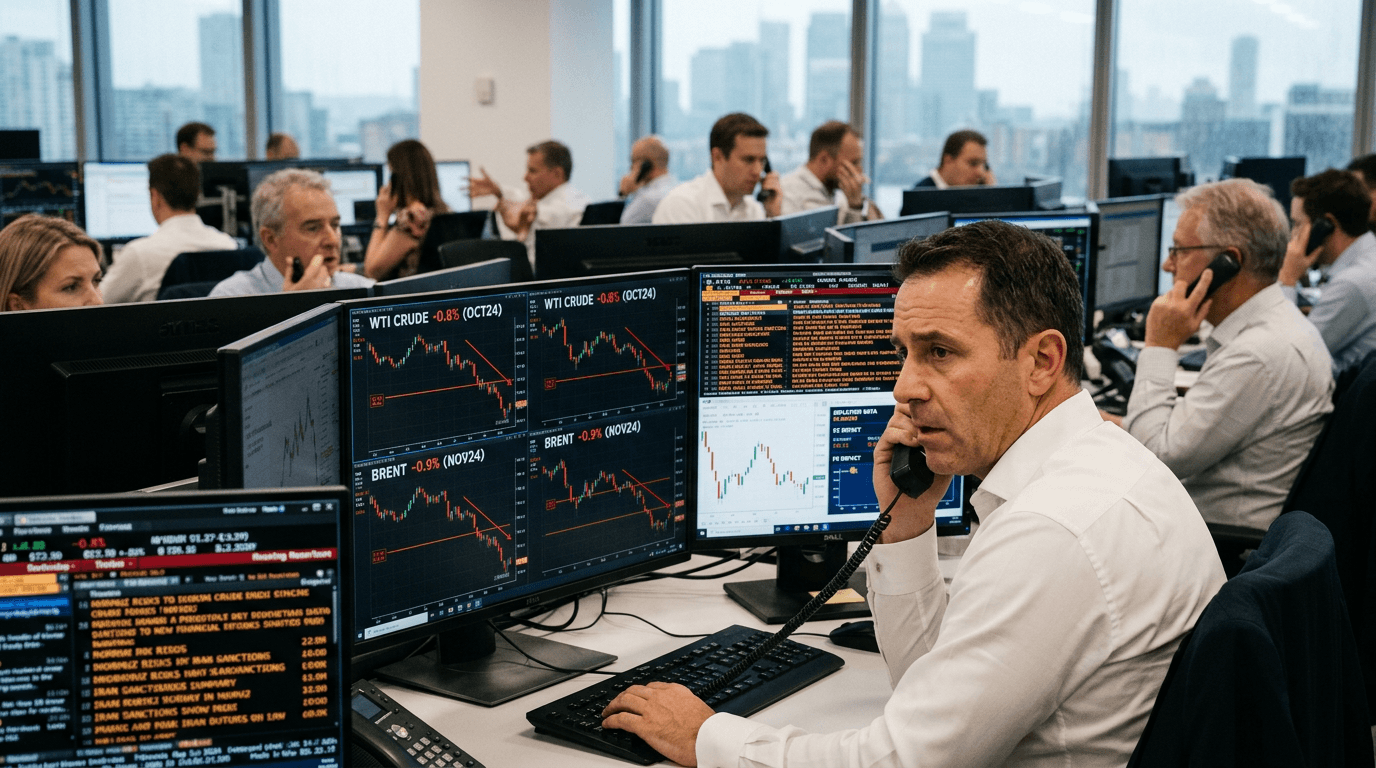
Oil futures have slipped back from recent highs, with WTI drifting below the psychologically important 85-dollar mark and Brent falling under 91 dollars, even as geopolitical risk in the Middle East remains unresolved.[2][6][8][9] For traders, this combination of softer prices and elevated risk is a reminder that markets often reprice sentiment faster than underlying fundamentals change.[4][10]
Market Pullback After A Strong Rally
Over recent months, crude rallied hard as the closure and disruption of flows through the Strait of Hormuz concentrated attention on supply security and pushed benchmarks into or near triple-digit territory.[1][10][11][14] That rally reflected a classic risk premium: markets paid up for barrels because roughly 20% of global oil exports and significant LNG volumes transit this narrow chokepoint.[5][12][15] As diplomatic signals around Iran and regional tensions have intermittently improved, traders have started to unwind part of that premium, allowing prices to ease back toward pre-crisis levels.[6][9][11]
The current pullback is not simply about demand softness or a sudden return of surplus supply; it is about shifting probabilities assigned to worst-case scenarios.[1][4][10] When headlines hint at ceasefires, provisional truces or negotiation channels, algorithmic and discretionary flows both tend to reduce long exposure, pushing prices down rapidly.[6][9] Yet the underlying physical disruption through Hormuz and the sanctions regime around Iran’s exports are far from fully resolved, leaving energy markets exposed to renewed volatility.[4][5][10]
Geopolitical Risk Premium: Why It Remains Elevated
The Strait of Hormuz has been effectively closed or severely disrupted for large swathes of commercial shipping this year, resulting in a steep drop in vessel transits and forcing rerouting or delays in crude and gas deliveries.[4][13][15] Insurance costs, war-risk premia and crew safety concerns have all contributed to a structural constraint on flows, even when prices temporarily soften.[10][13] At the same time, sanctions targeting Iran’s oil exports, shadow fleet operations and broader economic activity continue to limit the country’s ability to normalize supply to global markets.[7][12]
From a risk-management perspective, this means the “tail risk” of a fresh supply shock is still very much in play, even if spot prices are off the highs.[1][4][11] A prolonged closure or escalation affecting Hormuz could quickly reverse the current easing and send Brent and WTI back toward, or above, recent peaks.[1][5][10] Traders should therefore think of the current environment not as a clean return to stability, but as a repricing phase within an ongoing geopolitical regime.[4][11]
Implications For Energy-linked Fx
For energy-linked currencies like the Canadian dollar (CAD) and Norwegian krone (NOK), the shift in oil futures represents more than a headline move; it directly affects terms of trade, revenue expectations and investor positioning. When crude surged on Hormuz-related risk, these currencies tended to firm as markets priced stronger export receipts and improved fiscal balances.[4][5][15] As prices ease back below key levels, that tailwind can fade, especially if broader global growth indicators are mixed or risk appetite is fragile.[6][9]
The nuance is that FX does not respond only to spot prices but to the shape of the futures curve and perceptions of durability.[8][10] If traders believe that the current pullback is temporary and that risk premia will re-expand on fresh tensions, CAD and NOK may remain relatively supported compared with non-energy peers.[1][4] Conversely, if diplomatic progress around Iran becomes credible and Hormuz disruption is steadily reduced, the structural upside for these currencies could moderate, even if they still benefit from longer-term energy demand.[4][10][12]
Inflation Expectations, Bonds And Equity Futures
Energy prices feed into inflation expectations and, by extension, into bond markets and equity index futures that embed assumptions about growth, margins and policy rates.[4][15] The initial Hormuz shock, with its sharp reduction in ship transits and rapid rise in fuel and freight costs, raised concerns about renewed global inflation pressure.[13][15] Fixed-income traders responded by adjusting breakeven inflation rates higher, while equity investors reassessed sectors sensitive to energy and transport costs.[4][15]
As WTI and Brent ease back below recent thresholds, some of those inflation worries can abate, at least at the margin.[2][6][8][9] Lower energy prices tend to relieve pressure on household budgets and corporate input costs, supporting real incomes and earnings in the near term.[4][15] However, with the strait still not fully normalized and sanctions risk unresolved, inflation expectations are unlikely to fall back to pre-crisis lows quickly; markets recognize that another flare-up could push prices higher again, keeping central banks cautious.[4][10][11]
For equity index futures, this translates into a delicate balance: lower oil can help broad indices via cost relief, but sustained geopolitical risk keeps volatility elevated and caps valuations in energy-sensitive sectors.[4][15] Sector rotation—between energy producers, refiners, transport, and consumer-facing names—remains an active theme for index and single-stock traders alike.[4][10]
How Traders Can Navigate This Environment
In a simulated finance environment or live markets, traders need to differentiate between price action driven by sentiment and changes rooted in fundamentals. The recent slide below key price levels reflects a partial unwinding of extreme risk pricing, not a complete resolution of Middle East tensions or sanctions frameworks.[6][9][12] Scenario analysis—ranging from rapid de-escalation and reopening of Hormuz to prolonged disruption or renewed military escalation—can help structure trades in oil, FX and rates.[1][4][10]
Practically, that means monitoring not only spot prices but also spreads between near and deferred futures, option-implied volatility and cross-asset correlations with energy-linked FX and inflation breakevens.[8][10][15] Traders can use simulated strategies to test how portfolios respond to renewed risk premia, such as a sudden spike in Brent back above 100 dollars, or to a slow normalization in shipping flows and sanctions relief.[1][5][11] Keeping position sizes aligned with clearly defined scenarios and time horizons is critical in an environment where headlines can drive rapid repricing.[4][10]
Conclusion: Volatility Without Resolution
Oil futures easing below key levels after a powerful rally might suggest to casual observers that the crisis is fading, but the reality is more complex.[2][6][8][9] The risk premium has compressed, yet the underlying drivers—disruption in the Strait of Hormuz, sanctions on Iran, and broader regional instability—remain unresolved and capable of reigniting volatility.[4][5][10][12] For traders, investors and policymakers, this is a phase of volatility without definitive resolution, where vigilance and scenario-based thinking matter more than chasing every price swing.[1][4][11][15]