
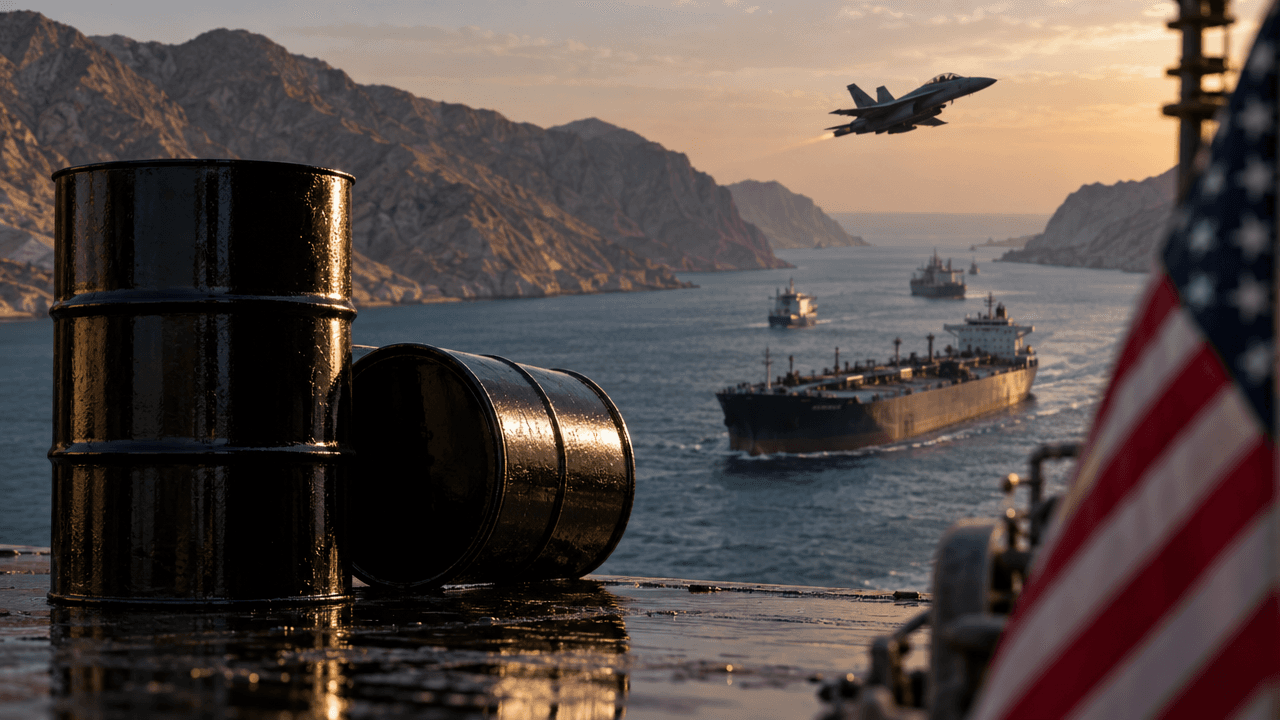
Oil rebounded sharply after reports that the United States had carried out a strike on Iran’s Qeshm Island, highlighting how quickly geopolitical developments can reshape energy markets. Brent crude rose about 1.7% to approximately $106.60 per barrel, while West Texas Intermediate gained roughly 1.7% to around $98.10. The move partially reversed the previous session’s steep decline, when optimism about possible diplomatic progress had pushed oil prices lower. [1]
The price reaction was not simply a response to one military operation. It reflected renewed uncertainty over supply security, shipping routes, and the possibility that tensions could escalate around the Strait of Hormuz. For traders, the episode is a reminder that oil markets price expectations as much as physical barrels. When the outlook changes suddenly, volatility can rise faster than prices themselves.
Geopolitical Risk Returns To The Oil Market
Qeshm Island sits near the Strait of Hormuz, one of the world’s most strategically important energy corridors. During peacetime, approximately one-fifth of global oil supplies pass through the waterway, making any military activity in the area highly significant for energy traders and policymakers. [6]
Reports indicated that the strikes were intended as a defensive measure to prevent Iranian forces from threatening commercial shipping. Iranian state media reported explosions on Qeshm and nearby locations, while U.S. officials described the operation as limited. [10]
The distinction between a limited strike and a broader military campaign matters greatly to markets. A contained operation may create a temporary risk premium that fades if shipping continues normally and diplomatic channels remain open. A wider confrontation, however, could threaten tankers, port facilities, pipelines, and export infrastructure.
That uncertainty explains why prices can move sharply in both directions. On Monday, oil reportedly fell more than 7% as investors focused on the possibility of renewed talks and the reopening of the Strait. The following day, the reported strike forced markets to reconsider whether a diplomatic resolution was as close as previously believed. [8]
Why The Strait Of Hormuz Matters
The Strait of Hormuz is a narrow maritime passage connecting the Persian Gulf with the Gulf of Oman and the Arabian Sea. It is particularly important because several major oil-producing countries rely on nearby export terminals to reach global customers.
Any disruption could affect more than crude oil. Refined products, liquefied natural gas, shipping insurance, tanker availability, and freight costs could all respond to heightened risk. Even if physical supply is not immediately lost, companies may reroute vessels, delay shipments, or demand higher insurance premiums.
For oil traders, the key question is not only whether the Strait is closed. The market also watches for partial disruptions, inspections, mine threats, attacks on vessels, and restrictions that slow traffic. A modest reduction in daily shipments can have an outsized psychological effect when inventories are tight or when participants are already concerned about the geopolitical outlook.
The reported U.S. action therefore raised concerns about prolonged supply disruption, even as Iran discussed a plan to reopen the waterway and resume nuclear talks with Washington. [6] Markets must balance these opposing forces: the immediate threat of escalation and the possibility that negotiations eventually reduce the risk premium.
From Crude Prices To Inflation And Currencies
Higher oil prices can spread quickly through the broader economy. Fuel costs influence transportation, manufacturing, agriculture, air travel, and household spending. If an energy shock persists, headline inflation may rise even when underlying demand is weakening.
Central banks face a difficult trade-off in that environment. They cannot directly create more oil, but they may need to consider whether higher energy prices are feeding into wages and consumer expectations. A temporary price spike may have limited policy consequences. A sustained increase can complicate interest-rate decisions and delay expected monetary easing.
Currencies may also react. Oil-importing economies can face pressure as their energy bills increase, particularly if their currencies weaken against the U.S. dollar. Oil-exporting nations may receive stronger trade revenues, although that benefit can be offset by political and security risks.
Equity futures are vulnerable as well. Energy companies may benefit from higher crude prices, while airlines, transportation firms, chemical manufacturers, and consumer businesses may face margin pressure. Investors often rotate toward energy and defensive sectors when geopolitical risk rises, but that response can reverse quickly if negotiations improve.
What Traders Should Watch Next
The next market moves will depend on evidence rather than headlines alone. Traders should monitor whether commercial shipping through the Strait continues, whether additional strikes are reported, and whether Iran or the United States changes its public position.
The forward curve is also important. If near-term futures rise more than longer-dated contracts, the market may be pricing an immediate supply scare rather than a lasting shortage. A sustained backwardation, in which nearby contracts trade above later deliveries, can signal stronger urgency for prompt barrels.
Options markets offer another window into sentiment. Rising implied volatility indicates that traders are paying more for protection against large price swings. However, elevated volatility does not identify the direction of the next move. Prices can jump higher on escalation and fall rapidly on a ceasefire announcement.
For SimFi traders, risk management should take priority over prediction. Reduce position size when headline risk is elevated, define stop levels before entering a trade, and avoid using excessive leverage during illiquid periods. It can also be useful to track correlated markets, including natural gas, the U.S. dollar, inflation-sensitive bonds, energy equities, and transportation stocks.
The Bigger Lesson For Simfi Traders
The oil rebound demonstrates why markets can reverse even when the underlying trend has not changed. Monday’s selloff reflected hopes for de-escalation; Tuesday’s recovery reflected renewed fears about conflict and supply. Neither move necessarily established a durable direction.
A disciplined trader separates the event from the reaction. The event is the reported strike and the resulting threat to regional stability. The reaction is the jump in crude prices, volatility, and cross-asset correlations. The trading opportunity, if one exists, comes from evaluating whether that reaction is likely to continue, fade, or become more extreme.
For now, the market is balancing diplomatic hopes against the possibility of a wider confrontation. Until there is greater clarity around shipping, negotiations, and further military action, oil is likely to remain highly sensitive to every new headline. The most valuable edge may not be forecasting the next barrel move, but managing exposure when the market’s range of possible outcomes is unusually wide.