
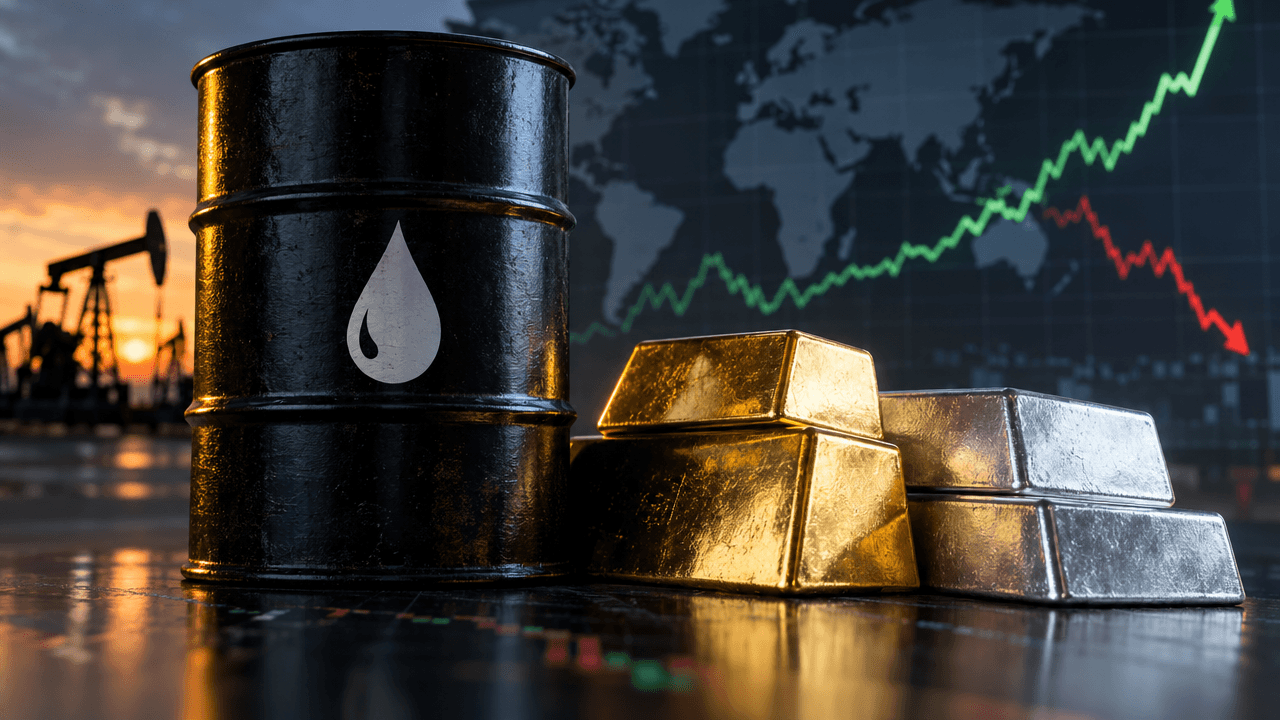
Oil and precious metals delivered sharply different messages in the latest market session. Crude prices climbed more than 2%, while spot silver dropped about 6.1% and gold declined roughly 3.5%. Oil’s advance reflected renewed concern about disruptions to Gulf energy supplies, while precious metals faced liquidation pressure as investors reduced risk across markets. [1]
The split is important because commodities do not always move together. Oil is primarily responding to supply, demand, and geopolitical risks. Gold and silver are also influenced by interest rates, currency movements, market liquidity, and investor positioning. When these forces pull in opposite directions, volatility can rise quickly across currencies, bonds, equities, and commodity-linked assets.
What Drove The Divergence
The latest oil rally was linked to another tanker attack in the Strait of Hormuz and concerns that energy shipments from the Gulf could be disrupted. Crude futures reached their highest settlements since late April as traders reassessed the possibility of tighter near-term supply. [1]
Oil prices often rise when traders price in geopolitical risk because even a temporary disruption can affect inventories, shipping costs, and refinery supply. The market does not need an immediate loss of production to rally. A credible threat to transportation routes can be enough to lift prices as buyers hedge against future shortages.
Precious metals faced a different set of pressures. Gold and silver were caught in a broader technology-led equity selloff, prompting investors to liquidate profitable or liquid positions to cover losses elsewhere. Falling Treasury yields and geopolitical uncertainty normally provide support for gold, but those benefits were overwhelmed by the need for cash and the unwinding of crowded trades. [1]
Silver was hit harder because it combines monetary and industrial characteristics. In addition to serving as a precious metal, silver is used in electronics, solar equipment, and other manufacturing applications. Concerns about equity valuations, industrial demand, and restrictive financing conditions can therefore weigh on silver more heavily than on gold. [1]
Inflation And Interest-rate Expectations
Higher oil prices can complicate the outlook for central banks. Energy is a major input into transportation, manufacturing, heating, and consumer goods. If crude remains elevated, headline inflation may become more persistent, even if underlying price pressures are moderating.
That can encourage investors to expect interest rates to remain higher for longer. Higher yields increase the opportunity cost of holding non-yielding assets such as gold and silver. A stronger U.S. dollar can add another layer of pressure because precious metals priced in dollars become more expensive for international buyers.
The relationship is not automatic. Gold can rise alongside oil when investors focus primarily on geopolitical risk or currency debasement. However, the latest move shows how quickly inflation concerns can change the market’s interpretation of a geopolitical shock. Instead of buying gold as a traditional haven, investors sold metals as higher energy prices reinforced expectations for restrictive monetary policy.
What It Means For Currencies
The oil rally may create support for currencies linked to energy exports, including the Canadian dollar and Norwegian krone, provided their domestic economies and central-bank expectations remain stable. Higher export revenues can improve trade balances and increase demand for those currencies.
Importing economies may face the opposite pressure. More expensive energy raises the cost of imports and can weaken consumer purchasing power. Emerging-market currencies with large energy deficits may become more vulnerable if oil remains high and the U.S. dollar strengthens at the same time.
Currency traders should avoid treating commodity relationships as fixed rules. Interest-rate differentials, political risk, fiscal conditions, and broad market sentiment can overpower the impact of oil prices. The most useful approach is to monitor whether the oil move is temporary or part of a sustained trend.
Practical Takeaways For Traders
First, separate the catalyst from the asset. Oil is currently reacting to supply and geopolitical risk, while gold and silver are responding more directly to liquidity, yields, and positioning. A single headline may therefore produce opposite moves across commodities.
Second, watch Treasury yields and the U.S. dollar. If oil rises while yields and the dollar also move higher, precious metals may remain under pressure. If yields fall and the dollar weakens, gold may recover even if energy prices stay elevated.
Third, treat silver as a higher-volatility instrument. Its industrial exposure can amplify both gains and losses. A six-percent decline in one session demonstrates why position sizing and predefined risk limits are essential.
Fourth, avoid chasing the first reaction. Geopolitical markets can reverse rapidly when diplomatic developments change the perceived probability of supply disruption. Traders should distinguish between a short-lived risk premium and a genuine deterioration in physical energy availability.
For SimFi traders, this environment is especially useful for practicing cross-market analysis without exposing real capital. Track oil, gold, silver, the U.S. dollar, and Treasury yields together. Record the news catalyst, the initial price reaction, and what happened after several hours. This process can reveal whether a move was driven by fundamentals, forced liquidation, or changing rate expectations.
The Broader Market Lesson
The latest session demonstrates that defensive assets do not always rise together. Oil’s rally highlighted supply risk, while precious metals’ selloff exposed the importance of liquidity and interest-rate expectations. In stressed markets, investors may sell even traditionally defensive holdings when they need cash or reduce leverage.
The key question now is whether oil can sustain its gains without causing a broader inflation shock. If supply concerns fade, crude could give back its risk premium and relieve pressure on metals. If disruptions persist, markets may face a more difficult combination of higher energy prices, firmer inflation expectations, and tighter financial conditions.
For traders, the best response is not to predict every headline. It is to understand the forces behind each market, manage exposure carefully, and remain flexible when correlations break down. Divergence is not merely noise; it is information about what investors fear most.