
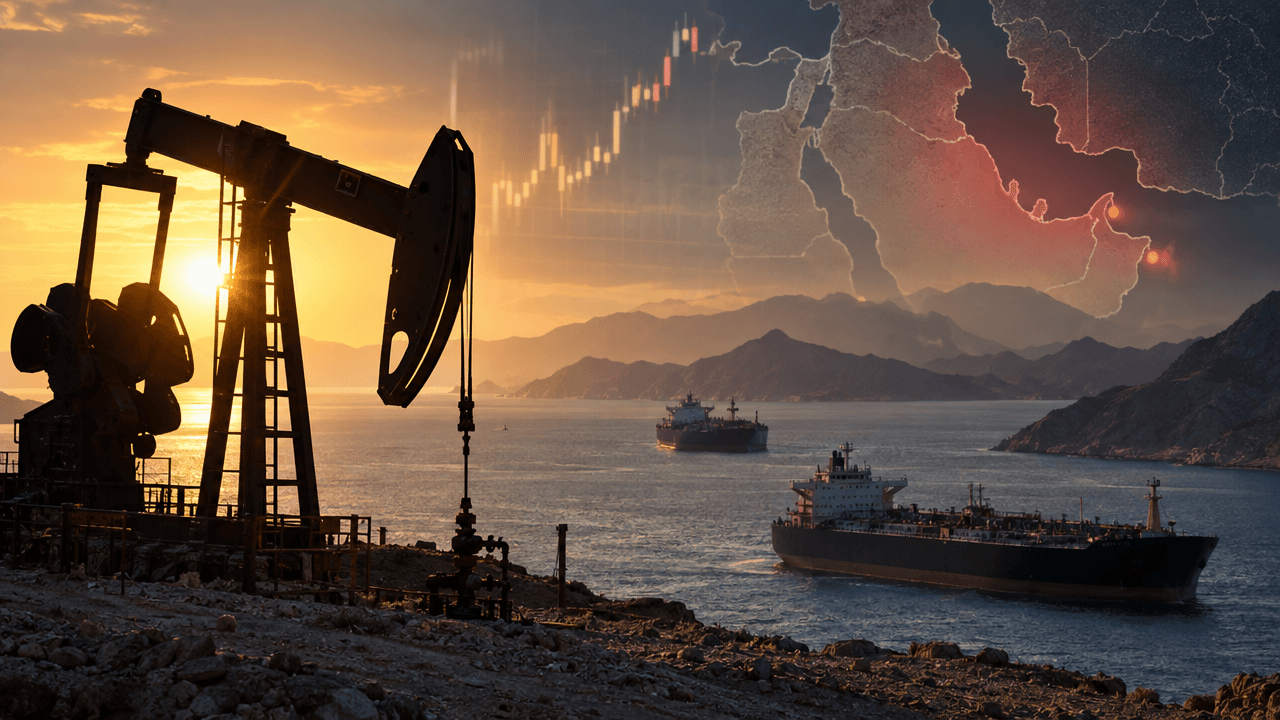
Oil prices climbed roughly 1.75% to around $103.50 as renewed concerns over the Gulf and Strait of Hormuz increased the perceived risk of supply disruption. The move is more than a routine commodity-market rally: it adds another challenge for economies already dealing with elevated prices and makes it harder for central banks to deliver interest-rate relief.
Why The Strait Of Hormuz Matters
The Strait of Hormuz is one of the world’s most important energy chokepoints. A significant share of globally traded crude oil, refined products, and liquefied natural gas passes through the narrow waterway. Any threat to shipping, port infrastructure, or tanker insurance can quickly raise prices, even before physical supplies are lost.
Markets price risk before disruption becomes reality. When traders believe vessels may face delays, attacks, or restricted passage, they typically demand a larger risk premium. That premium can push benchmark prices higher because buyers compete for alternative cargoes and sellers account for the possibility that future shipments may become more difficult or expensive.
The result is a market that can move sharply on headlines. A temporary security concern may lift prices for a few sessions, while a prolonged disruption could create a more persistent supply shock. The difference will depend on the duration of the risk, the availability of spare production capacity, and whether exporters can reroute cargoes through alternative channels.
How Higher Oil Prices Feed Inflation
Oil affects inflation through several channels. The most direct impact appears in fuel prices, including gasoline, diesel, and aviation fuel. Transportation companies then face higher operating costs, which can influence freight rates and the price of goods delivered to consumers.
Energy is also an important input for manufacturing, agriculture, chemicals, plastics, and heating. Higher fuel and electricity costs can therefore spread beyond the energy category and affect core goods and services. Businesses may initially absorb some of the increase, but sustained pressure can eventually lead to higher prices for customers.
There is also a psychological effect. If households and companies expect energy costs to remain elevated, workers may seek higher wages and businesses may adjust prices more frequently. These second-round effects are what central banks watch most closely. A temporary increase in gasoline prices may fade from official inflation data, but persistent increases in wages and services can make inflation harder to control.
Recent analysis has highlighted the scale of the risk: a prolonged disruption could push oil above $100 per barrel and raise inflation in major developed economies by roughly half a percentage point. [7]
The Central Bank Dilemma
Higher oil prices create a difficult policy trade-off. Central banks cannot produce more crude oil or reopen a blocked shipping route by raising interest rates. Monetary tightening mainly reduces demand by making borrowing more expensive and slowing economic activity.
However, policymakers must prevent a temporary energy shock from becoming embedded in inflation expectations. If inflation remains above target for longer, officials may postpone rate cuts, keep rates higher for an extended period, or in extreme circumstances consider additional increases.
That means markets may need to reassess expectations for monetary easing. Investors who had anticipated lower rates could face a reversal if energy prices continue rising and inflation data deteriorates. Bond yields may move higher, while interest-rate-sensitive sectors such as technology, housing, and consumer discretionary stocks may come under pressure.
The risk is a stagflationary combination: slower growth alongside higher prices. Energy-importing economies are particularly exposed because they pay more for essential fuel while sending more income abroad. Oil-producing countries may benefit from stronger export revenue, although their broader economies can still suffer if geopolitical tensions weaken global demand.
What Traders Should Watch
The first indicator is the duration of the disruption risk. A one-day price spike is less consequential than a sustained rally accompanied by tighter physical supply. Traders should monitor tanker traffic, shipping insurance costs, port activity, and official statements from governments and energy agencies.
The second is the shape of the oil futures curve. Rising near-term prices can signal immediate supply anxiety, while strength across several contract maturities suggests that traders expect the problem to last. Volatility measures and options pricing can also reveal whether demand for protection is increasing.
The third is the response from central banks. Statements that emphasize “transitory” energy effects may support risk assets if policymakers look through the shock. By contrast, warnings about second-round inflation effects could reinforce expectations for higher-for-longer interest rates.
Finally, traders should track the dollar, inflation-linked bonds, and energy equities. Oil often benefits from geopolitical risk, while a stronger dollar can limit gains because crude is priced in dollars. Energy producers may outperform, but their shares can also become vulnerable if prices rise high enough to damage economic growth.
Practical Takeaways
The latest move toward $103.50 is a reminder that oil markets are driven by both physical fundamentals and geopolitical risk. Traders should avoid treating every headline as proof of a lasting shortage, but they should also recognize that the Strait of Hormuz gives relatively small disruptions the potential to produce outsized market reactions.
Risk management is especially important in this environment. Position sizes should reflect the possibility of rapid price gaps, and stop-loss levels should account for volatility rather than normal market conditions. Diversification across asset classes can reduce exposure to a single geopolitical outcome.
For macro-focused traders, the key question is no longer simply whether oil rises. It is whether higher energy costs begin influencing wages, services, inflation expectations, and central-bank guidance. If those broader effects emerge, the market impact could extend well beyond crude futures.
Conclusion
Oil’s latest advance highlights how quickly geopolitical risk can become an inflation problem. Continued Gulf and Hormuz concerns could keep a floor under crude prices, challenge expectations for interest-rate cuts, and increase volatility across currencies, bonds, equities, and commodities.
The most important variable is persistence. If shipping conditions stabilize and supply flows recover, the inflation shock may gradually fade. If disruption risks remain elevated, policymakers may be forced to choose between supporting growth and protecting price stability. For traders, that uncertainty makes disciplined risk management and close attention to market signals more important than attempting to predict the next headline.