
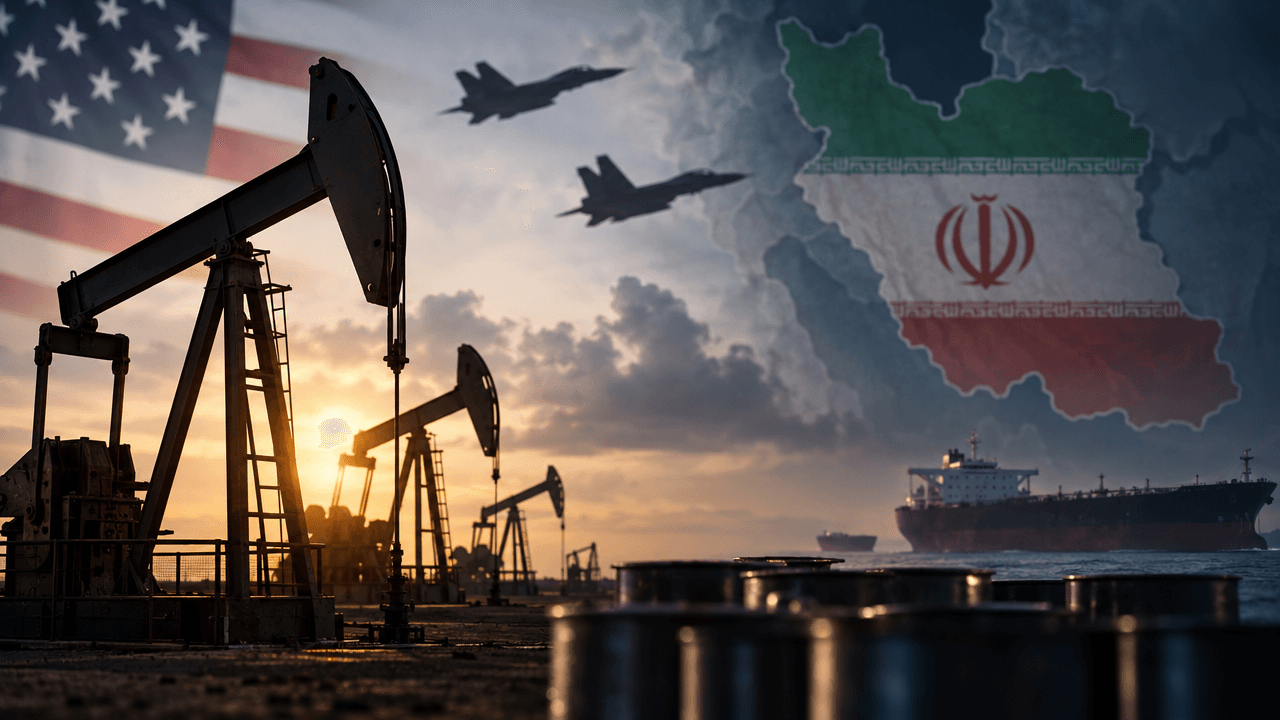
Oil prices are rising as traders price a renewed geopolitical risk premium into crude markets. Brent crude was recently around $90.72 per barrel, gaining roughly 1.5%, as concerns over possible U.S. strikes on Iran and disruption around the Strait of Hormuz outweighed signs of improving supply. The move illustrates how quickly energy markets can react when the security of a major transportation route comes into question. [7]
Geopolitical Risk Returns To The Oil Market
The Strait of Hormuz is one of the world’s most important energy chokepoints. Large volumes of crude oil and refined petroleum products move through the waterway each day, connecting producers in the Persian Gulf with buyers across Asia, Europe, and other regions.
Any threat to shipping through the strait can immediately affect prices, even before physical supply is lost. Traders typically respond by purchasing futures contracts, building precautionary inventories, or increasing exposure to companies and products that may benefit from tighter energy markets.
That reaction is visible in the latest price move. Potential U.S. military action against Iran has raised fears that tensions could spread across the region. A direct escalation could affect tanker traffic, export terminals, production facilities, or insurance costs for vessels operating near the conflict zone.
The market does not need a full supply interruption to become volatile. Delays, rerouted tankers, higher freight rates, and increased shipping insurance can all raise the delivered cost of oil. The resulting uncertainty is often reflected in prices through a risk premium.
Supply Recovery Limits The Rally
Although geopolitical concerns are supporting crude, the market is not facing an unquestioned supply shortage. Oil flows from the Middle East have been recovering, with shipments through the Strait of Hormuz reportedly returning close to pre-conflict levels. That recovery has helped ease fears of an immediate global deficit. [6]
Expectations of abundant supply are therefore limiting the upside. The International Energy Agency has indicated that the oil market could move into surplus as Middle Eastern exports recover faster than global demand. A larger supply cushion gives refiners and consumers more flexibility, reducing the need to bid aggressively for available barrels. [3]
This creates a tug-of-war between two forces. Geopolitical developments encourage traders to price in potential shortages, while recovering production and exports suggest that any disruption may be temporary or manageable.
For crude prices to sustain a major rally, the market would likely need evidence that supply losses are both substantial and prolonged. A single attack or military warning may cause a sharp short-term spike, but prices can retreat if shipments continue and diplomatic efforts reduce the risk of escalation.
Inventories And Demand Remain Important
U.S. inventory data is another factor restraining oil prices. Recent builds in crude stocks have reinforced concerns that supply is outpacing demand in parts of the market. Higher inventories generally indicate that refiners and end users are receiving more oil than they currently need, weakening the immediate pressure on prices. [4]
Inventory trends can also reveal how much resilience exists in the system. If storage levels are rising while imports and domestic production remain firm, consumers may be able to absorb a temporary disruption without sharply increasing bids. Conversely, falling inventories would make the market more sensitive to any geopolitical shock.
Demand expectations matter as well. Slower economic growth, restrictive financial conditions, and seasonal changes in fuel consumption can reduce the amount of crude required by refiners. If demand growth weakens while exports recover, the market’s surplus could become more visible.
This is why traders are watching more than the daily price change. They are also assessing refinery activity, gasoline and distillate demand, tanker movements, export data, and forward prices. Together, these indicators help determine whether a rally reflects lasting fundamentals or temporary fear.
What Traders Should Watch Next
The first priority is the security of commercial shipping around the Strait of Hormuz. Reports of tanker attacks, mine incidents, naval activity, or restrictions on transit could quickly push prices higher. Confirmation that vessels are moving normally would likely reduce the risk premium.
Second, traders should monitor official statements from the United States, Iran, Gulf producers, and international maritime organizations. A change from threats to military action could produce a rapid repricing across crude, refined products, currencies, and global equity markets.
Third, inventory releases will help determine whether the physical market is tightening or loosening. Continued stock builds would challenge the bullish case, while unexpected draws could amplify the impact of geopolitical headlines.
Finally, market participants should pay attention to the shape of the futures curve. A move into backwardation, where near-term contracts trade above later ones, can signal stronger immediate demand or concern about prompt supply. A contango structure, with later contracts priced higher, may indicate comfortable availability and rising storage incentives.
Practical Takeaways For Simfi Traders
Simulated finance traders should avoid treating a geopolitical headline as an automatic signal to buy oil. Instead, consider the direction of the initial move, the size of accompanying volume, and whether related assets confirm the story.
A sustainable oil rally may be supported by stronger energy equities, higher tanker rates, and tighter near-term futures pricing. If crude rises while inventories remain high and the futures curve signals ample supply, the move may be more vulnerable to reversal.
Risk management is especially important during geopolitical events. Volatility can expand quickly, spreads can widen, and stop orders may execute at less favorable prices. Smaller position sizes, predefined loss limits, and scenario planning can help traders remain disciplined.
Oil’s latest advance is a reminder that markets constantly balance fear against fundamentals. Geopolitical tension can lift prices rapidly, but recovering supply, rising inventories, and uncertain demand can prevent a short-term rally from becoming a lasting trend. For traders, the most valuable edge is not predicting every headline. It is understanding which developments change the physical oil balance—and which merely create temporary noise.