
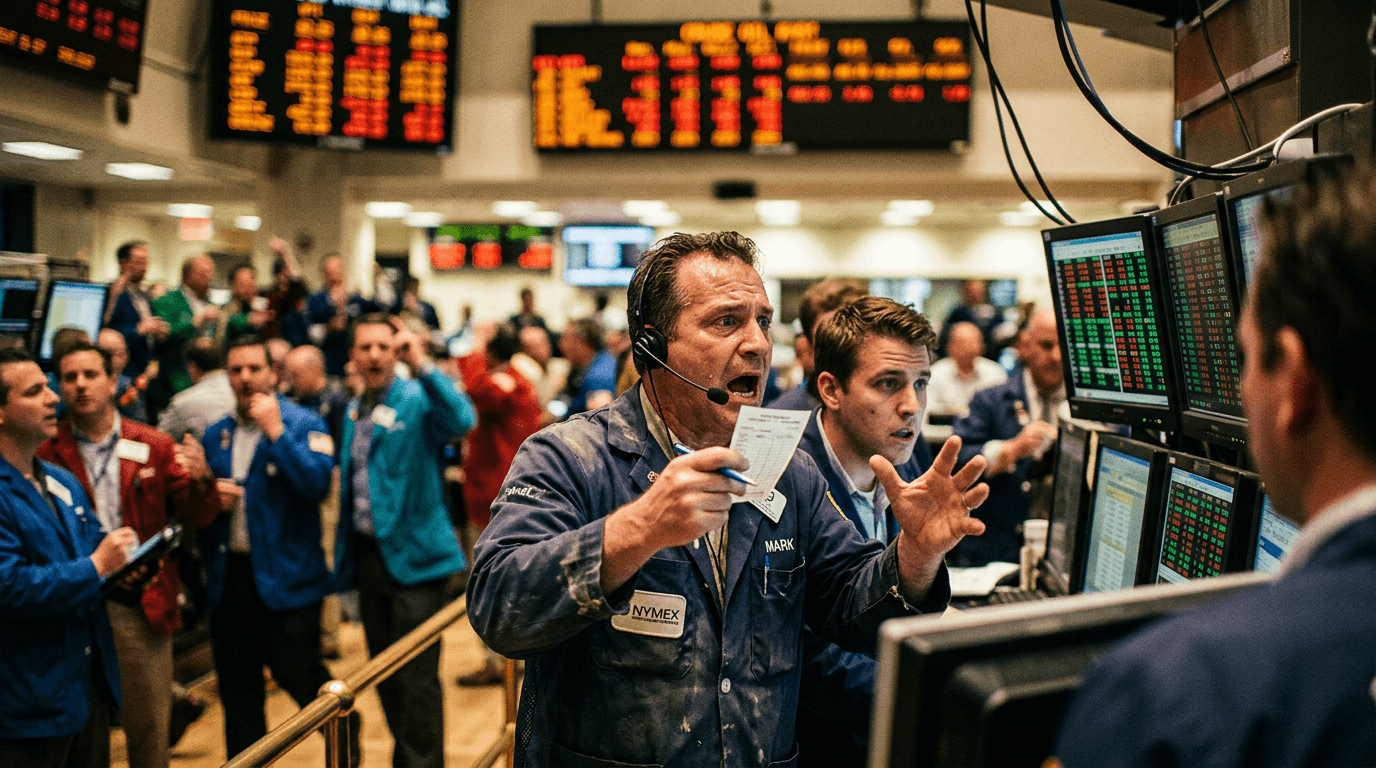
Oil markets are once again at the center of global macro risk, with crude futures surging more than 3–4% in early Globex trade after intensified U.S. strikes on Iran and a renewed declaration from Tehran that the Strait of Hormuz is closed to shipping. This move is not just an energy story; it is rippling across equity, FX, and rates markets as investors pivot into a risk-off stance and rapidly reprice inflation and interest-rate expectations.
Market Reaction: Oil Spike, Risk-off Flows
The immediate takeaway is straightforward: higher geopolitical tension in the Gulf is driving a sharp bid in oil and a broad de-risking across global assets. U.S. crude futures have already shown they can jump 3–6% in a single session when U.S.–Iran ceasefire assumptions break down and military strikes resume.[2][3][9] Renewed talk of Hormuz disruption is amplifying that move, pushing energy prices higher and putting pressure on U.S. equity futures as investors reassess growth and margin outlooks.
In parallel, risk-off flows are lifting the dollar and traditional safe havens as portfolios rotate out of cyclical and high-beta exposure. Episodes of escalated strikes and tanker attacks in the Strait of Hormuz have previously pushed investors into Treasuries and cash, while pushing up breakeven inflation and expectations that policy rates may need to stay higher for longer.[1] The current setup combines both elements: growth worries via risk assets, and inflation worries via the energy channel.
Why The Strait Of Hormuz Matters
To understand why markets react so violently to Hormuz headlines, it helps to appreciate the strategic importance of this narrow waterway. The Strait of Hormuz is the key chokepoint for a significant share of global seaborne crude and LNG exports; when Iran threatens closure or disrupts tanker traffic, the market must quickly price in the risk of supply bottlenecks and rerouting.
Historically, even the threat of partial closure has been enough to send Brent and WTI sharply higher as traders factor in the probability of reduced flows, higher shipping costs, and potential physical shortages.[3][7] In recent episodes, U.S. and allied strikes in response to tanker attacks have been followed by sizeable rallies in both benchmarks, with Brent up 5–6% and WTI 4–6% on some days.[3][7][9] The latest renewed closure declaration effectively reopens that playbook in traders’ minds.
For energy-importing economies, sustained higher crude prices translate into higher input costs, weaker real incomes, and pressure on corporate margins. That is why oil shocks are so closely watched by equity and FX markets: they can quickly morph from a commodity story into a broader macro headwind.
Ripple Effect Across Asset Classes
The current oil spike is already feeding into a wide repricing across asset classes. In equities, higher energy costs are a tax on consumers and a drag on sectors with thin margins and high fuel exposure, such as airlines, logistics, and parts of manufacturing. At the index level, risk-off flows in response to geopolitical escalation often show up as softer U.S. equity futures, underperformance in small caps and cyclicals, and renewed demand for defensive sectors like utilities and staples.
In FX, this kind of shock tends to support the dollar and other safe-haven currencies as global investors seek liquidity and perceived safety. At the same time, currencies of energy importers may underperform, while select petro-currencies can benefit from improved terms of trade. The key nuance this time is the overlay of inflation and rate expectations: if markets conclude that central banks will tolerate higher energy prices, the dollar’s rate advantage could be reinforced; if they fear aggressive tightening in response to renewed inflation, front-end yields and rate volatility can rise.
Rates markets are already sensitive to the inflation implications of oil swings. Past Iran-related spikes have coincided with higher long-term inflation expectations and moves in Treasury futures as investors reassessed how long policy rates might need to stay elevated.[1][7] Higher oil raises headline inflation in the near term; if it looks persistent, it can also seep into core inflation via second-round effects on wages and broader pricing behavior.
What This Means For Traders And Investors
For traders, this environment offers both opportunity and heightened risk. The immediate opportunity lies in directional and relative-value trades across energy, FX, and rates: crude and refined products, petro-currency pairs, inflation-linked bonds, and volatility strategies that benefit from larger intraday swings. However, the path is unlikely to be smooth, and headline risk is intense. Statements from U.S. and Iranian officials, any sign of de-escalation, or evidence that Hormuz is not fully closed can trigger rapid, sharp reversals similar to the intraday spikes and fades seen in recent sessions.[7][8]
Risk management is therefore crucial. Position sizing, scenario analysis, and clear exit criteria matter more than ever when markets can gap on geopolitical news. For example, simulated trading environments allow participants to explore how different oil and FX shock scenarios affect their P&L without putting capital at risk, helping them refine strategies for real-world conditions. Practicing responses to sudden 4–6% daily moves in WTI or Brent can build discipline before deploying in live markets.[3][7][9]
Longer-horizon investors may focus less on intraday swings and more on whether this episode marks a structural regime shift. If U.S.–Iran tensions keep the risk premium in energy elevated, sectors tied to energy production, infrastructure, and security could see sustained support, while energy-intensive industries and EM importers may face ongoing valuation pressure. Portfolio construction decisions—such as how much inflation protection to hold or how to balance defensives and cyclicals—will reflect these evolving assessments.
Looking Ahead: Key Signposts To Watch
Several signposts will shape the next phase of this story and, with it, the trajectory of risk assets. First, the durability of the Hormuz closure claim: is shipping genuinely disrupted at scale, or is this primarily a signaling move without full enforcement? Satellite tracking of tankers and shipping data will be critical in determining whether the market’s supply fears are justified.
Second, the political and military response from the U.S. and its allies. Previous episodes have seen cycles of strike, retaliation, and then tentative de-escalation, with oil prices easing once markets concluded that full-scale war was unlikely.[7] If this time the strikes broaden or rhetoric hardens further, the risk premium embedded in energy and broader assets could climb.
Third, the reaction function of central banks. If policymakers treat the oil spike as a temporary, supply-driven shock, they may lean against tightening financial conditions and emphasize their focus on core inflation. If they instead signal that renewed energy-driven inflation will be met with tighter policy, that would reinforce the risk-off tone and pressure rate-sensitive assets.
For now, the message from markets is clear: when a critical chokepoint like the Strait of Hormuz is back in the geopolitical crosshairs, oil is not just an energy trade—it is a macro variable with the power to reshape risk sentiment globally. Understanding these linkages, and preparing playbooks for different escalation paths, is essential for anyone participating in modern markets, whether in live environments or simulated finance platforms.