
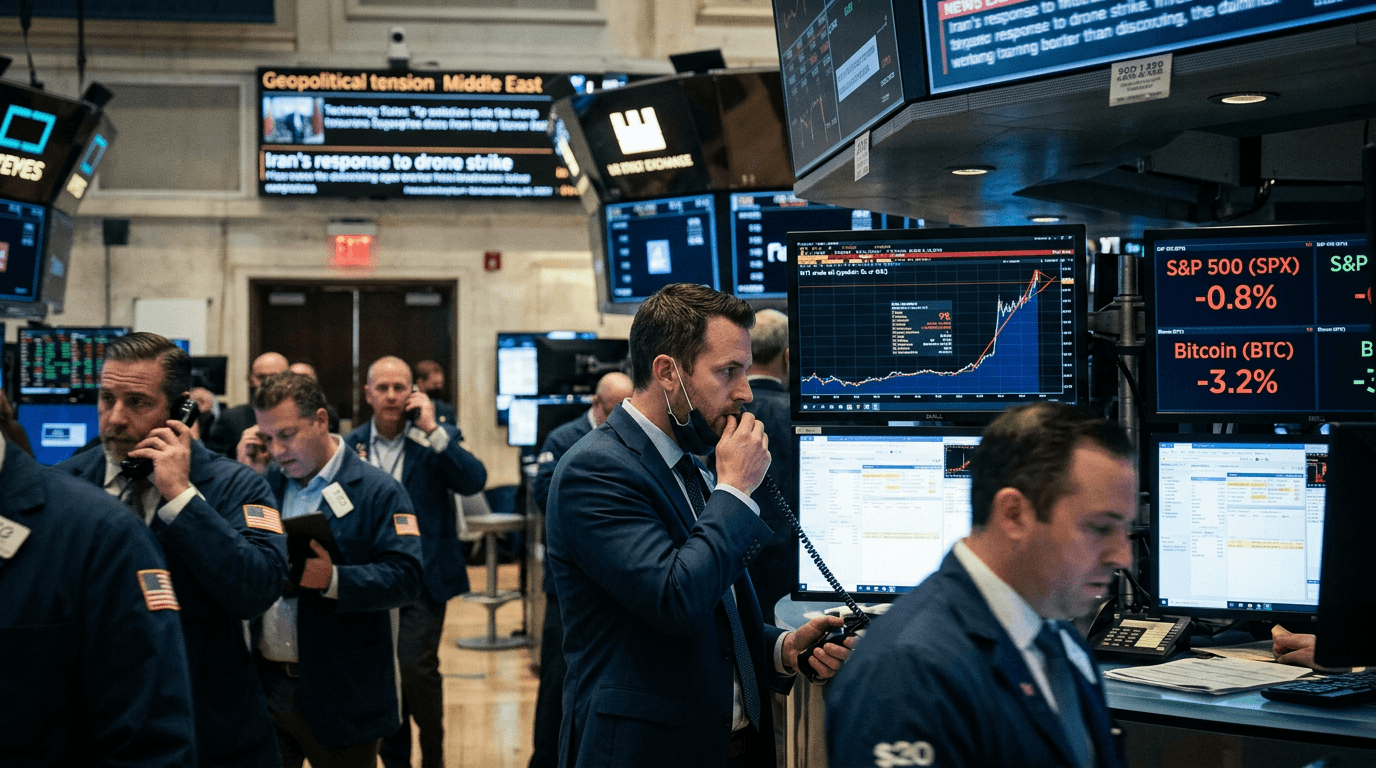
Oil jumping nearly 9% in a day is not just an energy story; it is a macro shock that ripples through every major asset class. The latest escalation of war with Iran has pushed US crude back to its highest level since the summer of 2024, while Brent has climbed toward the mid‑80s, reigniting worries about inflation, growth and risk appetite across stocks and crypto. As traders digest this move, the key question is less “why did this happen?” and more “what does it change from here?”
Why An Iran Conflict Hits Oil So Hard
Iran sits at the heart of the global oil system because of both its own output and its geographic position near the Strait of Hormuz, the narrow channel through which a large share of seaborne oil and gas flows from the Gulf to global markets.[1][3] Any war that threatens Iranian infrastructure or its ability to disrupt shipping through that chokepoint instantly commands a risk premium in oil prices.[1][3]
Recent conflicts in the region have shown how quickly futures markets can react. When exports from the Mideast Gulf are perceived to be at risk, traders price in potential shortfalls long before physical cargoes are actually disrupted.[1] That is why prices can spike in days rather than months, as hedgers scramble for protection and speculators pile into momentum.
According to recent analysis, escalating conflict involving Iran has previously pushed Brent crude to multi‑year highs above $100 per barrel on fears of prolonged shipping disruptions through the Strait of Hormuz.[3] In more extreme scenarios where Iran is seen as fully closing the strait, some energy experts have suggested that oil could surge toward $150–$200 per barrel if supplies are severely curtailed.[2] While the current 9% move is far from that worst case, markets are clearly repricing the probability of a sustained supply shock.
For traders, the takeaway is straightforward: when geopolitical risk directly touches key energy corridors, oil often becomes the primary transmission channel for macro stress. The speed of this repricing can far exceed the speed of fundamental change in supply and demand.
Us Stock Indices: From Energy Shock To Stagflation Fears
A sharp rise in oil is effectively a tax on consumers and energy‑intensive businesses. Higher fuel and transport costs squeeze margins for airlines, retailers, manufacturers and logistics firms, while also reducing disposable income for households. This is why a big oil spike can weigh on major US indices even if energy stocks within those indices rally.
The latest move has pressured US stock indices and their futures as investors reassess earnings forecasts and sector exposures. The concern is not just higher costs; it is the specter of stagflation. When oil pushes inflation higher at the same time that growth is already softening, central banks face an uncomfortable trade‑off between supporting the economy and containing prices.
In previous Iran‑related flare‑ups, rising energy costs have contributed to broader inflation pressures worldwide, with retail fuel costs and diesel prices climbing in tandem with crude.[3] That dynamic is now back in focus. If higher oil filters through into headline inflation data, it could complicate expectations for rate cuts and keep financial conditions tighter for longer.
For equity traders, the practical implication is to think in terms of relative winners and losers rather than a simple “market up or down” view. Energy producers, refiners and some commodity‑linked names may benefit, while sectors with thin margins and high energy sensitivity may underperform. Index futures will reflect this repositioning as investors hedge broad exposure while rotating within the market.
CRYPTO SENTIMENT: RISK ASSET OR MACRO HEDGE?
Bitcoin, Ethereum and XRP have all traded more cautiously as the oil shock revived stagflation fears and undermined broader risk appetite. While some narrative framing casts Bitcoin as “digital gold,” its realized behavior in major macro shocks has often resembled a high‑beta risk asset: it tends to move with equities when investors de‑risk and raise cash.
In an environment where higher oil raises inflation expectations but also threatens growth, cross‑currents emerge for crypto. On one hand, persistent geopolitical risk and concerns about fiat debasement can support long‑term demand for scarce digital assets. On the other hand, tighter financial conditions, higher real yields and elevated volatility can reduce speculative flows and leverage in the system.
The fact that major coins are hovering near key technical support zones underscores how fragile sentiment is. If the conflict escalates further and oil drives a deeper risk‑off move in equities, crypto could see additional pressure as part of a broader liquidity contraction. Conversely, if the shock is contained and central banks lean more dovish in response to growth fears, risk assets—including crypto—could recover.
For crypto traders, the key takeaway is that macro now matters as much as on‑chain metrics. Geopolitics and energy prices are not just background noise; they influence funding conditions, cross‑asset correlations and the willingness of large players to hold risk.
What Traders Should Watch Next
In the days and weeks after an oil shock tied to conflict, the focus often shifts from the initial headline to a few critical indicators:
- The shape of the oil curve: Backwardation (near‑term prices above longer‑dated) suggests acute, immediate tightness, while a flatter curve can signal that markets see the shock as more temporary.
- Shipping and export data from the Gulf: Any signs that flows through the Strait of Hormuz are stabilizing or improving can quickly compress the geopolitical risk premium.[1][3]
- Inflation expectations and central bank pricing: If bond markets start to price higher inflation with only modest changes in growth expectations, that keeps stagflation risk front and center.
- Cross‑asset volatility: Rising volatility in equities, rates and FX can force de‑leveraging across portfolios, amplifying moves in both stocks and crypto.
Monitoring these variables can help traders distinguish between a “headline spike” that fades and a structural regime shift in energy and macro conditions.
Risk Management In An Energy Shock Environment
When markets are driven by unpredictable geopolitical headlines, the biggest mistake is treating them like normal trend environments. Position sizing, leverage and scenario planning matter more than ever.
Practical steps include stress‑testing portfolios for different oil paths, such as a rapid retrace, a grind higher or an extreme disruption scenario. Traders can also consider relative trades—such as long energy versus short broader indices—to express a view on the impact of oil without taking pure directional equity risk.
Simulated trading environments are particularly useful in this context. They allow traders to practice managing positions through gap risk, volatility spikes and correlation breakdowns without real capital at stake. Running playbooks for “oil +10%, indices -3%, crypto -8%” type scenarios can build the discipline needed when similar configurations appear in live markets.
Above all, risk management in an energy shock is about accepting that you cannot forecast the next headline—but you can control how exposed you are when it hits.