
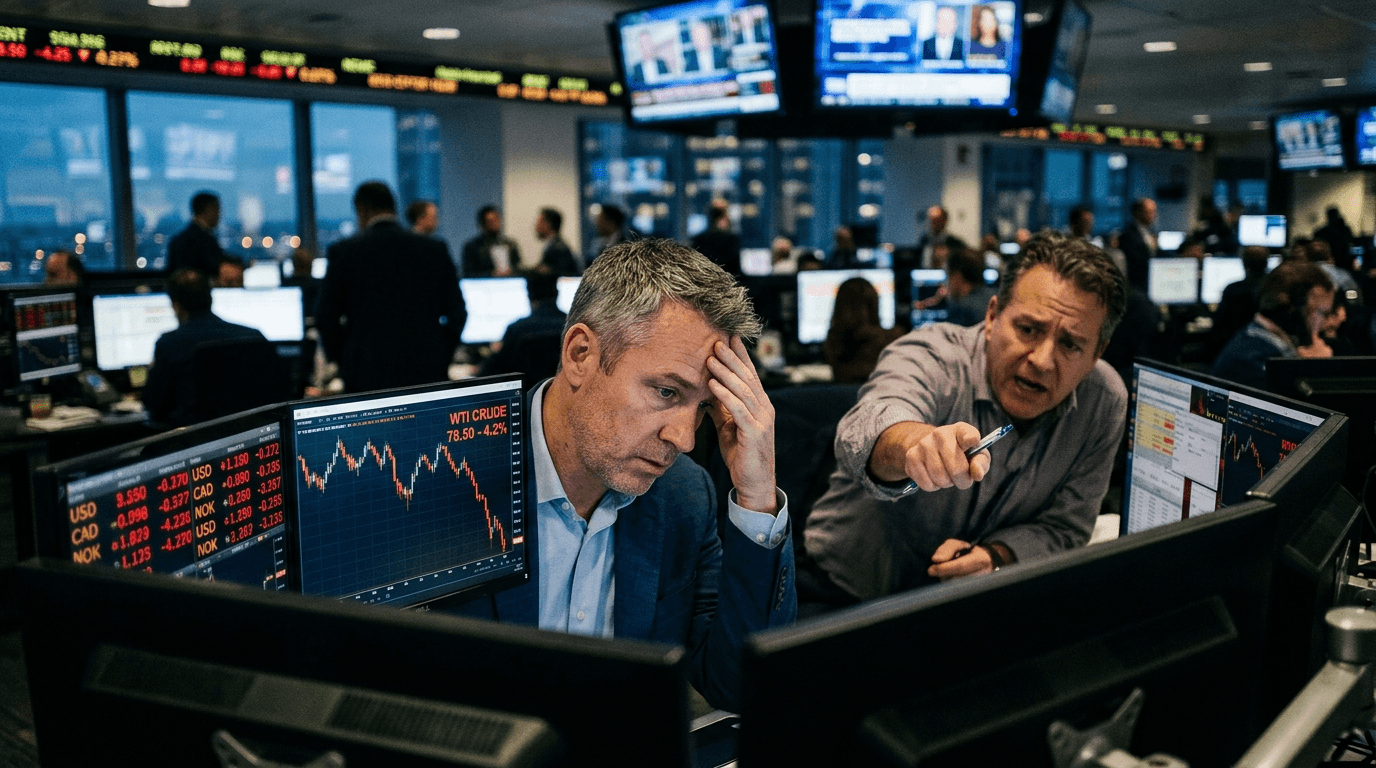
Oil prices are under pressure again as traders bet that Middle East supply risks might ease, with West Texas Intermediate (WTI) and Brent crude sliding on reports of a temporary arrangement for the Strait of Hormuz involving Iran and Oman[2][6][12]. Lower crude is rippling through energy-linked futures, broader commodity markets, and macro expectations, turning what began as a regional shipping story into a global cross-asset theme.
Markets React To Hormuz Hopes
The latest leg down in oil comes as Iran and Oman advance talks on joint management of the Strait of Hormuz, raising hopes for a temporary deal that would normalize tanker traffic through the chokepoint[4][11][12]. Futures market pricing suggests traders are marking down the geopolitical risk premium that had built into crude during months of disruption and war-related uncertainty[2][9][10]. When perceived supply risk falls, prices tend to move quickly as hedging flows unwind and speculative longs exit.
Recent moves illustrate how sensitive oil is to headlines around Hormuz. In prior episodes this year, even tentative ceasefire or transit arrangements between Iran and its counterparts drove single-day drops of 5–10% in Brent and WTI as markets priced in restored flows[3][5][13][15]. The current slide fits that pattern: traders are not waiting for a final political agreement before adjusting positions, but instead continuously repricing as probabilities shift.
Why The Strait Of Hormuz Matters
The Strait of Hormuz is one of the world’s most critical energy arteries, connecting Gulf producers to global consumers and carrying a significant share of seaborne crude and LNG exports[3][10][13]. Any disruption—whether physical closure, insurance restrictions, or military risk—can dramatically affect perceived supply availability, even if actual volumes are only partially curtailed. Markets respond by embedding a “risk premium” into prices, reflecting the chance that things might get worse.
When discussions about reopening or jointly managing Hormuz gain traction, that premium starts to erode. Reports that Iran is willing to coordinate transit management with Oman, including direction-based traffic oversight, signal a more predictable framework for shipping[4][12]. For traders, that translates into fewer tail-risk scenarios to hedge, lower volatility expectations, and a more stable forward curve. In practice, risk managers reassess worst-case assumptions, and options markets adjust implied volatility and skew.
Understanding this dynamic is essential for anyone trading energy or correlated assets in a simulated or live environment. Price moves are often less about current barrels in or out of the market and more about changing probabilities of future disruption.
Ripple Effects: Inflation, Fx And Risk Sentiment
Oil is not just an energy commodity; it is a key input to inflation expectations, FX pricing, and broader risk sentiment. Falling crude generally reduces projected headline inflation, especially in oil-importing economies, as lower fuel and transportation costs feed into price indices over subsequent months[10][13]. Fixed income markets can respond with lower breakeven inflation rates and less pressure on central banks to maintain restrictive policy.
Currency markets also react. Major importers tend to benefit from cheaper energy via improved trade balances and potentially stronger consumer demand, which can support their currencies. Conversely, exporters may face weaker fiscal revenues, prompting reassessment of sovereign risk and FX stability[3][10]. In recent sessions, oil-linked FX pairs and commodity currencies have traded in tandem with crude as Hormuz headlines shift sentiment[2][6].
Equity and commodity traders watch these correlations closely. Lower oil can relieve margin pressure for energy-consuming sectors like airlines, logistics, and manufacturing, while weighing on producers and service firms. At the same time, broad commodity indices may soften as energy-heavy baskets adjust to the new price level[2][6][8]. For multi-asset portfolios, the Hormuz story is a reminder that a single geopolitical catalyst can simultaneously move bonds, currencies, equities, and commodities.
Trading And Simulated Strategies: How To Navigate
For traders on simulated finance platforms, events like a temporary Hormuz deal offer a rich environment to test macro and cross-asset strategies without real capital at risk. The core challenge is translating news into scenarios rather than reacting impulsively to headlines. That starts with identifying the key drivers: probability of sustained Hormuz reopening, impact on risk premium, and feedback loops into inflation and FX.
Several practical approaches stand out
1) Scenario mapping: Outline bull, base, and bear cases for oil and related assets depending on whether a temporary arrangement becomes permanent, stalls, or reverses.
2) Correlation tracking: Monitor how energy equities, refiner margins, airline stocks, and commodity currencies are moving relative to crude during the news cycle.
3) Volatility strategies: Use simulated options positions to explore how implied vol responds to diminishing geopolitical risk and whether short-vol or spread trades would have performed.
4) Macro pairing: Test trades that link oil moves to inflation-sensitive instruments, such as breakeven rates or rate-sensitive FX crosses, under different Hormuz outcomes.
By practicing these frameworks in a simulated environment, traders build muscle memory for interpreting complex news and structuring trades that reflect not just direction, but also timing, sizing, and risk management.
Key Takeaways For Traders
The current slide in oil on hopes of a temporary Hormuz arrangement highlights several enduring lessons:
1) Geopolitical risk is a tradable factor: Markets routinely reprice risk premia on evolving headlines, often before fundamentals fully adjust.
2) Chokepoints magnify impact: Strategic locations like Hormuz can drive global moves because even partial disruptions alter perceptions of supply security[3][10][13].
3) Cross-asset effects matter: Oil moves feed into inflation expectations, FX behavior, and equity sector performance, creating opportunities and risks beyond pure energy trades[2][6][8].
4) Process beats prediction: Effective trading focuses on scenarios, correlations, and risk controls rather than trying to “call” the final political outcome.
As Iran and Oman inch toward a possible temporary arrangement, traders should treat the Hormuz story as a real-time case study in geopolitical pricing. Whether the deal proves durable or fleeting, the way markets respond—repricing crude, reshaping inflation expectations, and rebalancing FX and equity risk—offers invaluable insight. In both simulated and live environments, those who can connect the dots between shipping lanes, risk premia, and macro trends will be better positioned to navigate the next wave of energy volatility.