
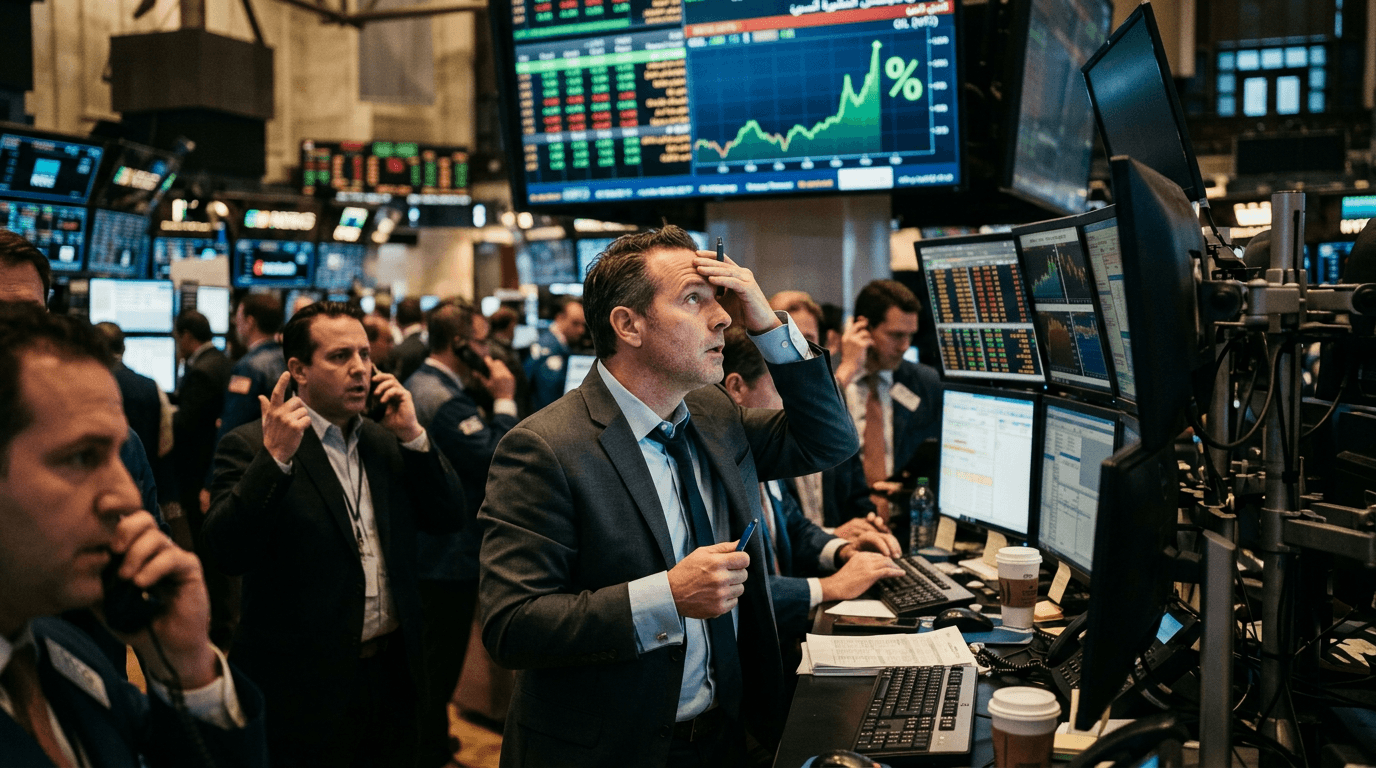
Oil’s latest surge has reminded markets how quickly geopolitics can reprice energy. On fresh Iran conflict fears, U.S. crude futures jumped roughly 9% to about $81.64 a barrel, while Brent climbed to around $85.85, injecting a sudden risk premium into one of the world’s most systemically important commodities.[5] For futures and broader risk assets, this kind of supply‑shock scare can matter more than a routine economic data release, because it hits both sentiment and real-world costs at the same time.
What Just Happened In Oil Markets
The move in crude was not a slow grind higher; it was a sharp repricing driven by war-related headlines and concern that energy flows from the region could be disrupted.[5] When the market collectively decides that supply is less secure than it looked the previous trading session, prices can gap higher before liquidity fully adjusts.
Strategists estimate that traders are now demanding a significantly higher “risk premium” for holding crude, effectively paying extra for each barrel to compensate for the possibility of a more serious disruption.[3] Goldman Sachs Research, for example, has outlined scenarios where a full one‑month closure of key transit routes could justify an increase of roughly $10–$15 per barrel depending on how much spare pipeline capacity and strategic reserves are used.[3] Even the hint that such scenarios are more likely is enough to push futures higher.
Recent history shows how violent these swings can become. During earlier phases of the U.S.–Iran confrontation, WTI futures traded in a wide band from the high $80s to above $100 in a single week, as markets lurched between escalation and partial de‑escalation.[2] In one recent session, U.S. crude briefly spiked near $120 before reversing towards $90 as traders reassessed how long the conflict might last and how severe the damage to supply would be.[4] That kind of whipsaw is a reminder: in geopolitical markets, direction and volatility can both change faster than many trading models assume.
For traders, three points stand out: 1) The size of the move (around 9%) signals a regime shift in perceived risk, not just noise. 2) Front‑month contracts tend to react first and most aggressively, with later maturities adjusting more gradually. 3) Volatility can stay elevated even if prices retrace, as uncertainty over further headlines remains high.[2]
Why Iran And The Strait Of Hormuz Matter
Iran’s importance to oil markets is not just about its own production; it is about geography. Roughly one‑fifth of global oil supply and close to 20% of global seaborne crude flows through the Strait of Hormuz, a narrow waterway bordered by Iran and other Gulf producers.[3][2] The same chokepoint carries nearly a fifth of global liquefied natural gas (LNG) exports, making it critical for both oil and gas markets.[3]
Because so much energy travels through this corridor, even a temporary disruption—or credible fear of one—can have outsized effects on prices. Analysts estimate that:
- A full one‑month closure of the Strait, with no mitigating measures, could justify a $15 per barrel increase in oil.[3]
- If all available spare pipelines are used and strategic reserves are tapped, the impact might be closer to $10 per barrel.[3]
- A partial closure (for example, 50% of flows for a month) with mitigation could still add around $4 per barrel.[3]
These are scenario estimates, not forecasts, but they highlight why markets mark up prices so aggressively when conflict risk around Iran rises. The market is essentially paying an option premium against the tail risk that millions of barrels per day go off the seaborne grid.
Because the probability of extreme scenarios is hard to estimate, traders often err on the side of overpaying in the short term and then adjusting as real-world disruptions (or the lack of them) become clearer. That creates fertile ground for both rapid rallies and equally rapid corrections.
How The Oil Spike Hits Broader Risk Assets
A sudden jump in crude is not just an energy story; it is a macro and cross‑asset story.
Higher oil feeds directly into inflation forecasts, especially through fuel and transport costs. That can push bond yields higher as markets price the risk that central banks may need to stay tighter for longer, even if growth is already slowing. Equities, particularly rate‑sensitive sectors like tech and consumer discretionary, may struggle under the combined weight of higher input costs and higher discount rates.
At the same time, sector rotations tend to accelerate. Energy producers and oilfield services names often gain on higher realized and expected prices, while fuel‑intensive industries such as airlines, logistics, and some manufacturers can come under pressure as their margins are squeezed.
We have seen this pattern play out already in past Iran-linked spikes: broad indices sold off sharply intraday before staging partial recoveries as hopes for a short conflict or diplomatic progress emerged.[4] Commodity‑linked currencies (such as the Canadian dollar and Norwegian krone) frequently track oil higher, while currencies of large energy importers can weaken as their terms of trade deteriorate.
For futures portfolios, this means correlation structures can change quickly: - Equity index futures may start trading more negatively correlated with crude. - Volatility futures and options can become more expensive as hedging demand increases. - Cross‑asset hedges that worked in calmer regimes may break down if everything sells off together in a severe risk‑off phase.
Implications For Futures And Simulated Traders
For active futures traders—and those training in a SimFi environment—the key challenge is navigating the speed and uncertainty of geopolitical repricings.
Margin requirements can rise as exchanges respond to higher realized volatility in energy contracts. Bid‑ask spreads often widen during headline‑driven moves, increasing transaction costs and slippage risk. Stop orders may execute at worse levels than expected when markets gap on surprise news.
In practice, that means: - Position sizing needs to reflect the new volatility regime, not last month’s conditions. - Leverage that seemed reasonable when crude was moving $1–2 per day may be dangerous when intraday ranges expand to $5–10. - Intraday risk management becomes as important as overnight risk, because many of the biggest headlines hit outside regular cash sessions.
For simulated traders, these episodes are invaluable training grounds. They offer a chance to: - Stress‑test strategies against fast, news‑driven markets. - Practice making decisions when price, news, and social sentiment are moving simultaneously. - Build playbooks for “geopolitical shock” days—predefined rules for how quickly to cut exposure, when to reduce size, and which markets to watch as secondary indicators.
A Practical Gameplan For Geopolitical Oil Shocks
To turn this kind of event into a learning and trading edge, consider a structured approach:
1) Define your information map. Identify the handful of data points that truly matter in an Iran‑driven oil shock: confirmed disruptions to Strait of Hormuz traffic, changes in production guidance from key Gulf exporters, and any coordinated response via strategic reserves.[2][3] Distinguish between noise (political rhetoric) and signals (infrastructure hits, shipping insurance changes, or official flow data).
2) Anchor scenarios, not single forecasts. Use scenario analysis similar to what research houses publish: no disruption, partial disruption, full disruption for a limited time.[3] For each scenario, outline possible price ranges, likely central bank reactions, and which sectors or assets might be relative winners or losers.
3) Adapt your time frame. In the first hours of a shock, price action is often dominated by liquidity and positioning rather than fundamentals. Short‑term traders may focus on intraday momentum and order‑flow signals, while swing traders might wait for the initial spike and volatility to settle before committing.
4) Upgrade your risk rules for the event window. Set maximum intraday loss limits, reduce leverage, and be explicit about when you will step back from trading if conditions become too chaotic. In a simulated setting, this is the best time to test how robust your risk framework really is under stress.
5) Review and codify. After the volatility passes, review what happened: how prices moved relative to news, where your strategy helped or hurt, and which signals were most reliable. Turn those insights into checklist items for the next geopolitical flare‑up.
Conclusion
The latest spike in oil on Iran conflict fears is a case study in how geopolitics can rapidly reshape pricing across energy, rates, FX, and equities. A roughly 9% jump in crude is not just a headline; it is the market’s way of repricing the probability and impact of supply shocks in real time.[5] For traders—especially those honing their skills in simulated environments—the opportunity lies in understanding the mechanics behind these moves, preparing scenario playbooks in advance, and treating each shock as data to refine a more resilient, adaptable trading process.