
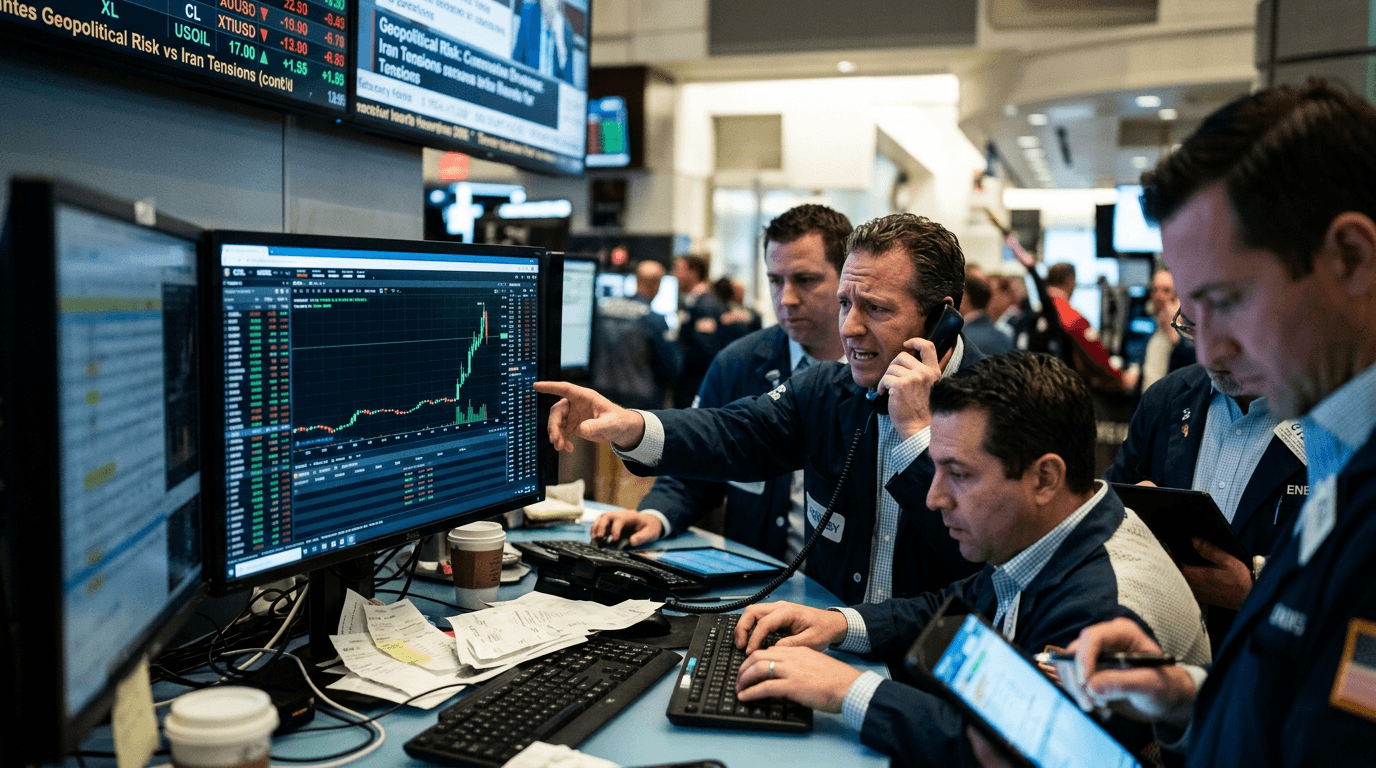
Oil markets just delivered a forceful reminder that geopolitics still matter. Crude futures ripped roughly 9% higher in a single move, briefly sending US WTI above $81 per barrel and Brent above $85 as traders reacted to escalating conflict between the US and Iran and the risk of supply disruption.[1] The initial spike has not fully faded: energy prices and related futures remain well bid, keeping inflation concerns alive and rippling across FX, rates, and equities.[1]
Market Recap: What Happened In Oil And Energy Futures
The latest leg higher in crude began after headlines around intensifying US–Iran tensions reignited fears of a broader regional conflict.[1][3] With the Middle East still central to global oil supply, any hint of disruption to exports or shipping lanes is enough to send risk premia sharply higher.[2][5]
WTI futures pushed toward roughly $81.6 per barrel, with Brent climbing to around $85.8, as traders scrambled to reprice the probability of supply shocks.[1] The move was not just a front‑month story: energy‑linked futures across the curve repriced higher, and options implied volatility spiked as hedging demand rose.[1]
Crucially, after the initial 9% surge, prices have remained elevated rather than snapping back immediately.[1] That tells you this was not perceived as a pure “headline spike” to fade, but as a genuine reassessment of geopolitical risk with potential staying power.[5]
Why Energy Stayed Bid Instead Of Fading
Oil often reacts first and most violently to Middle East shocks, but not every spike lasts.[5] The fact that crude and energy‑linked futures are still bid reflects a few key dynamics:
First, traders are pricing a higher probability that supply flows could be disrupted, rather than assuming a quick de‑escalation.[2][5] Even without an actual loss of barrels, the risk that exports through key choke points might be constrained is enough to justify a higher risk premium.
Second, positioning matters. When markets come into a shock with relatively light speculative length, a bullish catalyst can trigger aggressive buying as trend‑followers, CTAs, and systematic strategies add exposure.[1] That can help sustain prices above prior ranges.
Third, the shape of the futures curve is critical. A shock that tightens near‑term supply tends to deepen backwardation—where front‑month contracts trade at a premium to later months—because traders are willing to pay up for prompt barrels.[1] This is supportive of roll yield for long front‑month positions and can keep the complex attractive to both hedgers and speculators.
Inflation, Rates, And Cross-asset Ripple Effects
A 9% oil spike is not just an energy story; it quickly becomes a macro story.[1][5] Higher crude prices flow into transportation, manufacturing, and eventually consumer prices, especially if the move persists rather than retraces.
That is why inflation hedges—from inflation‑linked bonds to commodity baskets—caught a bid as energy spiked.[1] Markets started to reassess the path of central bank rate cuts, with traders questioning whether policymakers can ease as quickly if energy‑driven inflation flares again.[1]
On the equity side, the reaction has been mixed. Broad equity futures saw pressure as investors worried about higher input costs and tighter financial conditions, while energy shares and oil‑sensitive sectors outperformed.[1][3] This kind of rotation—out of rate‑sensitive growth, into cash‑generative resource names—is typical when the inflation narrative re‑accelerates.
In FX, commodity‑linked currencies such as the Canadian dollar and Norwegian krone found support as higher crude improves their terms of trade.[1] Energy importers, by contrast, face deteriorating trade balances and weaker growth prospects, which can weigh on their currencies and local risk assets.[4][5]
Zooming out, cross‑asset moves are signaling elevated caution, not full‑blown panic.[4][5] Oil, bonds, and equities together are reflecting a repricing of geopolitical risk and inflation, rather than a systemic global crisis.[5]
Trading Implications For Futures And Fx Traders
For active traders and SimFi participants, this environment is rich with opportunity—but also higher risk. The key is to map how an Iran‑linked oil shock travels through markets and express views in a structured way.[1]
In energy futures, traders are watching:
- Direction: whether the conflict escalates or stabilizes, and how quickly physical flows normalize.
- Curve shape: deeper backwardation can favor strategies using front‑month longs or calendar spreads designed to capture roll yield.[1]
- Volatility: elevated implied volatility can make options structures (such as call spreads or collars) attractive relative to outright futures for defined‑risk exposure.
In FX, commodity currencies versus broader G10 or indices can be a cleaner way to express a bullish oil view than just buying crude outright.[1] For example, relative‑value trades—long CAD or NOK versus a basket of oil importers—can partially hedge general risk‑off moves while still aligning with the energy theme.[1][4]
Equity and index traders might look at energy sectors versus the broader market, or inflation‑sensitive sectors versus more defensive ones. Spreads like “long energy, short broad index” are common ways to isolate the commodity shock from general equity beta.
Strategically, it also pays to distinguish between:
- Short‑term fear trades: built around headlines and risk‑premia that may unwind quickly if tensions ease.
- Structural trades: based on a view that supply will remain tight, capex will stay constrained, or policy will shift in a way that supports longer‑term energy prices.[1][5]
Risk Management And The Value Of Simulated Trading
One big lesson from a 9% daily move: sizing that felt conservative in quiet markets can become aggressive in a high‑volatility regime.[1] When daily ranges expand and overnight gaps become more frequent, risk management moves from being a “nice to have” to a core edge.
Practical steps include
- Reducing notional trade size as volatility rises, rather than simply widening stops.
- Defining maximum daily and weekly drawdown limits and sticking to them.
- Stress‑testing positions with scenarios like “What if crude gaps $5 overnight?” and checking margin and liquidation risk.
- Using options or structured trades to cap downside when trading directional views around geopolitical risk.
For many traders, especially those new to energy markets, a simulated environment is the ideal place to battle‑test their approach. Running oil‑linked strategies, FX relative‑value trades, and equity rotations in a SimFi setup allows you to experience the volatility, slippage, and emotional swings of an oil shock without real capital at risk.
You can practice reading futures curves, tracking cross‑asset correlations, and adjusting positions as news flow evolves. You also gain valuable data on your behavior: how you react to sharp swings, whether you chase moves, and how consistently you respect your own risk rules.
As the US–Iran conflict continues to shape sentiment, the message from markets is clear: energy risk is back at the center of the macro narrative. For traders, the challenge is not just predicting the next headline, but building a disciplined framework that links oil, inflation, FX, and equities—and then executing that framework with robust risk management. Simulated trading offers a powerful way to refine that playbook before deploying it in live markets.