
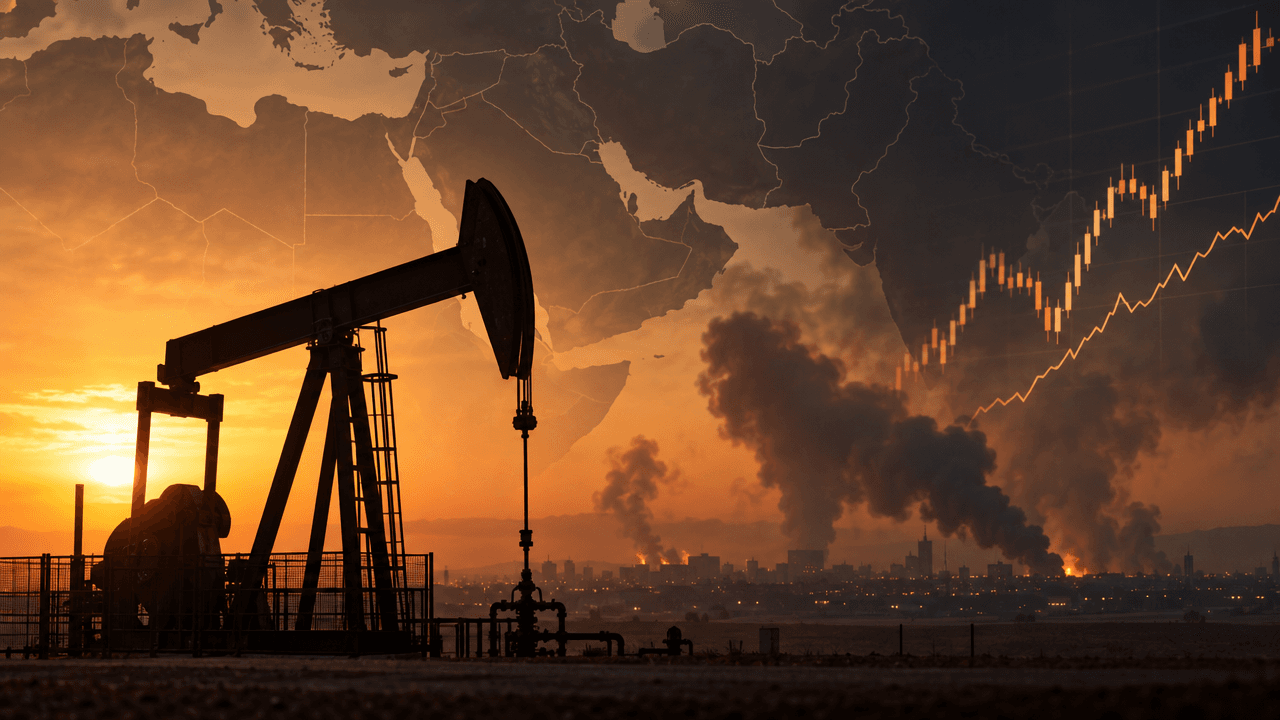
Oil-supply fears have returned to the center of the market, sending crude sharply higher and reopening an uncomfortable question for investors: can inflation finally cool if energy prices keep climbing?
Brent crude rose 3.14% to settle at $116.72 a barrel, its highest close since April 29. U.S. crude also moved above $100 as attacks linked to Middle East tensions raised concerns about energy infrastructure, shipping routes and the reliability of regional exports. [1][2]
The latest move is more than a headline for commodity traders. Oil influences transportation, manufacturing, utilities, food distribution and household budgets. When crude rises quickly, investors begin to reassess inflation forecasts, interest-rate expectations and the outlook for risk assets.
Why Supply Fears Are Driving Oil Higher
Oil markets are responding to the possibility of disrupted supply rather than a sudden surge in global demand. Reports of attacks on energy targets in Saudi Arabia, along with shipping risks around the Gulf, have increased concern that production facilities, pipelines or tanker traffic could be affected. An oil spill reported by the United Arab Emirates has added to the market’s sense of vulnerability. [2][5]
The Middle East remains critical to global energy markets. Even when physical production is not immediately lost, traders can price in a risk premium when transport routes become less secure. Tankers may require longer routes, insurers may charge more, and refiners may compete for barrels from alternative suppliers. Those costs can lift prices before any measurable shortage appears.
The market is also highly sensitive to uncertainty. A disruption that removes a relatively small amount of supply can have an outsized effect if traders believe further escalation is possible. That is why geopolitical developments can move crude several percentage points in a single session.
How Higher Oil Reignites Inflation Concerns
Energy is both a direct and indirect inflation driver. Consumers pay more for gasoline, heating and electricity when crude prices rise. Businesses face higher transportation and production costs, particularly in industries that rely on fuel-intensive logistics or petrochemical inputs.
Some companies absorb those costs temporarily, but others pass them on through higher prices. Airlines may raise fares, delivery firms may adjust surcharges and manufacturers may increase prices for goods transported over long distances. The longer elevated oil prices persist, the greater the risk that a temporary energy shock becomes embedded in broader inflation expectations.
This creates a difficult environment for central banks. Higher energy prices can weaken household purchasing power while simultaneously increasing headline inflation. Monetary policy cannot produce more oil or repair damaged infrastructure, but policymakers may still need to keep interest rates higher for longer if they fear that inflation expectations are becoming unanchored.
Recent market commentary has already highlighted the connection between lower supplies, higher energy prices, rising inflation and elevated bond yields. [11] The challenge is that tighter policy may reduce demand without addressing the original supply problem, increasing the risk of slower growth alongside stubborn inflation.
Why Bonds And Equities Are Under Pressure
The oil rally has affected financial markets through interest-rate expectations. If investors believe higher fuel costs will keep inflation above target, they may reduce expectations for near-term rate cuts or increase the probability of additional tightening.
That shift typically pushes bond yields higher, especially when markets are already concerned about government borrowing and inflation uncertainty. Higher yields raise financing costs for households and businesses and can reduce the present value investors assign to future corporate earnings.
Equities face a second pressure point through profit margins. Energy producers may benefit from higher crude prices, but fuel-intensive companies can see costs rise quickly. Transportation, manufacturing, consumer discretionary and some industrial businesses may be particularly exposed.
Growth stocks can also come under pressure when yields rise. Companies valued on expected profits far in the future are more sensitive to changes in discount rates. As a result, an oil shock can create a broad rotation away from expensive growth shares and toward energy, value or defensive sectors.
What Traders Should Watch Next
The first priority is whether the supply risk becomes a physical disruption. Traders should monitor attacks on energy infrastructure, tanker traffic, export terminals and developments involving major regional producers. Headlines alone can drive volatility, but sustained price gains generally require evidence that actual supply is being lost or threatened for an extended period.
The second priority is market breadth. If oil rises while inflation-linked bonds, nominal yields and the U.S. dollar also strengthen, markets are likely pricing a broader inflation shock. If crude rises but bond yields remain contained, investors may view the move as temporary or expect demand to weaken quickly.
The third signal is central-bank communication. Policymakers may distinguish between temporary headline inflation and persistent underlying price pressure. However, repeated references to energy costs, inflation expectations or the need for restrictive policy could increase volatility in interest-rate markets.
For SimFi traders, the practical lesson is to avoid treating crude as an isolated chart. Oil affects currencies, bonds, equity indexes and sector performance. A disciplined approach may include smaller position sizes, wider awareness of scheduled economic releases and clear plans for both continuation and reversal scenarios.
The Bigger Market Lesson
The return of triple-digit oil prices demonstrates how quickly geopolitical risk can reshape the macroeconomic outlook. A move toward $116.72 in Brent does not guarantee a prolonged inflation wave, especially if supply routes remain open or diplomatic conditions improve. But it does raise the cost of assuming that inflation will continue falling smoothly.
Markets are now balancing two competing risks: a supply shock that keeps prices elevated and a demand slowdown caused by higher living costs and tighter monetary policy. Until there is greater clarity on regional security and energy flows, crude is likely to remain a major driver of cross-asset volatility.
For traders, the most important takeaway is straightforward: follow the transmission channels, not just the headline. Oil prices influence inflation, inflation influences central banks, and central-bank expectations influence nearly every major asset class. Understanding that chain can help traders respond to volatility with a plan rather than reacting to the latest price spike.