
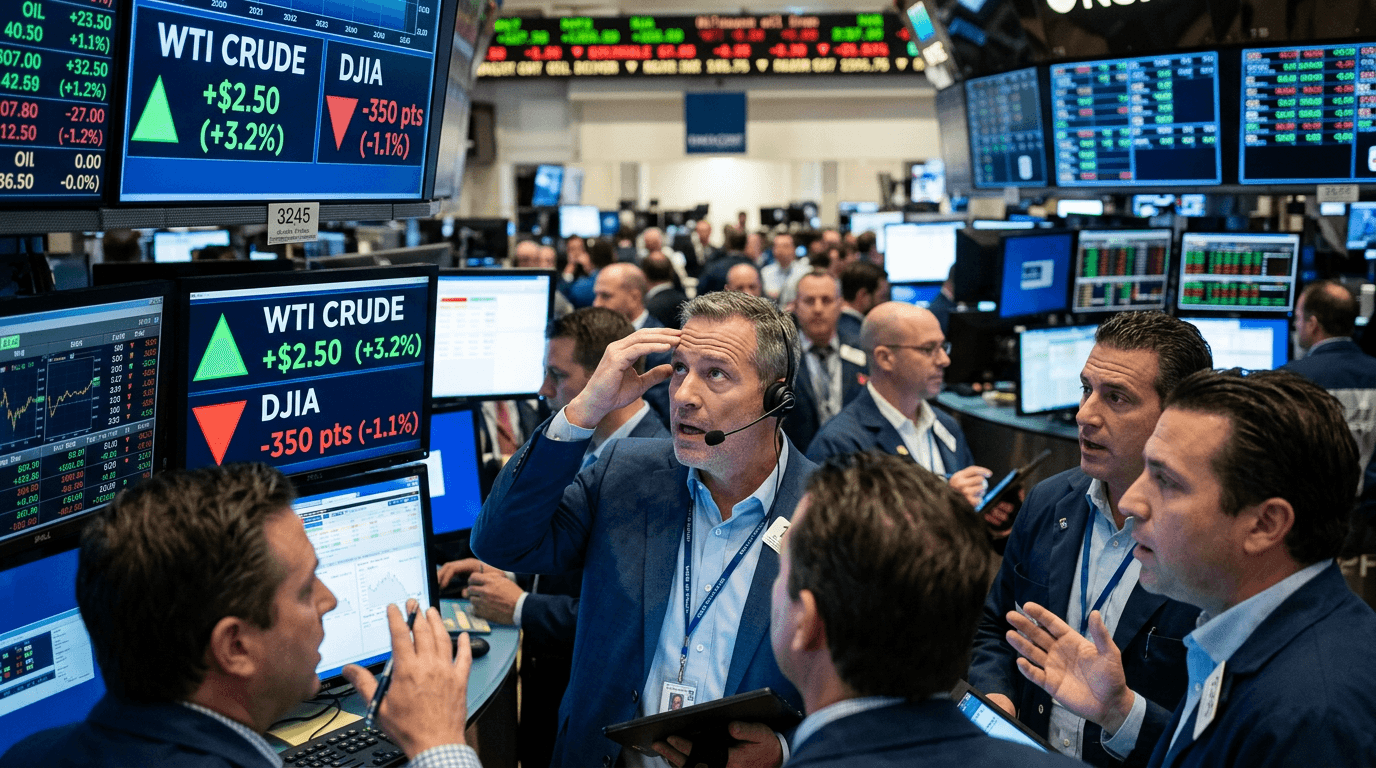
Oil’s latest surge is rippling quickly through global markets, putting renewed pressure on both stocks and government bonds as traders reassess geopolitical risk and the path of interest rates[8][12]. Fresh tensions between the U.S. and Iran have pushed benchmark Brent crude back toward the mid‑$90s per barrel and revived fears about supply disruptions from the Middle East, particularly around the critical Strait of Hormuz shipping route[6][8][15]. With energy costs rising and bond yields flirting with recent highs, investors are again asking whether the current equity rally can withstand another bout of oil-driven volatility[8][12].
Oil Surge Reignites Geopolitical Risk
Oil is one of the fastest ways for geopolitics to show up in asset prices, and the latest U.S.–Iran flare‑up is a clear example[1][8][10]. Following renewed exchanges of fire and strikes on energy-linked targets, Brent crude has jumped by more than $4 a barrel to around $94.65, while U.S. WTI has climbed above $90[8]. Similar episodes earlier in the summer saw oil spike 3–5% in a single session after threats to shipping in the Strait of Hormuz and changes to sanctions or licensing for Iranian crude exports[10][14][15].
The market reaction reflects a mix of immediate concerns and longer‑term risk repricing. In the short run, traders price in the possibility of physical disruptions to supply—such as blocked ports, damaged infrastructure, or restricted vessel movements through key maritime chokepoints like Hormuz and the Red Sea[6][7][9]. Longer term, repeated tensions push risk premia higher: the market demands a higher price to compensate for the probability that future barrels may be harder or more costly to deliver[13][14][15]. That combination has kept oil elevated even when macro worries briefly drag prices lower, as seen in recent sessions where demand concerns offset some of the geopolitical bid[11][12].
How High Oil And High Yields Hit Risk Assets
Rising oil prices are not just an energy story; they feed directly into inflation expectations, central bank policy, and ultimately the valuation of stocks and bonds. Higher crude increases input costs for transport, manufacturing, and logistics, and if sustained it can push headline inflation back up just as many economies are trying to stabilize price growth[8][12]. That, in turn, leads markets to anticipate that central banks will either keep policy rates higher for longer or move more cautiously on any future rate cuts.
The result is renewed upward pressure on government bond yields, especially U.S. Treasuries, which anchor global pricing of risk assets. Investors have been actively buying protection against further rises in yields—using options, futures, and duration hedges—to cushion portfolios against the risk of another bond sell‑off[12]. Higher yields challenge equity valuations by raising discount rates and making “risk‑free” income more competitive with stocks, particularly for long‑duration growth names and crowded thematic trades. When yields and oil rise together, the market effectively faces a double shock: higher financing and valuation headwinds plus higher operating costs.
For global equities, that combination tends to hit cyclicals and rate‑sensitive sectors first. Financials can benefit from steepening yield curves, but only up to the point where recession fears begin to dominate. Energy stocks often rally with crude, but if the move is seen as purely geopolitically driven, investors may hesitate to chase it aggressively and instead focus on balance‑sheet strength and dividend resilience. Defensive sectors—such as utilities and consumer staples—can see relative inflows as investors rotate toward perceived stability.
Flows Across Bonds, Fx And Futures
The pressure on government bonds is not limited to spot yields; it is also visible in derivatives positioning and volatility markets. When traders buy protection against rising yields, they typically do so through Treasury futures and rate options, increasing open interest and implied volatility around key tenors like the 10‑year and 30‑year maturities[12]. That hedging activity can itself amplify moves if markets suddenly gap higher in yields and risk management models force further de‑risking.
Foreign exchange markets feel the impact as well. Oil exporters’ currencies often outperform when crude spikes, as terms of trade improve and markets anticipate stronger fiscal revenues. Conversely, large net importers can face pressure as higher energy costs widen current‑account deficits and raise inflation risks. The prospect that high yields could threaten the global stock rally also matters for FX: if equity investors de‑risk, funding currencies and carry trades may unwind, leading to sharper moves across emerging‑market FX and high‑beta pairs[12].
In futures markets, positioning around equity indices, oil, and rates increasingly reflects a cross‑asset narrative rather than isolated bets. Some traders hedge equity exposure by going long energy futures, while others construct relative‑value trades—such as long oil versus short airlines or transport indices—to express views on margins and fuel costs. For SimFi participants, this environment provides a rich backdrop to practice multi‑asset strategy construction without the capital risk of live markets.
Lessons For Simulated Finance Traders
For traders on simulated platforms like E8 Markets, this episode is a reminder that geopolitical catalysts can move multiple asset classes in unexpected ways. A headline about U.S.–Iran tensions is not only an oil event; it is a potential trigger for shifts in yields, equity volatility, and FX correlations[8][12]. SimFi environments allow market participants to test how their strategies perform under such stress without the psychological and financial strain of real capital drawdowns.
One practical lesson is the importance of scenario planning. Traders can build and backtest scenarios such as “Oil +10%, 10‑year yields +25 bps, equity indices −5%” to understand how their portfolios respond across instruments. Simulated trading also helps highlight the difference between directional and relative‑value opportunities: instead of simply going long or short oil, a trader might simulate pair trades like long energy equities versus short consumer discretionary, or long oil versus short industrial metals, to capture more nuanced views.
Risk management is another key takeaway. In a world where yields and oil can both move rapidly on geopolitical news, traders need clear rules around position sizing, leverage, and maximum drawdown. SimFi platforms can be used to trial stop‑loss protocols, volatility‑adjusted sizing, and hedging overlays—such as using index futures or options to offset concentrated single‑name exposures—before committing to them in live accounts.
Looking Ahead: Navigating Geopolitical Shocks
Geopolitical risk in energy‑producing regions is unlikely to disappear, and markets will continue to oscillate between periods of calm and sudden stress. For now, elevated oil and rising yields have introduced a new layer of fragility into the global risk backdrop, challenging the sustainability of the equity rally and prompting more active use of hedging tools across bonds, FX, and futures[8][12]. Whether this episode becomes a short‑lived shock or the start of a more persistent regime shift will depend on how the U.S.–Iran situation evolves, how central banks respond to any renewed inflation pressures, and how corporate earnings absorb higher input costs.
For traders—whether operating in live markets or through simulated finance platforms—the key is to treat episodes like this as opportunities to refine process. That means building cross‑asset awareness, stress‑testing strategies under adverse scenarios, and learning to read the interplay between geopolitics, oil, yields, and risk sentiment. In doing so, market participants can move beyond headline reactions and toward structured, repeatable approaches to navigating geopolitical shocks.