
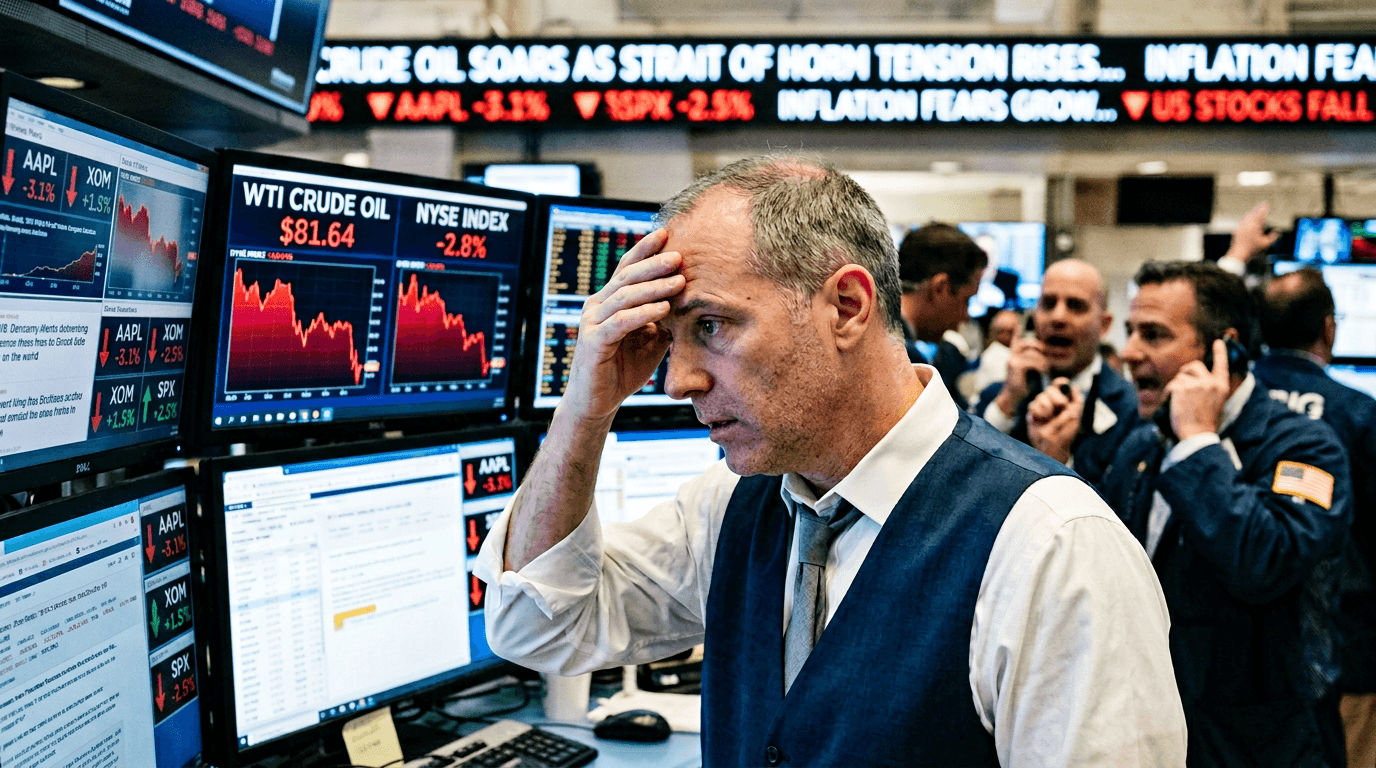
Geopolitical tensions between the United States and Iran have sent ripples through the financial world, causing crude oil prices to skyrocket nearly 9%, reaching $81.64 per barrel for West Texas Intermediate and $85.85 for Brent crude. This isn't just a blip of market volatility; it signifies a real supply crisis affecting everything from trading floors to gas stations, and ultimately, your portfolio. To navigate this increasingly uncertain economic landscape, understanding the forces behind these moves and their broader implications is crucial for traders and investors alike.
The Middle East Conflict: Igniting The Energy Market Flames
The surge in oil prices is directly linked to active military conflict in the Middle East. Iranian forces have targeted crucial oil infrastructure and commercial vessels in key shipping lanes. Meanwhile, U.S. airstrikes against Iran have entered their second week, perpetuating uncertainty and driving energy markets higher. The closure of the Strait of Hormuz by Iran—a vital chokepoint responsible for 20% of global oil supply—adds significant pressure.
This situation isn't mere speculative panic. Real damage to infrastructure, port shutdowns, and significant harm to Iran's oil refineries have been reported, with facility owners unable to meet existing supply contracts. Analysts estimate that U.S. and Iranian military actions have removed between 10 to 11 million barrels per day from global markets. In a world trading roughly 100 million barrels daily, this represents a 10% disruption of global oil supply—a shock that markets cannot easily overlook.
Equity Markets React To Supply Shocks
The immediate impact on U.S. stock markets has been harsh. The S&P 500 fell 0.6%, wiping out recent gains, while the Dow Jones dropped 1.6%, losing 784 points. The Nasdaq composite decreased by 0.3%, with sectors most vulnerable to rising energy costs bearing the brunt. Airlines, in particular, have suffered, as higher crude prices translate directly into increased fuel expenses, compounded by Middle East disruptions.
This market weakness reflects a fundamental shift in trader sentiment. Earlier optimism about economic resilience and potential Federal Reserve rate cuts has given way to renewed stagflation concerns—a scenario where economic growth stalls while inflation accelerates. With oil prices spiking due to actual supply disruptions, equity investors face a tough calculus: higher input costs, compressed profit margins, and the potential for central banks to maintain hawkish monetary policies longer than anticipated.
Inflation Fears Escalate At The Consumer Level
The swift transmission of oil prices into everyday life raises significant concerns for both consumers and policymakers. The average U.S. gasoline price has jumped to $3.25 per gallon, a 9% rise from $2.98 just a week earlier. By mid-March, prices reached $3.58 per gallon—a staggering 60-cent increase in one month. In some regions, prices have already surged above $4 per gallon, levels unseen since August 2022.
Higher energy costs are one of the fastest channels for inflation into broader consumer prices. This rapid acceleration threatens to reignite inflation concerns that had been easing, possibly forcing central banks to maintain restrictive monetary policies longer than anticipated. For consumers already facing elevated cost-of-living pressures, these price hikes pose a threat to household budgets and consumer spending—a key economic growth driver.
Strategic Responses And Market Outlook
Recognizing the severity of the situation, authorities are actively working to stabilize energy markets through strategic interventions. The International Energy Agency has announced a record release of 400 million barrels of oil from strategic reserves, with the United States contributing 172 million barrels from its Strategic Petroleum Reserve over four months. This extraordinary policy response aims to offset supply disruptions and moderate price increases.
However, these interventions face significant timing challenges. Strategic petroleum reserve releases operate over months, while geopolitical tensions can escalate or deescalate much more rapidly. This inherent uncertainty contributes to elevated volatility and risk premiums in energy markets. Government officials express optimism that oil prices will decline, though a definitive timeline for the military conflict's duration remains elusive.
Key Takeaways For Traders And Investors
The current oil surge exemplifies how geopolitical shocks translate into immediate financial market consequences. Genuine supply disruptions—not mere speculation—are driving current dynamics, lending credibility to sustained elevation in energy costs. Positions in energy stocks, transportation sectors, and volatility products will likely experience substantial fluctuations as Middle East developments unfold.
For traders and investors, this moment demands careful portfolio assessment. Energy prices serve as critical conduits from diplomatic crises to stock portfolios and household budgets. Long-term observers should evaluate whether this spike represents a temporary shock or heralds a sustained period of elevated oil prices poised to reshape economic and market dynamics throughout 2026 and beyond.