
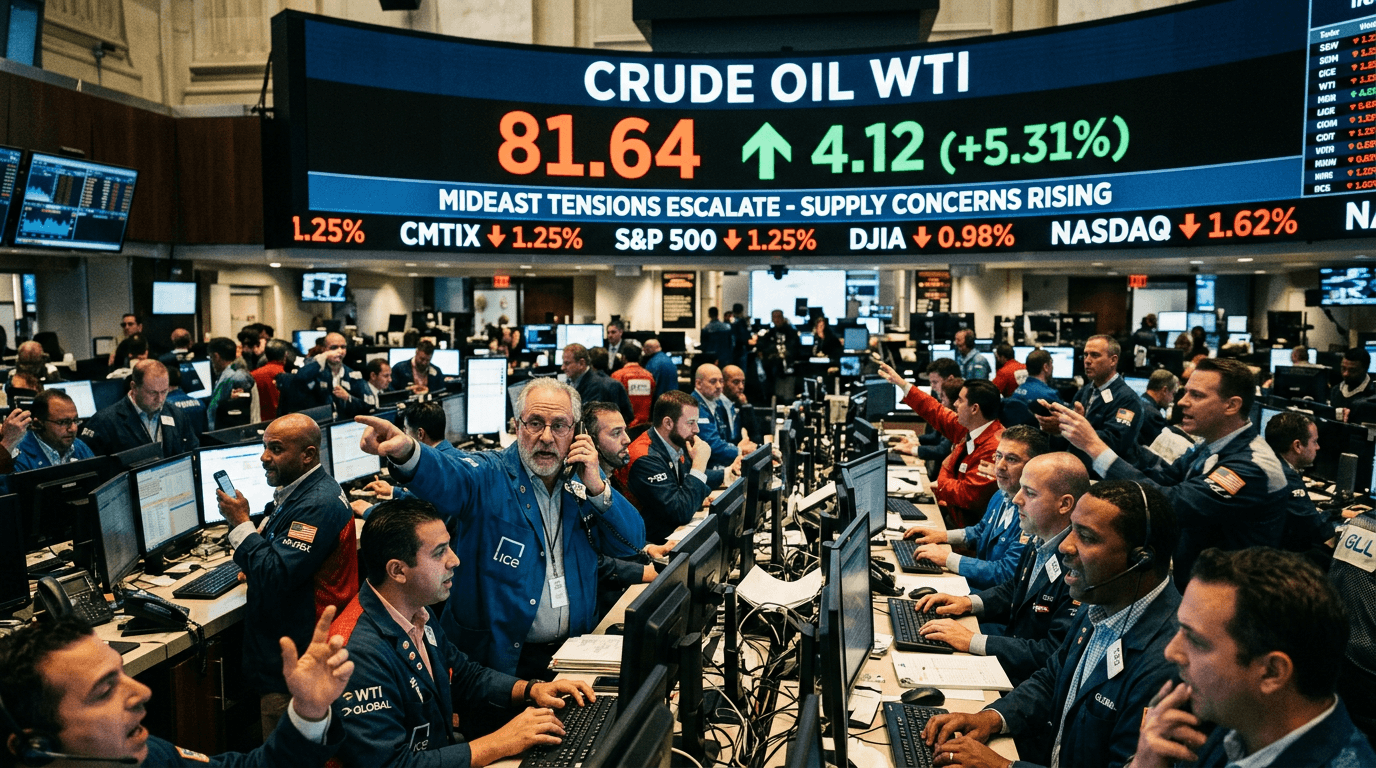
West Texas Intermediate crude oil surged 9% to $81.64 per barrel on Thursday, marking its highest level since summer 2024, as escalating military tensions between the United States and Iran triggered a genuine supply shock reverberating through global financial markets. Brent crude simultaneously climbed to $85.85, reflecting widespread concern about disruptions to critical oil infrastructure and strategic shipping routes. This dramatic price movement extends far beyond typical market volatility—it represents real economic consequences as military conflict transforms into energy-focused economic warfare across the Middle East. For traders, investors, and financial professionals, Thursday's action signals a potential shift in how energy pricing will evolve throughout the remainder of 2026.
Understanding The Supply Shock
The oil price surge stems directly from sustained military escalation that has dominated headlines throughout early 2026. U.S. airstrikes targeting Iranian military installations entered their second consecutive week, maintaining constant pressure throughout global energy markets. Iran responded by targeting oil infrastructure and vessels operating in critical shipping lanes, effectively weaponizing energy supplies as an instrument of economic leverage.
This represents a fundamental departure from traditional military conflict—direct targeting of economic systems rather than purely military objectives. The Strait of Hormuz, through which approximately 20% of the world's crude oil passes daily, remains effectively blockaded or under heightened threat. This single chokepoint controls the flow of roughly 10 to 11 million barrels per day, making it perhaps the most strategically critical energy corridor on the planet.
What distinguishes the current situation from speculative price moves is the tangible nature of the supply disruption. This is not algorithmic trading whipsawing prices based on sentiment swings. Instead, real barrels of oil have been removed from the market, gasoline prices are rising at the pump, and shipping companies face genuine uncertainty about operating through the region.
Why Us Stocks Are Buckling
Stock market futures tumbled sharply following Thursday's oil surge, reflecting how crude oil price shocks cascade through equity valuations almost immediately. Higher energy costs create headwinds across multiple sectors simultaneously—transportation companies face elevated fuel expenses, manufacturing sees input cost pressures, and consumer discretionary spending begins to contract as households allocate more of their budgets toward energy and gasoline.
The broader concern driving the stock selloff extends beyond direct energy sector impacts. Markets worry that sustained elevated oil prices will reignite inflation concerns that had been moderating through early 2026. If inflation re-accelerates due to energy price spikes, the Federal Reserve faces renewed pressure to maintain higher interest rates for longer, which depresses equity valuations across the board. Technology and growth stocks, which rely heavily on lower discount rates to justify their valuations, face particular headwinds in this environment.
Additionally, the geopolitical uncertainty itself creates a risk-off mentality. When major military conflicts disrupt essential commodities like oil, investors typically reduce risk exposure across their portfolios. This defensive posture often triggers selling pressure in equities while benefiting traditional safe-haven assets like gold and government bonds.
Inflation And Fed Policy Complications
The oil price surge complicates the Federal Reserve's policy calculus in meaningful ways. Prior to Thursday's escalation, market expectations were pricing in continued progress on disinflation, potentially justifying rate cuts later in 2026. Oil prices surging nearly 9% in a single session threatens to derail that narrative.
Energy prices carry outsized weight in inflation measures because they flow through the entire economy. Higher oil translates to higher gasoline prices, higher heating costs, and higher transportation costs embedded in virtually every consumer good. If oil remains elevated around $80-85 per barrel rather than moderating toward $70, inflation data from May and June could show unexpected stickiness that catches the Fed's attention.
This dynamic has already shifted market expectations for Fed rate cuts. Contracts pricing in when the first rate cut might occur have moved later in the calendar, reflecting recognition that an energy shock could necessitate maintaining restrictive policy longer than previously expected. For traders positioning around Fed decisions, this represents a meaningful pivot requiring portfolio adjustments.
Implications For Energy Traders And Investors
Current prices at $81.64 for WTI and $85.85 for Brent represent moderation from earlier extremes in this conflict. The Strait of Hormuz blockade in March drove Brent past $120 per barrel, while earlier escalations pushed WTI toward $104. That prices have pulled back from those disaster scenarios does not indicate reduced risk.
Rather, it suggests traders have incorporated elevated risk into current pricing rather than pricing for catastrophe. This distinction matters significantly for determining whether crude represents a buying opportunity or a risk that should be hedged. Monitor diplomatic developments closely as the primary driver of near-term direction. Any credible de-escalation announcements could trigger sharp reversals, while military escalation could push prices substantially higher.
Key Takeaways
Traders should recognize that current oil levels likely represent a new floor rather than a temporary spike. Geopolitical risks remain unresolved, and the supply shock is genuine. For equity investors, energy price strength creates headwinds for stock valuations, particularly growth-oriented sectors. Portfolio adjustments toward energy exposure and away from rate-sensitive growth stocks may warrant consideration given the shifted risk landscape.