
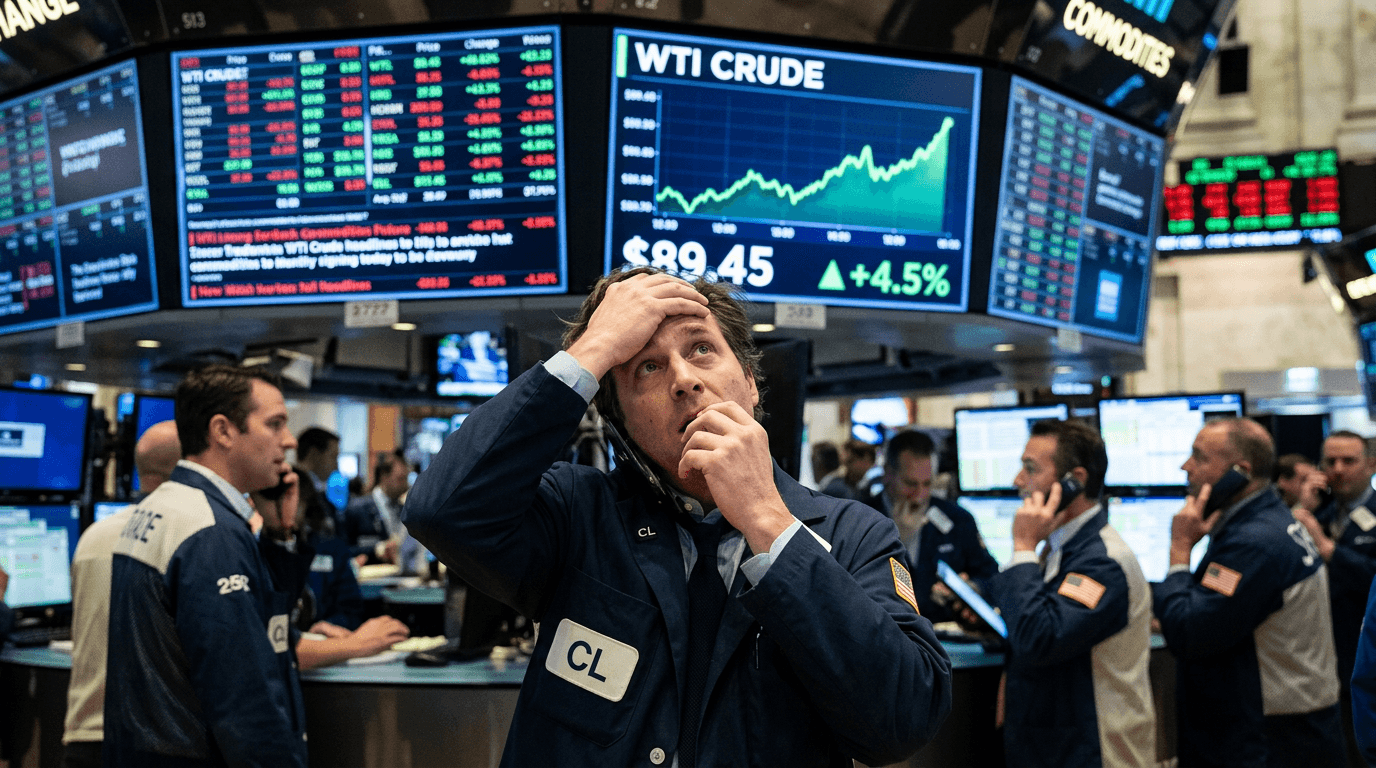
West Texas Intermediate crude oil has surged 9% to $81.64 per barrel, marking its highest level since summer 2024, as escalating military tensions between the United States and Iran create genuine disruption to global energy supply. Simultaneously, Brent crude has climbed to $85.85, reflecting broad-based pressure across international oil benchmarks. For traders and investors monitoring energy markets, understanding the mechanics behind this dramatic move and its far-reaching implications across equities, inflation expectations, and monetary policy is essential.
This is not a temporary spike driven by speculative excess. The surge reflects real-world constraints on critical energy infrastructure and the world's most vital shipping corridors. Military actions in the Middle East have removed approximately 10 to 11 million barrels per day from global energy supply. In a market that typically trades around 100 million barrels daily, this represents roughly a 10% disruption to worldwide oil production—a significant shock with immediate consequences for energy prices and economic growth.
The Anatomy Of A Supply Shock
The primary chokepoint driving current volatility is the Strait of Hormuz, through which approximately 20% of global oil flows daily. When geopolitical tensions escalate to military conflict, shipping lanes become unstable, and traders become reluctant to navigate these waters. Insurance costs spike, delivery times lengthen, and buyers shift to alternative suppliers. This reduces the effective supply available to markets in real time, not at some theoretical future date.
Direct targeting of oil infrastructure has further removed productive capacity from circulation entirely. Earlier escalations in March 2026 drove Brent crude past $120 per barrel, creating what the International Energy Agency characterized as one of the largest supply disruptions in global oil market history. While prices have moderated from those extreme levels, the underlying tensions remain unresolved and the fundamental supply constraint persists. The current $81.64 pricing reflects markets incorporating elevated risk into baseline expectations rather than pricing catastrophic scenarios.
This qualitative difference matters for traders. Supply shocks driven by geopolitical disruption behave differently from demand-driven price increases. The former creates structural constraints that persist regardless of short-term demand fluctuations. The latter can reverse quickly as economic conditions shift. Here, the constraint is immediate and tangible.
Spillover Effects Across Financial Markets
Higher oil prices do not exist in isolation. As crude climbs, knock-on effects spread rapidly through equity markets and macroeconomic expectations. US stock indices have declined as investors reassess the cost structure of corporate earnings, supply chain expenses, and consumer purchasing power. Transportation costs rise, profit margins compress, and consumer discretionary spending faces headwinds from elevated energy bills.
Safe-haven assets like gold have strengthened alongside oil as investors seek portfolio diversification against geopolitical risk. The U.S. dollar has also appreciated, benefiting from flight-to-safety dynamics and elevated interest rate expectations relative to other major currencies. This dynamic creates a challenging environment for growth-oriented equities while supporting defensive positioning.
Inflation expectations have shifted materially. Energy represents a significant component of consumer price indices and producer costs. A sustained oil price at elevated levels increases the likelihood that central banks must maintain restrictive monetary policy longer than previously expected. Rate cut expectations have become less certain, weighing on rate-sensitive equities and creating headwinds for fixed-income positions that had priced in near-term rate reductions.
What Traders Should Monitor
Geopolitical developments represent the primary driver of near-term oil price direction. Any credible de-escalation announcements could trigger sharp reversals, while additional military escalation could push prices substantially higher. The current $81.64 level should be treated as a dynamic support floor rather than a ceiling, given the environment's unpredictability.
Real-time indicators matter significantly here. Track shipping data and Iranian oil facility status as tangible evidence of supply disruption magnitude. Major shipping companies and energy infrastructure operators provide evidence of constraint severity far earlier than traditional economic reports. Watch for OPEC statements regarding potential production adjustments. Strategic reserves releases from major economies could moderate prices if international coordination occurs, though coordination remains uncertain in this geopolitical environment.
Monitor inflation data and central bank communications closely. Sustained elevated oil prices will force policymakers to address inflation persistence versus growth concerns. This tension creates trading opportunities for those positioned to capitalize on policy shifts.
Positioning In A Volatile Regime
This oil surge represents a material regime shift in energy markets driven by genuine supply constraints rather than speculative excess. Portfolio adjustments away from growth exposure and toward defensive positioning remain justified given inflation pressures and profit margin compression risks. Energy prices likely remain elevated throughout 2026 absent meaningful diplomatic resolution.
Traders should maintain flexible positioning in crude oil futures, recognizing that geopolitical events can create outsized price movements in either direction. The supply disruption underlying current prices suggests elevated volatility should be expected as the situation develops. Position sizing matters more than directional conviction in this environment.
The current market structure rewards those who monitor geopolitical developments, track shipping logistics, and remain vigilant for policy shifts driven by inflation persistence. This is an environment where information edges matter significantly.
---