
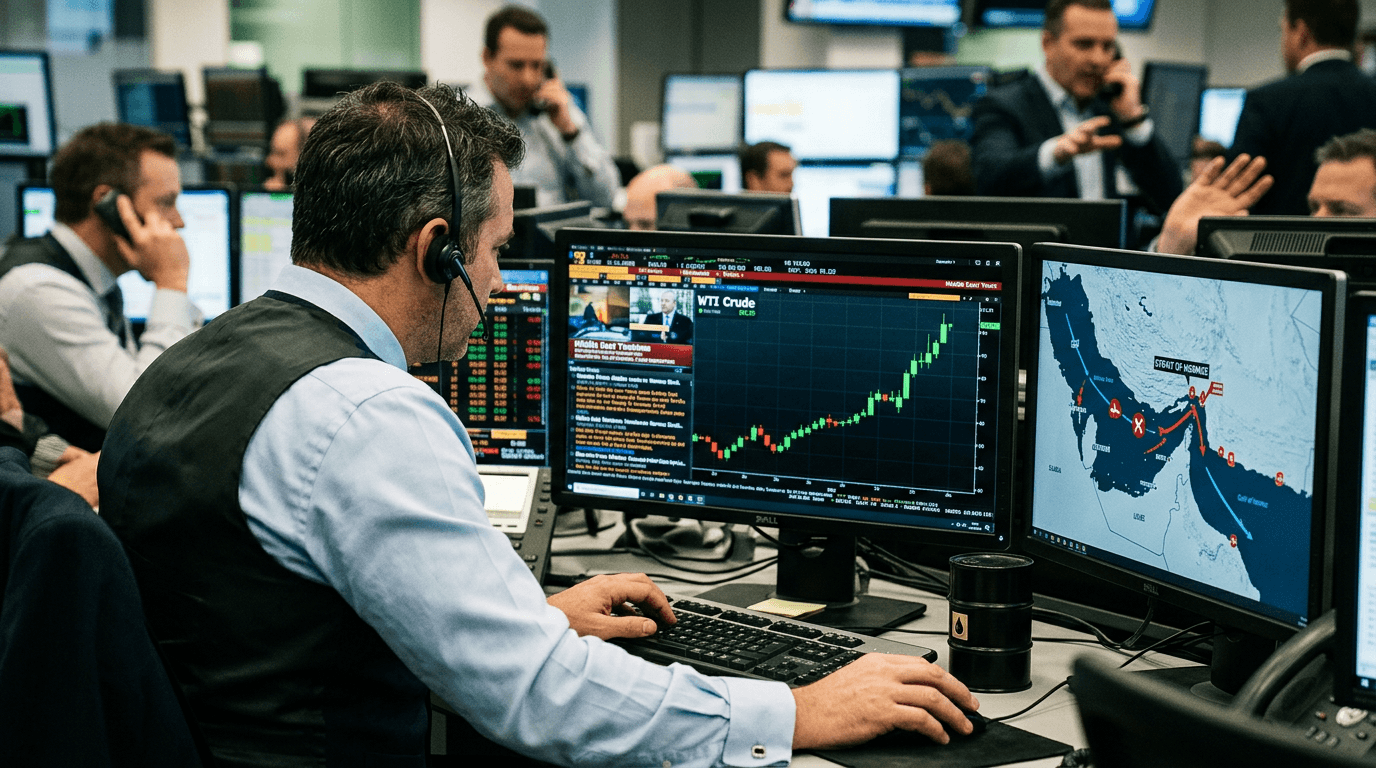
Global oil markets experienced a seismic shift this week as West Texas Intermediate crude oil surged past the $90 per barrel mark, reaching levels not seen since August 2022. This dramatic spike represents far more than a routine market fluctuation—it reflects the profound vulnerability of global energy infrastructure to geopolitical shocks and the cascading economic consequences that follow when critical supply routes face disruption. With tensions escalating in the Middle East and the strategic Strait of Hormuz facing unprecedented logistical challenges, traders and policymakers alike are grappling with a new energy reality that threatens inflation pressures and economic stability worldwide.
The Catalyst: Hormuz Strait Tensions And Supply Disruptions
The current crude rally stems directly from mounting concerns about oil flows through the Strait of Hormuz, a narrow waterway that normally handles approximately 20 million barrels of oil and petroleum products daily. This figure represents roughly one-fifth of all globally traded crude, making the Strait arguably the most critical chokepoint in the world's energy infrastructure. When this artery faces even partial disruption or perceived risk, markets respond with immediate volatility as traders scramble to price in supply uncertainty.
The catalyst for this week's surge came Friday when Qatar's Energy Minister Saad al-Kaabi told the Financial Times that Gulf exporters would halt production within days if tankers cannot safely pass through Hormuz. Simultaneously, President Donald Trump escalated rhetoric by urging Iran to accept unconditional surrender, amplifying fears that a prolonged conflict could severely impact worldwide oil supply. These developments transformed market sentiment from cautious to alarmed, triggering the 11 percent single-day surge that pushed WTI above the $90 threshold.
Global Benchmark Divergence: What The Spreads Tell Us
Understanding this crisis requires examining how different crude benchmarks have reacted. While WTI surged above $90, Brent crude traded above $88 per barrel, and Murban crude—the Abu Dhabi grade serving as the key pricing marker for Asian buyers—approached $100. These divergences reveal crucial information about where supply concerns are most acute.
Traditionally, geopolitical shocks in the Persian Gulf widen the Brent-WTI spread because Brent reflects globally traded seaborne crude while WTI is more tied to inland U.S. supply. However, this week the spread actually narrowed from roughly $8-9 per barrel to around $7, an unusual pattern suggesting traders are bidding up U.S. crude as buyers anticipate stronger demand for American export barrels if Middle East flows remain constrained. The surge in Murban prices tells an equally important story: Asian refiners, the most dependent on Persian Gulf exports, are facing rapidly rising feedstock costs that threaten profit margins across the region.
Market Mechanics And Inflation Implications
This oil shock carries profound implications for inflation and consumer purchasing power. The biggest weekly gain in approximately four years signals that markets view this disruption as potentially sustained rather than temporary. Higher energy costs ripple through entire economies, increasing transportation expenses, manufacturing costs, and ultimately consumer prices for goods and services across sectors far beyond energy itself.
The White House has acknowledged these risks and signaled it is exploring options to limit economic fallout, including potential releases from the Strategic Petroleum Reserve and temporary measures to ease consumer pressure. Such interventions, while potentially helpful in the short term, cannot fundamentally address the underlying supply constraint if Hormuz disruptions persist. Saudi Arabia has attempted to mitigate the crisis by raising prices for Asian buyers and redirecting shipments through Red Sea ports to bypass Hormuz entirely, but these routing changes add complexity and cost while reducing overall throughput capacity.
Looking Ahead: What Traders Should Watch
Market observers should monitor several critical indicators. The $90 mark is now firmly within reach for Brent and triple-digit crude is already emerging in parts of the global benchmark system, particularly Murban's approach to $100. These price levels have profound psychological and practical significance—$100 oil touches a cultural memory of the 2008 financial crisis and triggers additional hedging and defensive positioning across financial markets.
The persistence of Hormuz uncertainty will determine whether current prices stabilize or escalate further. If tensions ease and shipping corridors remain open, relief could come quickly. If conflict deepens or tanker traffic faces continued impedance, markets could test $100 and beyond within days. Energy traders should prepare for elevated volatility, while those with broader portfolio exposure should recognize that crude oil shocks typically correlate with equity market weakness and defensive positioning.
Takeaway For Simfi Traders
For participants in simulated finance environments, this week's crude oil surge offers invaluable lessons in how geopolitical events transmit through global markets, how different asset classes correlate during crises, and how supply constraints in critical infrastructure create profitable trading opportunities. The fundamental drivers—supply disruption, demand uncertainty, and geopolitical risk—remain constant whether trading with real capital or simulated positions. Understanding these mechanics builds the judgment essential for navigating real markets.
The Strait of Hormuz crisis reminds us that modern economies remain vulnerable to ancient geography and that energy security remains central to global stability.