
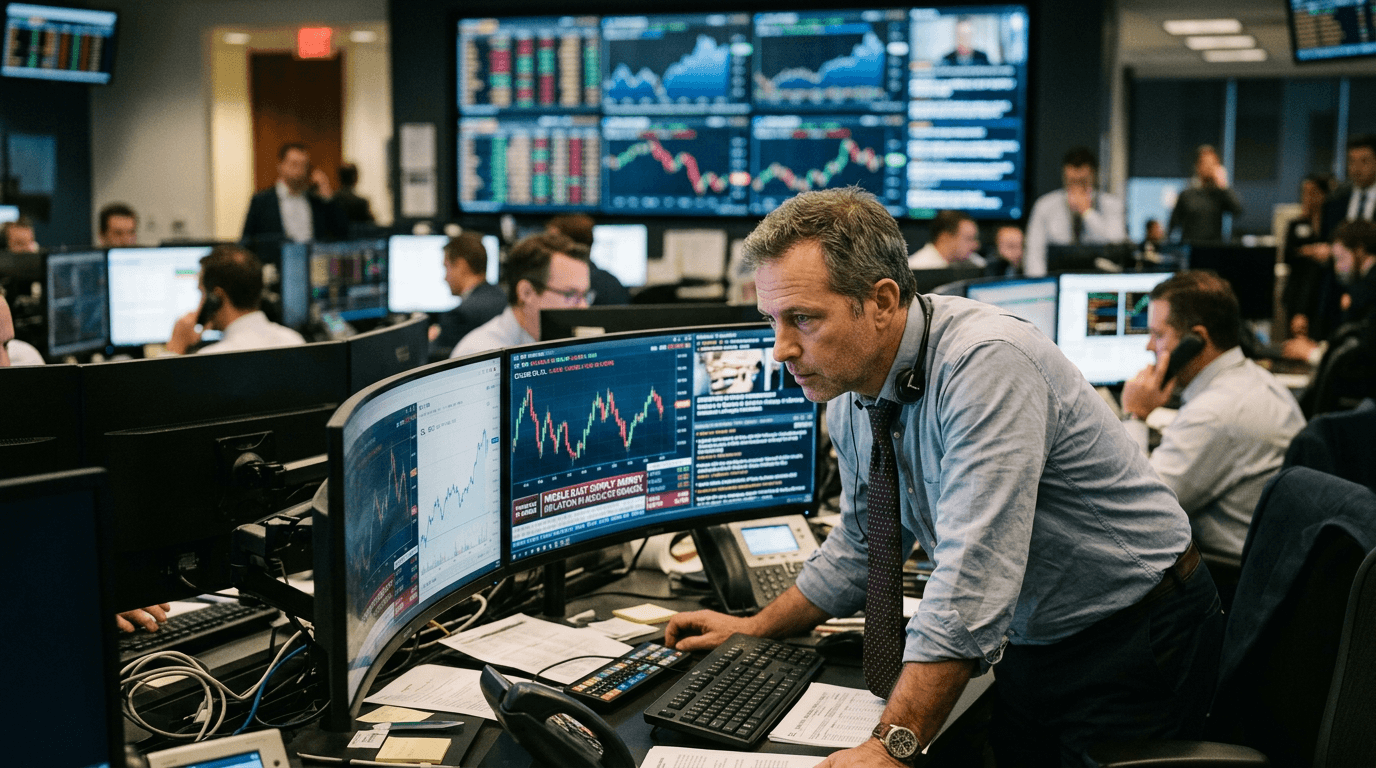
Oil markets are back in the spotlight, and this time it is volatility, not just direction, that has futures traders on edge. Middle East tensions have reignited sharp swings in crude, turning every new headline into a potential catalyst for rapid repricing across energy, rates, and equity index futures. For anyone trading macro themes or short-term moves, understanding how this volatility transmits through the futures complex is now essential, not optional.
Why Oil Volatility Matters For Futures Traders
Crude oil is not just another commodity; it is a benchmark input for global production, transportation, and logistics. When prices move quickly, the impact ricochets through inflation expectations, corporate margins, and ultimately, central bank policy paths. Renewed geopolitical tensions in the Middle East have already pushed crude prices higher in recent trading, underscoring the link between conflict risk and energy markets[2].
For futures traders, volatility is both an opportunity and a risk. Higher implied and realized volatility widens intraday ranges, creates more frequent breakouts and fake-outs, and increases the importance of execution and risk controls. Brent crude futures, for instance, have fluctuated in a wide band between roughly $98 and $119 per barrel over recent weeks as tensions triggered mixed market moves[7]. That kind of range expansion changes the behavior of technical levels, stop placements, and position sizing.
Importantly, oil is also a sentiment barometer. Sharp spikes in crude often coincide with risk-off flows, weigh on cyclical equities, and support safe-haven assets. When volatility in oil rises, so does the probability that equity index futures and currency pairs will react, even if the move in crude is short-lived.
Middle East Tensions: From Headlines To Price Swings
The latest bout of volatility is being driven less by pure supply-demand data and more by geopolitics. Reports of renewed military escalation and fragile ceasefires in the region have repeatedly pushed oil higher, as traders price in the risk of supply disruptions or shipping bottlenecks in key transit routes[2][6]. In one recent episode, oil prices climbed about 1% in a single session as optimism around a ceasefire faltered, reminding the market how quickly sentiment can shift[6].
This is not a one-directional story. While rising tensions intuitively suggest higher prices, futures markets do not always move in a straight line. There are instances where oil futures have signaled potential downside or consolidation even as geopolitical risk remains elevated, reflecting expectations for demand softness, alternative supplies, or the belief that worst-case scenarios will be avoided[4]. For traders, this divergence between headline risk and price action is critical: trading the narrative without verifying what the market is actually pricing can be costly.
The result has been record or near-record levels of short-term volatility, as measured by intraday ranges and swings around key data or news events. Since the start of the broader conflict cycle in the region, Brent and refined products like diesel have seen pronounced surges and sharp reversals, with speculation and rapid position adjustments amplifying the moves[5]. In this environment, liquidity can thin out near major levels, making slippage and gaps more common.
Inflation, Rate Cut Expectations, And Equity Index Futures
Energy prices feed directly into inflation prints and, just as importantly, into inflation expectations. Sustained rises in oil increase costs for transportation, manufacturing, and consumer goods, which can slow disinflation or even reignite price pressures. Higher oil tends to push market-based inflation expectations higher, which in turn can lead traders to reduce the odds or size of future rate cuts.
This transmission channel matters for rate and equity index futures. If crude remains elevated or volatile, fixed-income markets may start to price a slower or shallower easing cycle, potentially lifting yields and pressuring growth-sensitive sectors. That shift can weigh on stock index futures, particularly in energy-intensive industries such as airlines, autos, and parts of consumer discretionary.
At the same time, the composition effect can create divergent moves across equity futures. Energy and defense names can benefit from higher crude and geopolitical risk, sometimes propping up certain indices even as broader risk sentiment deteriorates. This dynamic helps explain why the relationship between oil and equity index futures is not always a simple inverse correlation; sector weighting and earnings sensitivity to energy prices play a major role.
For traders, the key is to think in terms of scenarios. A sustained geopolitical premium that keeps oil high may support energy stocks but undermine rate-cut hopes, while sharp but short-lived spikes may produce more of a volatility shock than a lasting macro shift. Aligning futures positioning with these scenarios—rather than reacting to each headline—is a core skill in this environment.
Trading And Risk Management In A High-vol Regime
When oil volatility spikes, trading strategies that worked in lower-volatility regimes can suddenly become fragile. Tight stops may get repeatedly triggered by noise; wide stops increase risk per trade. Position sizing needs to be recalibrated to account for bigger average true ranges and the potential for gap risk around key geopolitical developments.
Options markets provide one avenue to express views on volatility itself. Market participants have highlighted strategies that use options on oil-linked products to trade the swings rather than just outright direction, reflecting the demand for tools that can benefit from large moves in either direction[3]. Volatility-focused structures—such as straddles or strangles—may become more attractive when implied volatility is elevated but still lags realized moves, though traders must be careful about time decay and volatility crush when tensions ease.
Risk management in this environment should emphasize:
- Clear definitions of maximum loss per trade and per day
- Use of volatility-adjusted position sizes (for example, smaller contracts when daily ranges expand)
- Awareness of key event windows (ceasefire announcements, military developments, OPEC commentary, major policy speeches)
- Scenario planning for gaps and slippage, especially if trading into illiquid hours
In addition, cross-asset correlations can break down or flip sign under stress. A setup that typically hedges equity risk with a particular commodity or currency may not behave as expected when oil becomes the primary driver of macro sentiment. Regularly reassessing correlations and backtesting under stressed periods can help avoid overconfidence in static hedging assumptions.
How Simulated Trading Can Help You Navigate The Turbulence
For traders still building their playbook—or for experienced traders adapting to a new volatility regime—Simulated Finance (SimFi) environments offer a valuable sandbox. Oil-driven volatility is an ideal case study for practicing:
- Trading around news: how to handle entries, exits, and risk when markets react to geopolitical headlines
- Volatility-aware position sizing: testing different methods of sizing based on ATR or implied volatility
- Cross-asset strategies: exploring how moves in crude relate to equity index, rate, and FX futures under different scenarios
Because no real capital is at risk, traders can stress-test strategies that might otherwise be too risky to trial in live markets, such as short-dated options structures or intraday breakout approaches during major news windows. They can also review their decision-making after volatile sessions, refining rules for when to stand aside versus when to engage.
The current environment—where Middle East tensions keep oil volatile and futures markets alert—is a reminder that macro trading is as much about process as prediction. You cannot control the headlines, but you can control your preparation, your risk parameters, and your ability to adapt.
As long as geopolitical risk remains elevated and energy markets are sensitive to every development, futures traders should expect oil to remain a central driver of global risk sentiment. Those who understand the transmission channels—from crude to inflation, from rates to equities—and who use disciplined, volatility-aware strategies will be better positioned to turn turbulence into structured opportunity.