
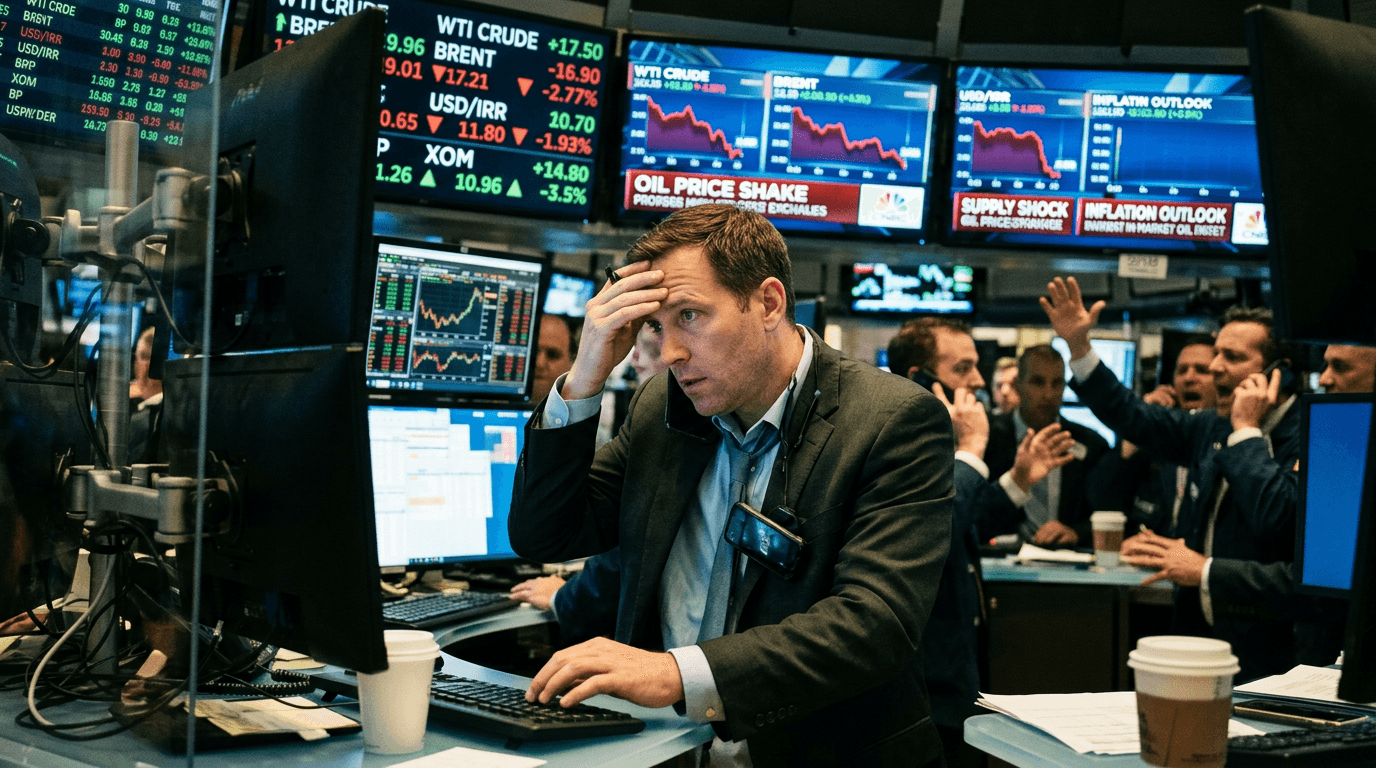
Oil prices have swung sharply as traders digest reports of temporary US sanctions waivers on Iranian crude and the prospect of a broader peace deal in the Middle East[1][7]. The shifting geopolitical narrative is rapidly reshaping expectations for global supply, WTI and Brent futures, energy equities, and even inflation forecasts across the broader market[5][9].
Behind the volatility is a familiar but powerful mix: changing sanctions policy, tentative de-escalation in a key producing region, and a market still scarred by recent supply disruptions and fuel shortages[3][15]. Understanding how these forces interact is essential for anyone trading oil directly or managing exposure through indices, energy stocks, or inflation-sensitive assets[5].
What Is Driving The Latest Oil Price Swings
The immediate catalyst is a US decision to temporarily waive certain sanctions on Iranian oil exports as part of a wider diplomatic effort to end regional hostilities[1][7]. The waiver authorizes the production, delivery, and sale of Iranian crude and petroleum products for a limited period, currently running through mid-August[1][7]. In practical terms, that gives Iran and its buyers a short window to increase legitimate exports without triggering US penalties[1][7].
At the same time, Middle East oil and gas output is still in the process of recovering from recent disruptions linked to conflict and infrastructure outages[3][15]. Analysts expect it will take months for production and refining across the region to return fully to pre-war levels, even under a favorable peace scenario[3]. That lag creates uncertainty around how quickly any additional Iranian barrels actually translate into net global supply growth.
Markets are also wrestling with the political durability of the deal. The fact that the waiver is time‑limited and can be revoked raises the possibility of a sharp reversal in flows if diplomacy stalls or tensions flare again[1][4][7]. This “on–off” profile naturally feeds volatility as traders continually reprice the probability of barrels being available three, six, or twelve months from now.
How Sanctions Waivers And A Peace Deal Change Supply
From a supply perspective, even the prospect of more Iranian crude can ease near‑term tightness by encouraging refiners and traders to line up new cargoes and logistics[1][7]. Tanker chartering, insurance, and financing become easier when flows are explicitly licensed rather than operating in a gray area of enforcement risk[7]. That visibility can pressure prompt prices and compress the geopolitical risk premium embedded in crude benchmarks[5][14].
This is happening against a backdrop where medium‑term supply was already projected to rise. Recent forecasts suggest global oil supply could increase by roughly 2.4 million barrels per day by 2026, taking total production to around 108.6 million barrels per day, driven in part by recovery and investment in the Gulf region[6]. That means the market is moving from a narrative of structural scarcity to one where incremental barrels from Iran add to an already more comfortable supply outlook[6].
On the demand side, the balance is shifting as well. The International Energy Agency has cut its 2026 oil demand outlook by about 700,000 barrels per day and now expects global consumption to decline by around 1.1 million barrels per day this year, citing weaker fuel use and the lingering effects of recent price and conflict shocks[9]. When softer demand collides with higher prospective supply, any easing of geopolitical risk—such as progress on a peace agreement—can have an outsized bearish impact on prices[5][9].
Geopolitical risk and oil prices are tightly linked because traders add an explicit risk premium when they fear disruptions to physical supply routes, such as the Strait of Hormuz[5][8]. Earlier in 2026, concerns about chokepoint closures and shipping attacks drove a spike in that premium and in related fuel prices, contributing to a broader “fuel crisis” in some import‑dependent economies[15]. As shipping lanes normalize and a ceasefire looks more credible, that premium starts to unwind, pulling futures lower and flattening or even inverting the term structure[3][11][14].
Implications For Energy Equities And Inflation
Energy equities tend to move with crude prices, but the relationship is not one‑to‑one. A temporary sanctions waiver that boosts supply and weighs on prices can compress cash‑flow expectations for producers, particularly those with higher breakeven costs or more leveraged balance sheets. At the same time, lower feedstock prices can support refiners and some integrated majors whose downstream margins improve when crude falls faster than refined product prices.
For broader equity markets, the story runs through inflation and growth expectations. Oil is a major input into headline inflation baskets worldwide, and geopolitical shocks that push prices higher have been a recurring source of upside surprises in consumer price data[5]. When risk premia deflate and crude retreats, markets often mark down future inflation and slightly relax expectations for how restrictive central bank policy needs to be[5][9]. The reverse holds if peace talks falter and supply disruptions or sanctions snap back.
Fixed‑income and inflation‑linked securities are similarly sensitive. Falling oil prices can lower breakeven inflation rates, while persistent geopolitical risk keeps an upside tail in play, especially for shorter‑maturity instruments tied closely to energy costs[5]. That is why even traders who never touch oil futures still watch WTI and Brent as real‑time gauges of macro risk.
What Traders And Investors Should Watch
For active traders, three information channels matter most in this environment. First is policy signaling around sanctions waivers and the peace process: official statements, license extensions or expirations, and any sign of political pushback that could limit the scope or duration of Iranian exports[1][4][7]. Sudden changes here can translate into gap moves in crude and related assets.
Second is evidence of actual physical flows. Shipping data, port loadings, and inventory reports help distinguish between “headline barrels” and oil that is truly reaching the market. Recovery in Middle East production and refining is still expected to take months, so watching how quickly facilities ramp up provides clues about whether supply is catching up with the more optimistic scenarios being priced in[3].
Third is the global demand picture. The IEA’s lower consumption forecast highlights that demand risk is not just about recessions but also about structural efficiency gains, substitution, and policy[9]. High‑frequency indicators like mobility data, refinery runs, and fuel sales can confirm or challenge the official outlook, helping traders decide whether dips driven by de‑risking are buying opportunities or the start of a more durable downtrend.
In terms of strategy, this backdrop favors scenario‑based thinking. Traders can map portfolios to different combinations of sanction outcomes, conflict paths, and growth trajectories, then design hedges using oil futures, options, and correlated assets such as energy equities or airline stocks. The goal is not to predict the exact political outcome but to understand how each scenario would affect prices and volatility.
How Simulated Trading Can Help Navigate This Volatility
For many market participants, jumping directly into leveraged crude positions around geopolitical events is a recipe for emotional decision‑making and oversized losses. Simulated trading environments allow traders to rehearse how they would respond to sudden headlines—such as an unexpected extension or cancellation of the Iran waiver—without putting real capital at risk.
In a SimFi setup, traders can test how different portfolio constructions behave when risk premia expand or compress, when term structures flip from backwardation to contango, or when energy equities decouple from crude. They can practice building playbooks for scheduled decision dates, like waiver expiries, and stress‑test positions against surprise shocks in either direction.
This kind of structured experimentation helps refine risk management: setting position limits, choosing stop‑loss levels that reflect volatility rather than fear, and deciding when options are a better tool than outright futures. Over time, traders build a data‑driven sense of how their strategies perform in high‑headline, geopolitically charged markets—insight that becomes invaluable when real money is on the line.
Conclusion
The latest bout of oil price volatility is not just noise; it reflects a meaningful shift in the interplay between geopolitics, sanctions policy, and the global supply‑demand balance[1][3][7]. A temporary US waiver on Iranian oil exports, tentative progress toward a peace deal, and a softer demand outlook have combined to erode some of the geopolitical risk premium that previously supported higher prices[5][9][14]. For traders and investors, the challenge is to navigate this environment with clear scenarios, disciplined risk management, and an appreciation of how quickly the narrative can change. Those who use episodes like this to strengthen their analytical and execution frameworks—whether in live or simulated markets—will be better positioned for the next turn in the cycle.