
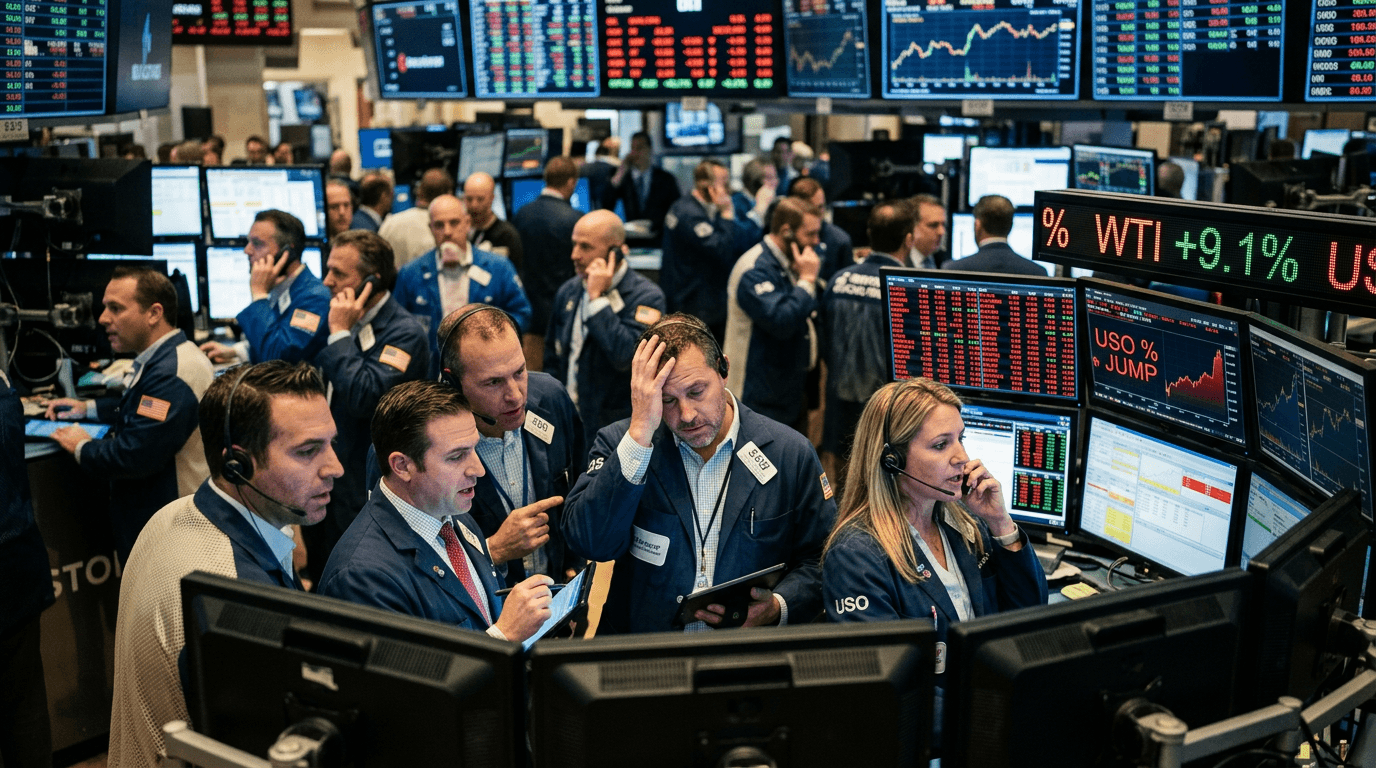
Oil’s latest 9% surge, pushing U.S. crude above $81 and Brent toward $86, is a powerful reminder that Middle East risk still sits at the heart of the global macro story. For traders, this is not just an energy headline; it is a shock to inflation expectations, interest‑rate bets, and futures positioning across asset classes.
MARKETS JOLTED BY A 9% OIL SPIKE
The immediate driver of the move is a renewed flare‑up in U.S.–Iran tensions, with fresh military strikes and the effective breakdown of a recent truce raising fears of supply disruption from a region that remains critical to global oil flows[3]. The pattern is familiar: each time diplomacy falters or ceasefires are declared “over,” crude responds with sharp upside moves[2][10].
Earlier episodes in 2026 showed how violently the market can react. During one of the most volatile trading weeks of the year, June WTI futures swung between a high near $107 and a low below $89 before stabilizing, as traders digested conflict headlines, shipping disruptions, and fast‑changing diplomatic signals[6]. Those price swings were driven less by immediate barrels lost than by the market repricing tail‑risk scenarios.
This latest 9% jump has also triggered classic risk‑off behavior: safe‑haven assets bid up, U.S. equities under pressure, and volatility measures turning higher. Previous Iran‑related escalations knocked global stock indices lower, including broad European benchmarks and U.S. equity futures[4][7]. When energy becomes the story, earnings margins, consumer spending, and discount rates all come under scrutiny.
Why Middle East Tensions Move Oil So Fast
At the center of the risk narrative is the Strait of Hormuz, one of the world’s most important oil choke points. Roughly a fifth of global oil trade passes through this narrow channel, making it a critical artery for both crude and refined products[9][6]. Any threat of closure, naval blockade, or attacks on tankers can send a “risk premium” ripping through the curve.
We have already seen how sensitive prices are to this corridor. Earlier in the year, disruptions around the Strait contributed to sharp intraday spikes and a wide trading range in crude futures as ships were delayed and insurance costs rose[6]. Later, when the U.S. and Iran agreed to extend a ceasefire and raised hopes that traffic through Hormuz would normalize, crude fell more than 4% to a three‑month low[9].
As diplomatic efforts progressed further and a memorandum of understanding paved the way for talks on Iran’s nuclear program, Brent briefly dropped to levels last seen before the conflict, helped by a steady increase in vessel traffic through Hormuz[8]. Maritime data showed more tankers moving through the channel once sanctions eased and tensions cooled[8]. This sequence underscores a key lesson for traders: Middle East geopolitics can add or remove several dollars of “risk premium” from oil in a matter of days.
What Higher Oil Means For Inflation And The Fed
Oil shocks rarely stay confined to the energy complex. They filter through to gasoline, diesel, and broader inflation, which in turn influence central bank policy expectations. Earlier in the conflict, U.S. gasoline prices jumped more than 30% from pre‑war levels, while diesel rose even more, squeezing consumers and transport‑dependent sectors[7]. Even after recent declines, fuel costs remained notably above pre‑war benchmarks[8][11].
When crude spikes 9% in a single session, markets quickly reassess the path of inflation. Higher energy prices can lift headline CPI directly and, if sustained, bleed into core components via transportation, manufacturing, and services. That pushes investors to reconsider how soon and how aggressively the Federal Reserve might cut rates. If inflation expectations drift higher, the bar for near‑term easing rises.
This is why a big oil move can hit both bonds and stocks simultaneously. Rising inflation expectations tend to push nominal yields higher, especially at the front and belly of the curve, as traders add back probability of “higher for longer.” Equities can suffer a double hit: higher discount rates and margin pressure for energy‑intensive sectors. In earlier phases of the U.S.–Iran conflict, signs of progress in talks helped ease fuel prices, but analysts warned it would take months for consumers to feel the full relief at the pump[11]. The reverse is also true: sharp oil spikes can tighten financial conditions faster than official policy statements.
How Futures Traders Are Positioning
For futures traders, a 9% one‑day move is not just a price event; it is a risk‑management stress test. Earlier in 2026, crude’s violent swings forced traders to navigate wide intraday ranges, stop‑outs, and margin calls as markets reacted to conflicting headlines about ceasefires, strikes, and Hormuz shipping data[6]. Episodes like this drive volatility higher, widen bid‑ask spreads, and increase the cost of holding leveraged positions.
Energy futures are not the only contracts in motion. Equity index futures often reprice rapidly when oil shocks change macro expectations. Rising crude can weigh on broad indices while supporting sector rotation into energy producers and away from fuel‑intensive industries such as airlines, transportation, and some manufacturers. At the same time, interest‑rate futures adjust to shifting odds of Fed cuts as traders incorporate higher inflation and geopolitical risk into their models.
We have also seen how quickly sentiment can flip. Progress toward ceasefires and peace deals has previously sent crude lower as traders priced in the reopening of key routes and potential increases in supply[9][8][11]. In those periods, crowded long positions in oil became vulnerable to sharp unwinds, while rate‑cut expectations firmed as energy price pressures eased. The common thread is that positioning around geopolitically driven moves must remain flexible and tightly risk‑controlled.
Practical Takeaways For Traders And Simulated Strategies
For both live and simulated trading, these developments highlight several practical lessons:
- Treat geopolitics as a volatility catalyst, not a sideshow. U.S.–Iran headlines can move oil, equity, and rate markets in minutes. Building a process to monitor event risk, including weekend and overnight developments, is essential.
- Understand the transmission channels. Oil shocks tend to hit fuel prices, then inflation data, then central bank expectations, then broader risk assets. Mapping these links helps you anticipate where the next move might appear rather than reacting only to price in your primary market.
- Size for volatility, not for conviction. When crude is swinging $5–$10 a day, smaller position sizes, wider but well‑defined stops, and reduced leverage can be the difference between participating in opportunity and being forced out by margin calls.
- Use scenarios, not predictions. Instead of trying to forecast the exact path of the conflict, build a set of plausible scenarios—escalation, prolonged stalemate, or renewed diplomacy—and think through how each would affect oil, the dollar, yields, and equities. Then design trades or simulated strategies that are robust across multiple outcomes.
- Separate tactical trades from structural views. You might have a long‑term view that the energy transition caps oil demand growth, yet still trade tactical long setups when geopolitical risk premiums expand. Keeping those horizons distinct improves decision‑making.
As the latest 9% spike in oil shows, Middle East tensions and the U.S.–Iran conflict remain potent drivers of global markets. For traders, the key is not to guess the next headline, but to understand how energy, inflation, and interest‑rate expectations interact—and to build trading and risk‑management frameworks that can withstand the kind of sudden repricing the market has just experienced.