
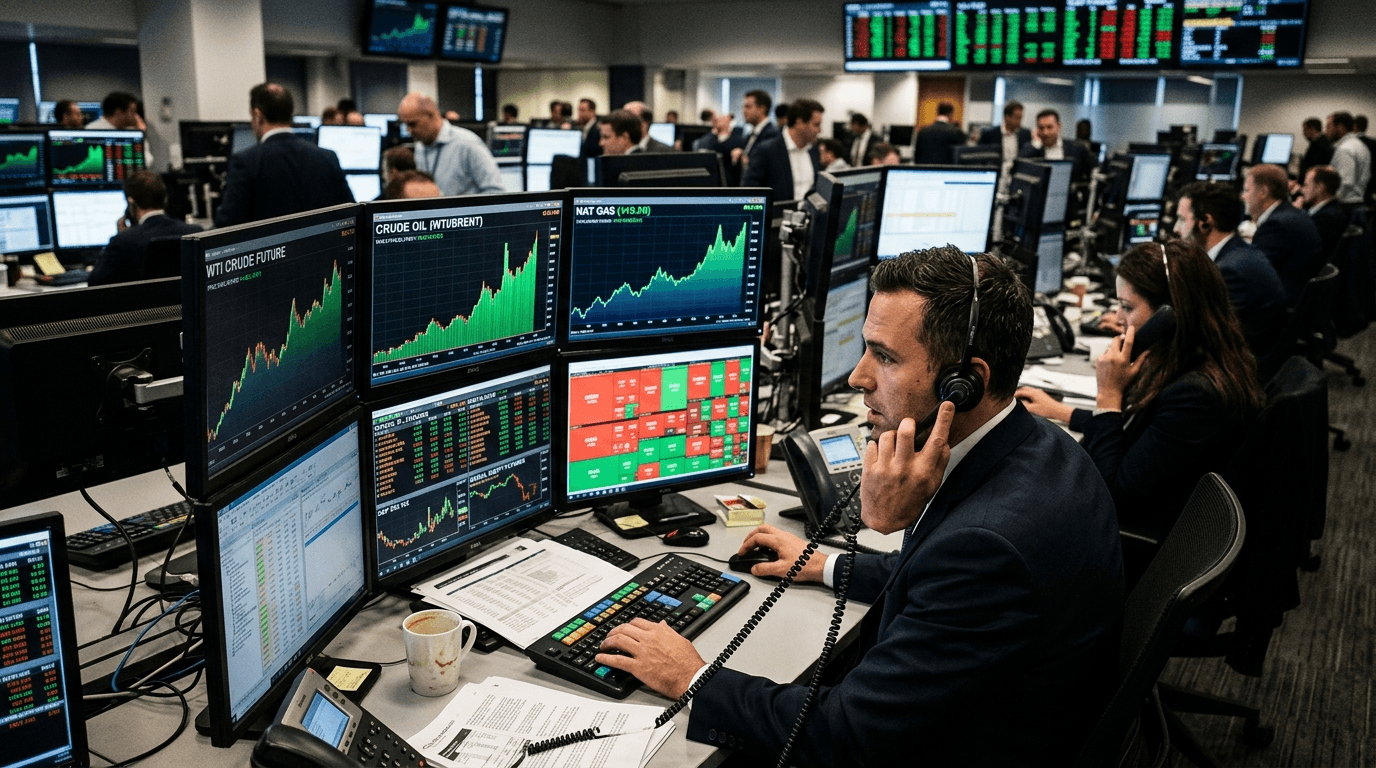
Oil’s latest climb on renewed Strait of Hormuz tensions is about more than just crude benchmarks ticking higher. It is a textbook example of how a single geopolitical chokepoint can reshape risk sentiment across energy futures, commodity-linked assets, and even broader equity-index and rates markets. For traders, it offers a live case study in how supply risk, inflation expectations, and cross-asset flows interact in real time.
Market Backdrop: Hormuz Tensions And Oil Supply
The Strait of Hormuz sits at the heart of global energy logistics, funnelling a large share of the world’s seaborne oil and liquefied natural gas through a narrow corridor vulnerable to military and political disruption. Any escalation involving the US, Iran, or regional actors tends to trigger swift reassessments of supply security, insurance costs, and transit risk.
Recent flare-ups, including naval blockades, attacks on commercial vessels, and contested reopening plans for the strait, have reintroduced a significant risk premium into oil prices. Even when spot physical flows are only partially disrupted, the perceived probability of a broader shutdown is enough to push crude benchmarks higher and keep volatility elevated.
In this environment, traders are not just pricing current barrels of oil; they are pricing scenarios. The market oscillates between expectations of a rapid diplomatic resolution and fears of prolonged bottlenecks. That tug-of-war is what drives brisk intraday swings, gaps on open, and sharp repricing along the futures curve.
Energy Futures And Commodity-linked Risk Sentiment
When a strategic chokepoint like Hormuz is in focus, energy futures quickly become one of the primary venues for expressing risk views. Crude benchmarks such as Brent and WTI tend to rally as traders hedge potential supply interruptions and speculative flows chase momentum. Volume and open interest often pick up as hedgers, macro funds, and short-term traders converge in the same contracts.
Beyond crude, the ripple spreads into refined products futures and energy-linked derivatives. Gasoline and diesel contracts may rise on expectations of tighter refinery margins and higher feedstock costs. Volatility surfaces in options on crude and products steepen, reflecting demand for upside protection and tactical plays on price spikes.
Commodity-linked assets typically respond as well. Energy majors and oilfield service stocks become more active in equity-index futures, often outperforming broader indices when crude prices surge. Currencies tied closely to energy exports, such as those of major oil-producing economies, can strengthen as markets anticipate improved terms of trade and fiscal revenues.
Crucially, this environment tends to lift risk sentiment within the energy complex even as it introduces caution at the index level. For short-horizon traders, it creates opportunities in relative value: long energy, short energy-intensive sectors; long producers, short consumers.
Macro Ripple Effects: Inflation And Cross-asset Flows
Higher oil prices rarely stay confined to the energy patch. They feed directly into inflation expectations through fuel costs, transportation expenses, and eventually broader price pass-through. That makes energy spikes particularly important for rates and index futures traders.
Inflation-linked instruments and breakeven trades may react as markets price in higher headline inflation, especially if oil remains elevated rather than spiking briefly. In turn, rates futures can move as traders recalibrate expectations about central bank policy paths: higher-for-longer narratives gain traction if energy-driven inflation appears persistent.
Equity-index futures feel the impact via sector rotation. Energy, materials, and some industrial names can benefit, while airlines, logistics firms, and consumer discretionary sectors often face margin pressure from higher fuel and input costs. Indices with heavier energy weightings may outperform those skewed toward energy-intensive industries, making country and sector selection more important.
For multi-asset traders, the key lesson is that a geopolitical shock in a single commodity can morph into a macro story. Oil becomes a proxy for growth, inflation, and policy uncertainty, and futures across asset classes adjust accordingly.
How Traders Can Navigate The Move
In a Hormuz-driven oil rally, disciplined structure beats reactive trading. Start by mapping the key transmission channels: crude benchmarks, refined products, energy equities, commodity-linked currencies, and inflation or rates products. Understanding how these pieces fit together helps avoid overexposure in correlated trades.
Risk management should focus on position sizing and scenario analysis. Ask what happens if tensions escalate further and flows through the strait drop sharply, versus a surprise diplomatic breakthrough that releases pent-up supply and collapses the risk premium. Stress-testing positions against both tail scenarios can highlight hidden leverage.
Technical levels and curve dynamics matter. Sharp moves often produce dislocations in calendar spreads, basis between different benchmarks, and relationships between crude and refined products. Traders who can spot when these relationships diverge from fundamentals may find opportunities in spread trades rather than pure directional bets.
For short-term participants, volatility is a feature, not a bug. Intraday spikes around news flow, official statements, or shipping updates reward those who combine clear trading plans with fast execution. For longer-horizon traders, the focus shifts to whether the geopolitical risk alters medium-term supply-demand balances or remains a transient shock.
Practical Takeaways For Simulated Traders
For traders using a SimFi platform like E8 Markets, this episode is an ideal environment to practice navigating complex, event-driven markets without capital at risk. By replaying or simulating Hormuz-related price action, you can systematically build and test your playbook.
Three practical exercises stand out
1) Build a cross-asset watchlist tied to energy shocks, including crude, products, energy equities, and rates futures. Track how each responds to new headlines to internalize the sequence of moves.
2) Design and backtest simple rules-based strategies, such as trading energy vs index futures on defined news triggers or volatility thresholds. Measure drawdowns, win rates, and sensitivity to slippage.
3) Practice scenario planning: define escalation and de-escalation paths for Hormuz tensions, then map expected market reactions. Use simulated trades to test how your portfolio would perform under each scenario.
These exercises reinforce risk awareness and pattern recognition, both of which are crucial when real markets become noisy and fast-moving.
Ultimately, the rise in oil on Hormuz tensions underscores how interconnected modern markets are and how quickly a localized conflict can reverberate through futures and risk sentiment. For traders, the goal is not to predict every political twist, but to understand the economic channels, construct robust strategies, and manage exposure intelligently. In a simulated environment, this kind of event becomes a valuable training ground, helping you refine your approach before deploying it in live markets.