
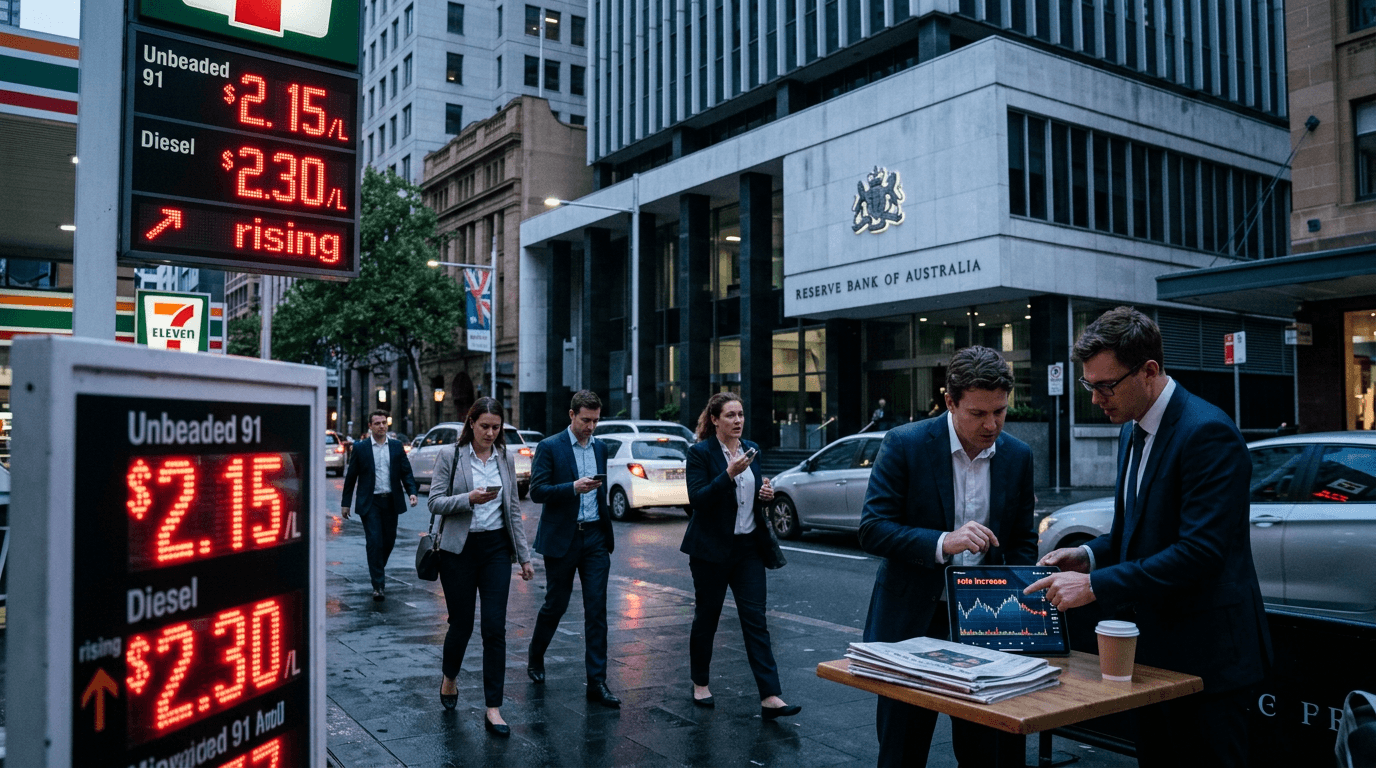
RBA's Stagflation Warning: Energy Shocks and the Policy Predicament
The Reserve Bank of Australia (RBA) is navigating turbulent waters as escalating energy prices threaten to usher in stagflation—a perilous combination of persistent inflation and sluggish economic growth. RBA Governor Michele Bullock has sounded the alarm, noting the risk that heightened fuel costs, driven by tensions in the Middle East, could further spike inflation if such conflicts persist. This energy-induced shock presents a formidable policy conundrum, where conventional interest rate hikes may fall short of addressing the supply-side forces elevating prices. For traders and investors keeping an eye on the Australian market, grasping this intricate dynamic is vital for predicting central bank maneuvers and navigating potential market swings.
Energy Shocks And Inflation Pressures
Global oil markets are under significant pressure due to heightened geopolitical tensions in the Middle East, causing crude prices to soar. The OECD has already revised its 2026 US inflation forecast upward, from 3% to 4.2%, signaling that energy-driven inflation is becoming deeply entrenched across major economies. Australia, although not as heavily reliant on commodities as some nations, still faces substantial inflationary pressures from rising petrol prices. Bullock recently pointed out that higher fuel costs will exacerbate inflation even prior to the RBA's latest decision to increase interest rates. The mechanism is clear: as crude and fuel prices climb, these costs cascade through transportation, household budgets, and production inputs, elevating overall price levels in the economy.
The Stagflation Dilemma
Stagflation occurs when an economy simultaneously experiences high inflation and weak growth—posing a double-edged sword for policymakers and investors. Energy price shocks contribute to this risk by acting as a tax on consumers and businesses. Elevated fuel prices erode discretionary spending power, potentially curtailing consumption and slowing economic growth. Concurrently, these price hikes elevate headline inflation and risk anchoring inflation expectations higher, complicating the central bank's task. The RBA faces this quandary head-on: raising rates can curb inflation but may exacerbate the economic slowdown induced by rising energy costs. As Bullock has articulated, the RBA must act to prevent inflation expectations from spiraling, yet rate hikes alone cannot boost global oil supply. This mismatch between the nature of the shock and available policy tools creates profound uncertainty regarding the optimal response.
Why Rate Hikes Alone Are Insufficient
Traditional monetary policy primarily influences demand, but energy shocks are fundamentally supply-side issues. When geopolitical tensions constrain oil supply, increasing interest rates does not add barrels to global consumption. Instead, rate hikes aim to temper demand for goods and services, aligning it with limited supply and thereby controlling inflation. However, this process entails economic discomfort, manifesting as slower growth and potentially higher unemployment. The RBA's recent decision to elevate the cash rate target to 4.1% reflects its assessment that inflation risks have intensified and that inaction could unmoor inflation expectations. Nonetheless, the central bank acknowledges that this strategy cannot fully shield Australia from the adverse growth impacts of steep energy prices. The unresolved question remains: how aggressively should the RBA tighten policy when a key inflation driver lies beyond its control?
Market Implications For Traders
For traders on simulated finance platforms and in real markets, this environment presents several key considerations. Australian dollar futures may see volatility as the market recalibrates expectations for interest rate trajectories and economic growth. Should energy prices stabilize or decline, the RBA might have the latitude to cut rates later in 2026, potentially weakening the AUD. Conversely, if Middle East tensions intensify and oil prices surge beyond $125 per barrel globally, inflation pressures could compel the RBA to maintain elevated rates longer, propping up the currency. Equity markets may encounter headwinds from margin compression as energy costs rise while consumer demand wanes. Fixed income investors should closely monitor inflation expectations, as breakeven inflation rates embedded in bond yields will adjust based on energy price movements. The divergence between headline and core inflation will become increasingly significant for central bank communication as officials strive to differentiate temporary energy-driven price spikes from enduring demand-driven inflation.
Key Takeaways For Market Participants
Closely monitor geopolitical developments in the Middle East, as these directly impact oil prices and consequently RBA policy directions. Pay attention to the RBA's communication for any shift toward recognizing energy shocks as potentially temporary, warranting a more cautious approach to rate hikes. Track inflation expectations and sentiment surveys to gauge whether elevated energy costs are fostering broader expectations of persistent inflation. Consider positioning for AUD volatility while remaining cognizant that extreme energy price scenarios could force the RBA into challenging policy decisions. Remember that stagflation scenarios, though rare, create difficult environments where traditional correlations may falter—making diversification even more crucial when inflation and growth diverge.
The current energy price shock facing the RBA underscores the limitations of monetary policy in tackling supply-side economic disruptions. Traders and investors who understand this distinction will be better equipped to navigate the intricate market dynamics ahead.