
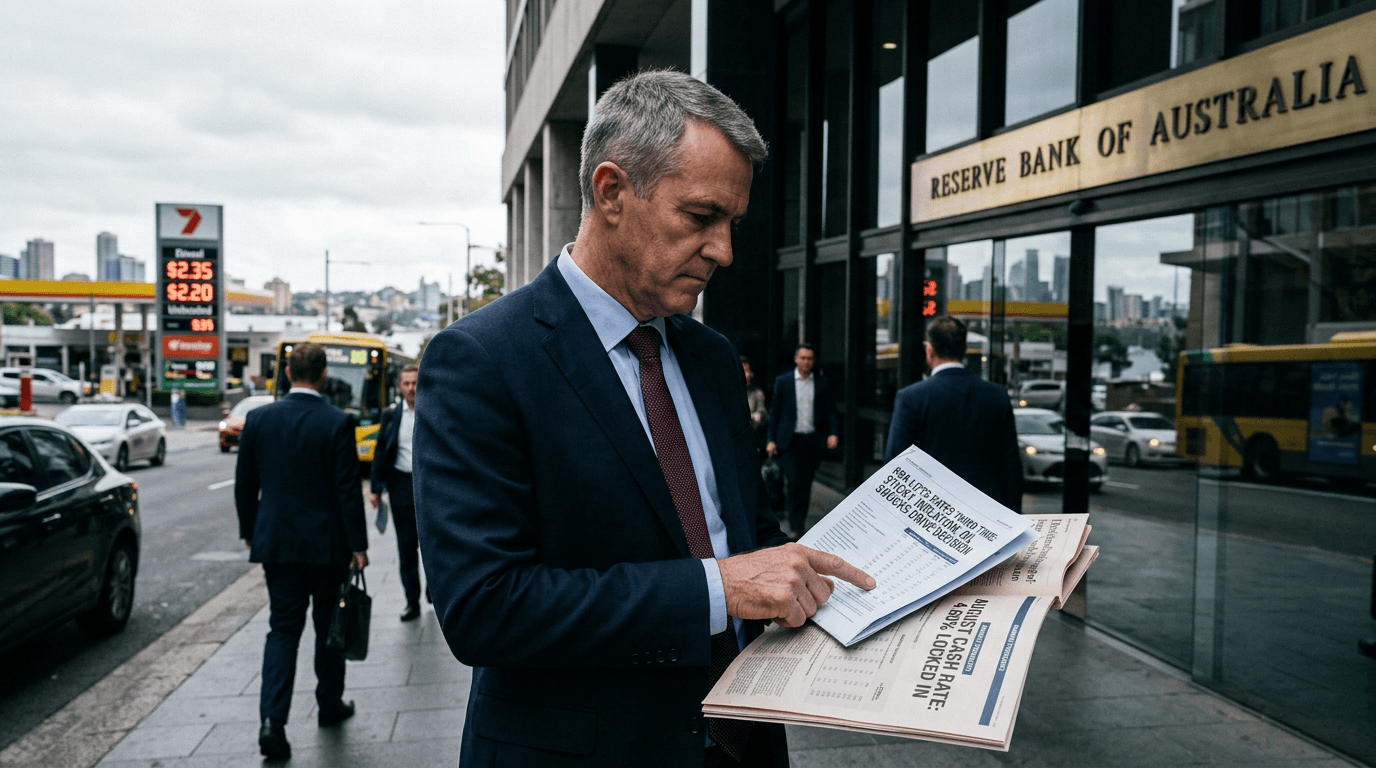
The Reserve Bank of Australia delivered its third consecutive rate hike on Tuesday, raising the cash rate by 25 basis points to 4.35%, a level not seen since early 2024. The decision came amid persistent inflationary pressures fueled by geopolitical tensions in the Middle East driving up global oil prices. While today's hike marks a return to post-pandemic highs, the more critical development for traders is what comes next: market expectations now fully price in a further increase to 4.60% by August or September, potentially reaching the highest level since late 2011. This escalating rate cycle represents a significant shift in policy stance and carries important implications for asset prices, currency movements, and economic growth expectations.
Understanding The Current Tightening Cycle
The RBA's hawkish pivot this year has been dramatic. After cutting rates three times in 2025, the central bank has now reversed course entirely with three consecutive hikes that have undone all those cuts. Governor Michele Bullock and her board voted 8-1 in favor of the latest increase, a notably unified decision compared to March's narrow 5-4 split. This unanimous support signals strong conviction among policymakers that inflation remains a primary concern requiring aggressive monetary tightening.
The decision reflects the RBA's assessment that current monetary policy is "slightly restrictive" but that further action may be warranted. Bullock emphasized that rising energy costs are driving inflation expectations higher, with headline inflation already at 4.6% in March. More concerning for the central bank is that core inflation remains above their 2-3% target band, suggesting price pressures extend beyond just energy. Early signals indicate that firms are beginning to pass rising costs through to consumers, amplifying inflation concerns.
THE PATH TO 4.60% AND BEYOND
While the board signaled a potential pause in the near term, financial markets have clearly priced in additional tightening. Swaps data suggests only a 15% probability of a rate move in June, allowing the market to digest today's decision. However, the consensus view strongly favors reaching 4.60% by August or September, with economists like those at Capital Economics and TD Securities adjusting their forecasts accordingly. This would represent a 25 basis point increase from current levels and mark the highest rate since late 2011, entering what some analysts describe as "unchartered territory" for the current economic cycle.
The case for further hikes rests on several factors. Capital Economics notes that inflation in Australia could surge to nearly 6% by mid-year as refined petroleum products continue driving up prices. Simultaneously, the labor market remains resilient, with recent data suggesting employment hasn't weakened materially. This combination of sticky inflation and robust employment gives the RBA less reason to pause its tightening campaign. Without clear improvement on the inflation front, the path to 4.60% appears largely assured.
Currency And Asset Market Implications
The Australian dollar experienced a modest 0.3% decline following the announcement, slipping to around $0.7145 USD. This move appears counterintuitive on the surface—rate hikes typically support currencies as higher yields attract foreign capital. However, the market's interpretation reflects disappointment that further hikes may be paused for now. The AUD had recently traded near four-year highs on expectations of aggressive RBA tightening, and today's messaging about a potential pause has tempered that bullish momentum.
Three-year government bond yields fell 5 basis points to 4.625%, the lowest in two weeks, also reflecting reduced expectations for near-term additional hikes. Long-term yields face an interesting dynamic: expectations of 4.60% by September are fully priced into forward rates, meaning they won't rally much further unless the RBA explicitly signals it will cut rates. Conversely, any indication of pausing or holding rates steady could see yields decline meaningfully.
What This Means For Traders And Investors
For traders in simulated finance environments, this RBA cycle presents multiple trading opportunities. Currency traders should monitor AUD/USD positioning, particularly around 0.72 resistance levels. Fixed income traders should consider that bond yields may face limited upside unless inflation surprises accelerate further. Equity traders should recognize that a 4.60% cash rate would represent a meaningful headwind to equity valuations, particularly for growth-oriented stocks dependent on low discount rates.
The broader global context matters too. The RBA is tightening while most major central banks have begun cutting or pausing, creating currency and carry trade implications. The Middle East geopolitical tensions that sparked the original oil shock remain fluid, potentially driving further energy cost surprises.
Key Takeaways For Market Participants
The RBA's move to 4.35% represents phase two of the inflation-fighting campaign that accelerated dramatically this year. Expect 4.60% to be reached by August or September barring significant economic deterioration. Watch inflation data closely—if it accelerates beyond expectations, the RBA could be forced even higher. The Australian dollar's recent weakness despite rate hikes suggests limited upside until the tightening cycle clearly concludes. For traders, this environment rewards those positioning for higher rates while remaining nimble enough to adjust if recession risks materialize.