
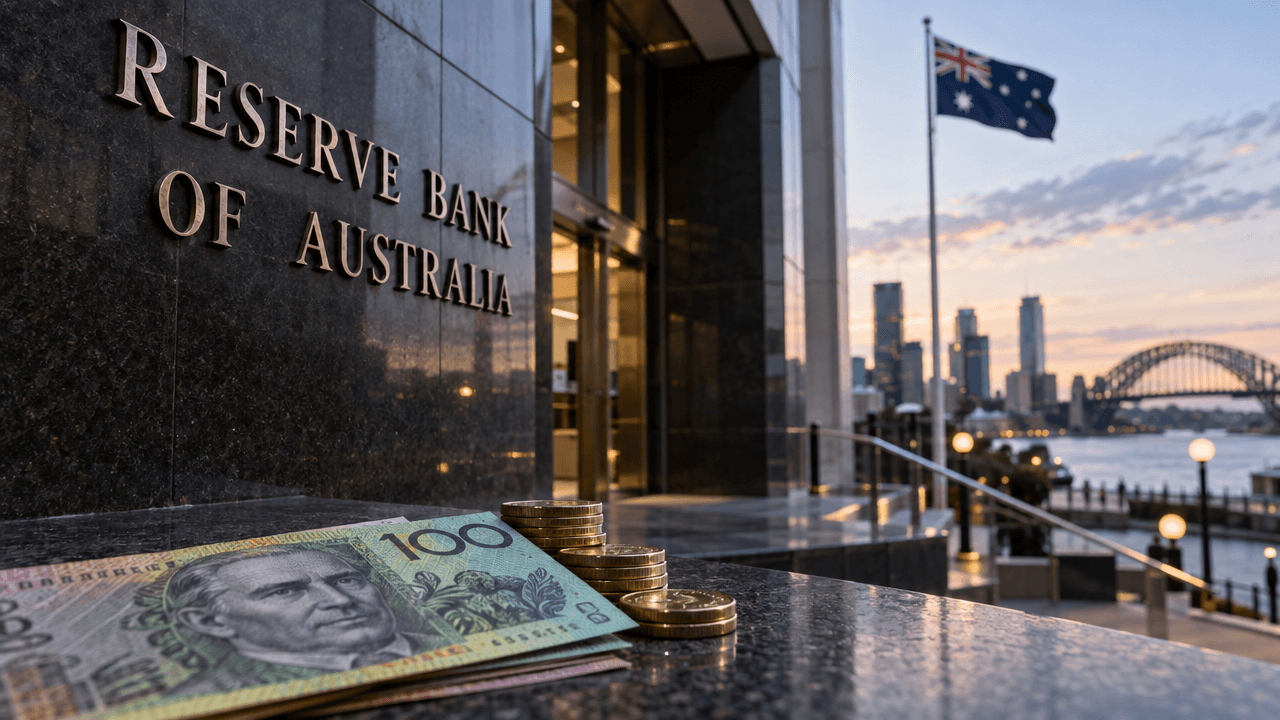
The Reserve Bank of Australia’s decision to hold the cash rate at 4.60% keeps monetary policy in firmly restrictive territory and extends a challenging environment for households, businesses, and traders. While markets widely anticipated no change this time, the choice to stay at a high level rather than signal an imminent easing is a clear message: inflation risks remain front and centre, and the RBA is not ready to relax yet.
What The Rba Decision Signals
At 4.60%, the cash rate sits around a 15-year high, following a series of rate increases delivered through 2026.[4][5][6] This means policy is intentionally tight, designed to cool demand and gradually bring price pressures back toward the 2–3% inflation target.[2][3][14] The RBA has consistently highlighted that both headline and underlying inflation are expected to remain elevated for some time before returning to target.[2][3][14]
By choosing to hold at 4.60% rather than push higher, the Board is effectively saying that the current level of restraint is sufficient for now, but the job is not yet done. Inflation is still above target and, importantly, the central bank continues to see upside risks to its projections, including the possibility that price pressures could prove more persistent than forecast.[2][3][14] That persistence—rather than the latest monthly print—is what matters most for policy and for markets.
For traders, this “high-for-longer” stance is just as significant as a fresh hike. A hold at a restrictive level shapes interest-rate expectations, influences valuations across equities and bonds, and sets the tone for the Australian dollar as global investors weigh the relative tightness of Australian policy against other central banks.
Why The Rba Is Keeping Rates High
The RBA’s recent statements and forecasts show a clear narrative: inflation has likely peaked, but the path back to the target band will be slow.[2][14] Trimmed mean (underlying) inflation is projected to remain above 3% until around mid-2027, only gradually easing toward the midpoint of the 2–3% range thereafter.[2][14][15] Headline inflation is expected to return to the target band earlier, but still remains above ideal levels in the near term.[2][14]
Driving this persistence are capacity pressures in the domestic economy—tight labour markets, strong demand in some sectors, and pass-through of previous cost shocks into final prices.[3][9][11] The RBA has also noted the impact of higher fuel and energy costs, alongside global disruptions, as factors that have kept inflation elevated.[2][3][14] These influences are expected to fade, but not overnight.
In this context, a cash rate stuck at 4.60% is more than a number; it is a signal that the RBA wants to ensure high inflation does not become embedded in expectations.[3][8][11] Cutting prematurely would risk undoing the progress already made, while further aggressive hikes might inflict unnecessary damage on growth and employment. Holding at a restrictive level gives the Board time to watch the data and adjust only if inflation or wage growth surprise on the upside.
Impact On The Australian Dollar And Bond Futures
The Australian dollar tends to respond quickly to RBA decisions and guidance, as FX markets constantly reassess interest-rate differentials and growth prospects. Recent rate moves toward 4.60% initially supported the currency, reflecting tighter monetary conditions and the perception of a more hawkish central bank, before gains faded as traders questioned how much further tightening was likely.[4][7] A hold at 4.60% now keeps the Aussie in a delicate balance: supported by relatively high yields, but vulnerable if markets begin to price in slower growth or earlier-than-expected cuts.
For Australian bond futures, the decision to hold offers a new anchor for the front end of the curve. Short-dated yields remain elevated, reflecting the restrictive cash rate and expectations that policy will stay tight until inflation convincingly heads back to target.[2][3][14] Longer-dated bonds, however, trade more on the expected timing and pace of future easing. If incoming data show inflation easing in line with the RBA’s projections, markets may start to price cuts further out, steepening the curve. Conversely, any upside inflation surprise would push expectations for the first cut further into the future, pressuring bond prices.
Volatility around RBA meeting days can be meaningful for SimFi traders. Even when the decision matches consensus, small changes in language around inflation risks, growth, or labour markets can reshape rate expectations and move both the Australian dollar and bond futures. This makes it essential not only to track the headline rate decision but also to study the accompanying statement and forecasts.
Implications For Traders Using Simulated Finance
For traders on simulated finance platforms, a steady 4.60% cash rate offers a rich environment to test macro, FX, and rates strategies without real-world capital at risk. High-but-stable policy rates are ideal for exploring how markets digest central bank communication and how expectations shift between meetings.
In FX simulations, traders can experiment with scenarios where the market oscillates between “higher for longer” and “earlier cuts,” watching how the Australian dollar moves against currencies whose central banks are at different points in the policy cycle. In rates simulations, they can build yield-curve trades that express a view on when the RBA might begin easing—such as positioning for steepening or flattening moves in Australian bond futures.
Because the RBA continues to stress inflation persistence, simulated strategies can also incorporate data surprise scenarios: What happens to the curve and the currency if inflation prints above expectations several months in a row? How does sentiment change if wages or employment soften more than forecast? Practicing these scenarios in a SimFi environment can help traders build intuition for how macro themes translate into price action.
Key Takeaways For Your Trading Playbook
1. Treat 4.60% as a “high-for-longer” benchmark, not a neutral rate. Strategy assumptions should reflect restrictive policy, with tighter financial conditions and greater sensitivity to data.
2. Focus on inflation and labour market releases, as these are the key inputs into RBA decisions and future rate paths.[2][3][11][14] Simulate different outcomes to understand how quickly markets can reprice expectations.
3. Watch the shape of the Australian yield curve, not just the front-end. Bond futures at different maturities will react differently to changes in the perceived timing of the RBA’s first cut.
4. Use the Australian dollar as a real-time barometer of how global investors perceive RBA policy versus other central banks.[4][7] FX strategies can be built around shifts in those relative expectations.
5. Above all, integrate central bank communication into your analysis. Statements, speeches, and forecasts often move markets as much as the rate decision itself.[3][8][11]
Conclusion
The RBA’s decision to hold interest rates at 4.60% underlines that the inflation battle is not yet over and that policymakers are willing to keep financial conditions tight until price stability is secured. While the move was widely anticipated, its implications for the Australian dollar and bond futures are significant, as traders refine their views on how persistent inflation will be and how long the RBA can keep policy at a 15-year high.[2][3][4][5][14] For SimFi participants, this environment offers a valuable opportunity to practice reading central bank signals, constructing macro trades, and stress-testing strategies against different inflation and growth scenarios. The more carefully you study the interaction between RBA decisions, market expectations, and price action, the better prepared you will be when it is time to move from simulated to live capital.