
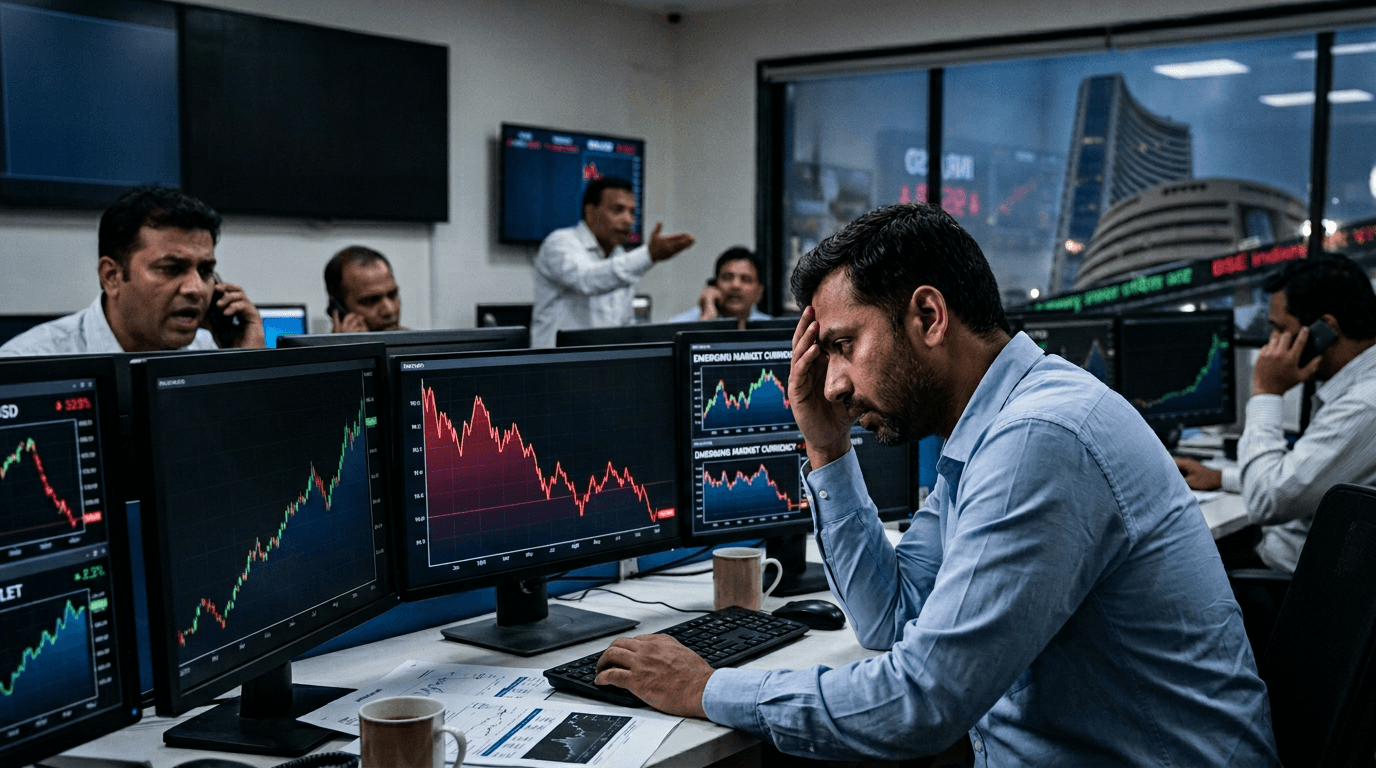
The Indian rupee has plunged to a fresh record low of 95.28 against the US dollar, marking another dramatic chapter in the currency's recent volatility. This milestone breach comes as renewed geopolitical tensions between the US and Iran have reignited fears of supply chain disruptions and escalating energy costs. For traders and investors monitoring emerging market dynamics, this depreciation represents far more than a currency milestone—it signals a critical confluence of economic pressures that could reshape portfolio allocation strategies across the region.
The Rupee's Breakdown: What We're Seeing
The Indian rupee's journey to 95.28 reflects a swift and sustained deterioration in investor confidence. Just weeks prior, market participants hoped the currency would stabilize after hitting 95 for the first time. Instead, the weakness has accelerated, with the rupee losing ground on multiple fronts simultaneously. The depreciation is particularly striking because it coincides with a period when the Reserve Bank of India has been actively intervening in currency markets, attempting to stem the decline through measures like adjusting net open position limits for banks. These interventions, while temporarily providing relief, have been unable to reverse the underlying weakness driving the currency lower.
What makes this situation distinct is its velocity. The rupee has fallen roughly 4.4% against the dollar in recent quarters—a significant move that compounds the challenges faced by importers, corporations with dollar liabilities, and ordinary citizens who purchase foreign goods. This isn't a gradual drift but a rapid correction that suggests structural forces are at play beyond normal market fluctuations.
Geopolitical Tensions And The Oil Equation
The immediate catalyst for the rupee's weakness ties directly to rising US-Iran tensions. Escalating rhetoric and potential military posturing between these two powers have triggered a predictable but no less consequential market response: oil prices have surged. With Brent crude trading significantly higher, India faces a particularly acute problem. As one of the world's largest oil importers, India's current account deficit swells when energy prices spike. This deficit must be financed in foreign currency, creating immediate demand for dollars and putting pressure on the rupee.
The mechanics are straightforward but impactful. Higher oil prices force Indian companies and the government to spend more dollars to secure the same quantity of petroleum. That increased dollar demand flows through to the currency market, where it exerts downward pressure on the rupee. Additionally, geopolitical uncertainty triggers a broader risk-off sentiment among global investors. Capital that might otherwise flow into emerging markets like India gets redirected toward safer assets, typically reducing the supply of foreign currency in Indian markets and further weakening the rupee.
Broader Market Implications
The rupee's weakness creates a cascade of effects throughout the Indian financial system. Bond yields have risen above 7% as investors demand higher returns to compensate for currency depreciation risk. Stock market indices like the Nifty50 and Sensex have experienced selling pressure partly attributable to foreign investor exits and currency concerns. For multinational corporations operating in India, the weaker rupee makes their Indian earnings worth less when converted back to their home currencies, potentially affecting their global profitability calculations.
Importantly, this rupee weakness raises the cost of external debt servicing for Indian companies and the government. Any entity with dollar-denominated liabilities faces higher real costs as the rupee depreciates. For a nation already grappling with elevated interest rates and inflation concerns, this represents an additional economic headwind that can slow growth and constrain investment.
What This Means For Traders And Simfi Participants
For traders engaging with simulated finance platforms, the rupee's weakness offers both analytical insights and practical lessons. The currency's movements demonstrate how macroeconomic factors—geopolitical risk, commodity prices, capital flows—translate into real market action. Traders practicing risk management techniques can learn valuable lessons from India's current situation, particularly around hedging strategies, position sizing when facing currency headwinds, and the importance of monitoring geopolitical developments.
Understanding correlations matters here. The rupee weakness correlates strongly with oil price movements and inversely with US dollar strength. Traders who recognize these relationships can anticipate currency moves ahead of them and adjust their simulated portfolios accordingly. Additionally, this situation illustrates why diversification across asset classes and currencies remains prudent—concentrated exposure to a single emerging market currency during periods of stress can magnify losses rapidly.
Key Takeaways For Investors
The rupee's descent to 95.28 serves as a reminder that emerging market currencies face multifaceted pressures during geopolitical uncertainty. Those investing in or trading Indian assets should monitor both the immediate geopolitical situation and longer-term structural factors affecting the rupee. Understanding your exposure to currency risk becomes paramount, whether through direct currency positions or through equity and bond holdings that carry implicit currency exposure.
The rupee weakness isn't likely to reverse quickly if tensions remain elevated and oil prices stay elevated. Investors should prepare for an extended period of currency pressure and adjust their India exposure and hedging strategies accordingly.