
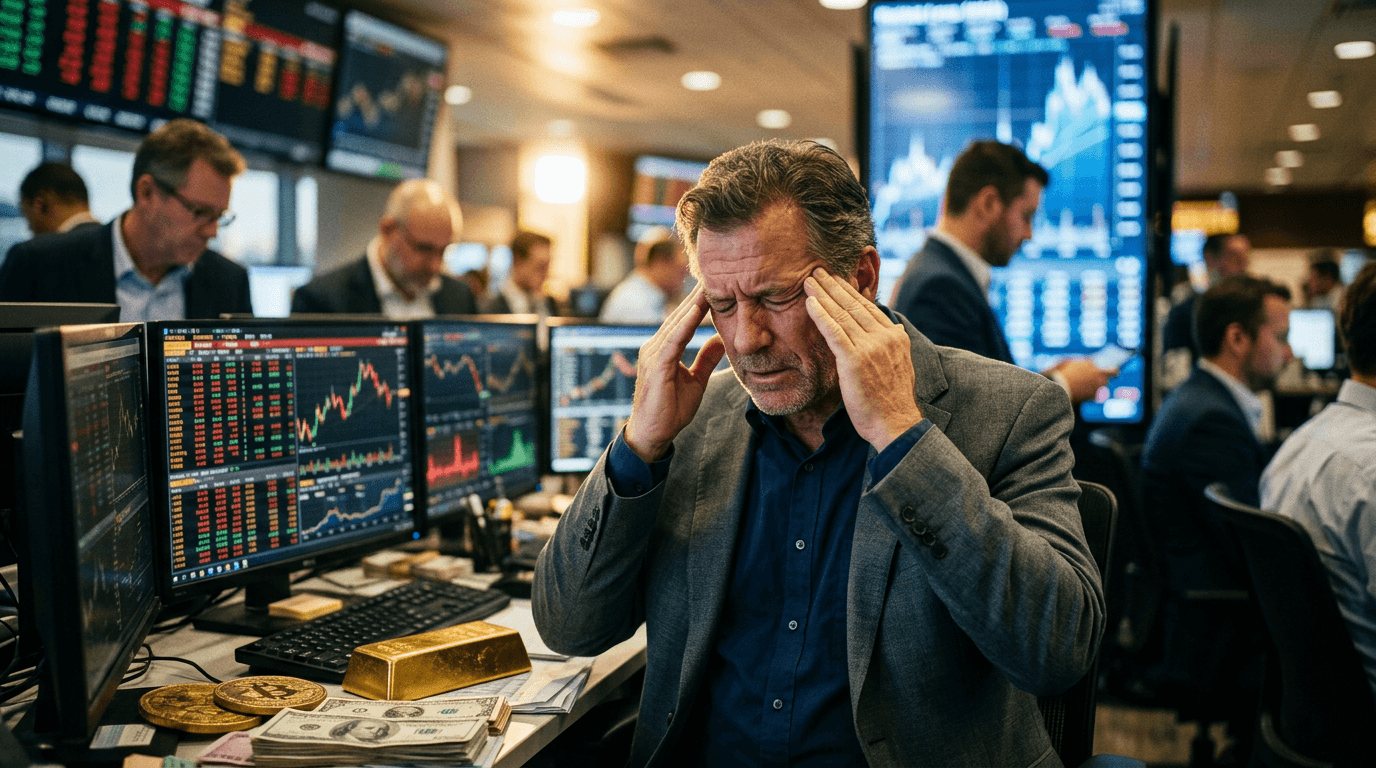
Traders across global markets are on high alert as the US Treasury prepares to unveil what officials have branded the “toughest sanctions in history” against Iran, with a high‑stakes announcement scheduled for 2 p.m. ET.[4][13][15] Ahead of the event, flows into traditional safe‑haven assets such as the Japanese yen, Swiss franc, and gold have intensified, while high‑beta currencies and risk‑sensitive assets are under pressure.[15][12] This combination of geopolitical risk and policy uncertainty is creating precisely the kind of environment where disciplined strategy and robust risk management matter most.
Markets Brace For Historic Iran Sanctions
Treasury Secretary Scott Bessent has pledged a campaign of “greatest coordinated economic isolation in the history of the world” against Iran, framing the measures as both economic warfare and a substitute for major new military operations.[4][13][15] The announcement is expected to build on a multi‑year escalation of sanctions targeting Iran’s oil exports, “shadow fleet” tankers, clandestine banking networks, and arms procurement channels.[3][9][10] Since early 2025, US authorities have already sanctioned over 1,000 Iran‑related individuals, vessels, and aircraft, reinforcing a strategy of maximum economic pressure.[9][10] Today’s move is therefore less a starting point than a potential inflection point in a long‑running sanctions regime.[1][3]
For markets, what matters is not only the label of “toughest” sanctions, but the specific sectors and enforcement tools targeted—especially anything that directly constrains Iranian oil exports or access to the global banking system.[3][10][12] Measures that significantly disrupt energy flows or payments channels can quickly translate into higher risk premia in commodities, emerging‑market assets, and credit spreads. Traders are already discounting a scenario where sanctions enforcement tightens, shipping risks rise, and geopolitical tensions remain elevated, pushing portfolios toward defense rather than outright risk‑taking.[12][15]
Why Sanctions Drive Safe-haven Flows
Sanctions function as a policy shock, increasing uncertainty around growth, inflation, and geopolitical stability, which in turn increases the value of safety and liquidity in portfolios. Historically, US actions against Iran—from re‑imposing full sanctions after the JCPOA to recent waves under the “Economic Fury” campaign—have coincided with bouts of risk aversion and portfolio rebalancing toward safe‑haven assets.[2][10][11] The yen and Swiss franc benefit from deep, stable financial systems and reputations as refuge currencies during periods of stress, while the US dollar’s role in global funding markets keeps demand elevated whenever the sanctions machinery tightens.[1][5]
Gold remains a central beneficiary when policy risk intersects with geopolitical tension, as investors seek assets that are not directly tied to any single government’s balance sheet.[14][15] Recent US‑Iran flare‑ups have shown that gold’s response can be nuanced, as higher oil prices and inflation fears drive expectations of tighter monetary policy, sometimes capping upside.[14] However, when the dominant narrative is geopolitical and financial system risk—rather than purely interest rate dynamics—gold tends to regain its classic safe‑haven role, especially if market participants fear secondary sanctions and payment disruptions in trade finance.[1][12][15]
Implications For Fx And Gold Traders
Ahead of the announcement, the core market message is clear: safe‑haven FX and gold are bid, while high‑beta currencies and equity‑linked risk assets are on the back foot.[15][12] High‑beta FX—including currencies of commodity exporters, emerging markets, and carry‑trade favorites—are vulnerable because their performance depends on stable risk sentiment, predictable capital flows, and confidence in global growth. When sanctions threaten energy supply chains, shipping routes, or financial connectivity, those assumptions weaken.
For FX traders, the key tactical questions include:
1) Whether to maintain or add to long positions in the yen and Swiss franc as event‑risk hedges, especially against higher‑yielding currencies that may face outflows if the sanctions shock is severe.[15] 2) How to manage existing exposure in currencies closely tied to Middle Eastern trade, oil flows, or global risk sentiment, where volatility and gap risk around the Treasury announcement may be substantial.[12] 3) Whether to use options rather than spot positions to express directional views, thus capping downside while still benefiting from potential volatility spikes.
Gold traders face a similar balancing act. With prices already sensitive to interest rate expectations and recent episodes of US‑Iran tension, the reaction will depend on how aggressively the sanctions target oil exports, shipping, and financial networks.[12][14] A package perceived as forceful and enforceable could support gold via higher risk aversion and potential inflation concerns if oil prices rise; a package judged largely symbolic, or already priced in, could trigger profit‑taking and a pullback from recent safe‑haven flows.[14][15]
Scenario Planning And Risk Management
With event‑driven risk, preparation often matters more than prediction. Traders can sharpen their edge by structuring clear scenarios around the announcement:
1) Maximum‑pressure scenario: If sanctions meaningfully escalate constraints on Iran’s energy exports and “shadow fleet,” markets may price higher oil risk, wider credit spreads, and a broader risk‑off move.[3][10][12] In this case, safe‑haven FX and gold likely outperform, while high‑beta FX, cyclical equities, and EM assets underperform. 2) Incremental‑tightening scenario: If measures focus on additional individuals, front companies, or financial facilitators—extending recent actions but without a major structural change—the reaction may be more measured, with an initial volatility spike but limited follow‑through.[9][11][12] 3) Under‑delivery scenario: If the package is smaller or less coordinated than markets expect given the “toughest in history” rhetoric, the result could be a partial unwind of pre‑positioning, hurting crowded safe‑haven longs and offering relief to risk assets.[13][15]
Across all scenarios, robust risk management is non‑negotiable. Traders should reassess position sizing ahead of the announcement, consider tightening stop‑loss levels, and plan for wider bid‑ask spreads and slippage during and immediately after the policy release. Concentration risk—being heavily exposed to a single currency, sector, or theme tied to the sanctions story—can magnify drawdowns, particularly if the market reaction diverges from consensus expectations.
How Simulated Finance Can Help Traders Prepare
For many traders, the challenge in environments like these is not lack of insight but lack of practice in managing fast‑moving event risk. Simulated Finance (SimFi) platforms offer a way to rehearse trading sanctions‑driven volatility, test strategies, and stress‑test portfolios without putting real capital at risk. By replaying similar historical episodes—such as previous Iran sanctions waves or other major geopolitical shocks—traders can see how safe‑haven FX, gold, and high‑beta assets reacted, and how different risk‑management rules would have performed.[2][9][10]
SimFi environments are particularly useful for refining process: designing pre‑event playbooks, calibrating position sizes to volatility, and practicing execution when liquidity thins and prices gap. Traders can experiment with diversification across FX, commodities, and indices, and evaluate whether options‑based hedges or dynamic stop‑loss strategies deliver more resilient outcomes around major policy announcements. The goal is not to predict the exact path of the market, but to build habits and frameworks that remain reliable under stress.
Conclusion
The US Treasury’s impending announcement of the “toughest” sanctions on Iran sits at the intersection of geopolitics, energy security, and global finance, and markets are reacting accordingly by rotating into safe‑haven FX and gold while shunning high‑beta risk.[13][15] For traders, the opportunity lies in understanding how sanctions propagate through oil, payments, and sentiment—and in preparing structured scenarios and robust risk‑management plans ahead of the event. Whether trading live or practicing in a simulated environment, the key is to treat sanctions as both a macro shock and a test of discipline: those who plan, size, and hedge thoughtfully are better positioned to navigate whatever the 2 p.m. ET announcement delivers.[12][15]