
Silver's Stunning Fall: From Heights of $116 to Depths of $85—Unveiling a Liquidity Crisis
The Grand Collapse
In an unprecedented twist, the silver market experienced a staggering collapse as January 2026 drew to a close. What began as an exhilarating climb from $30.82 to an impressive peak of $116.70 ended abruptly on January 30. By the month's end, silver had tumbled to $85.20, wiping away around $7 trillion in the precious metals market and dealing a severe blow to investors, both retail and institutional, who had bet on continued rises.
The Spectacular Unraveling
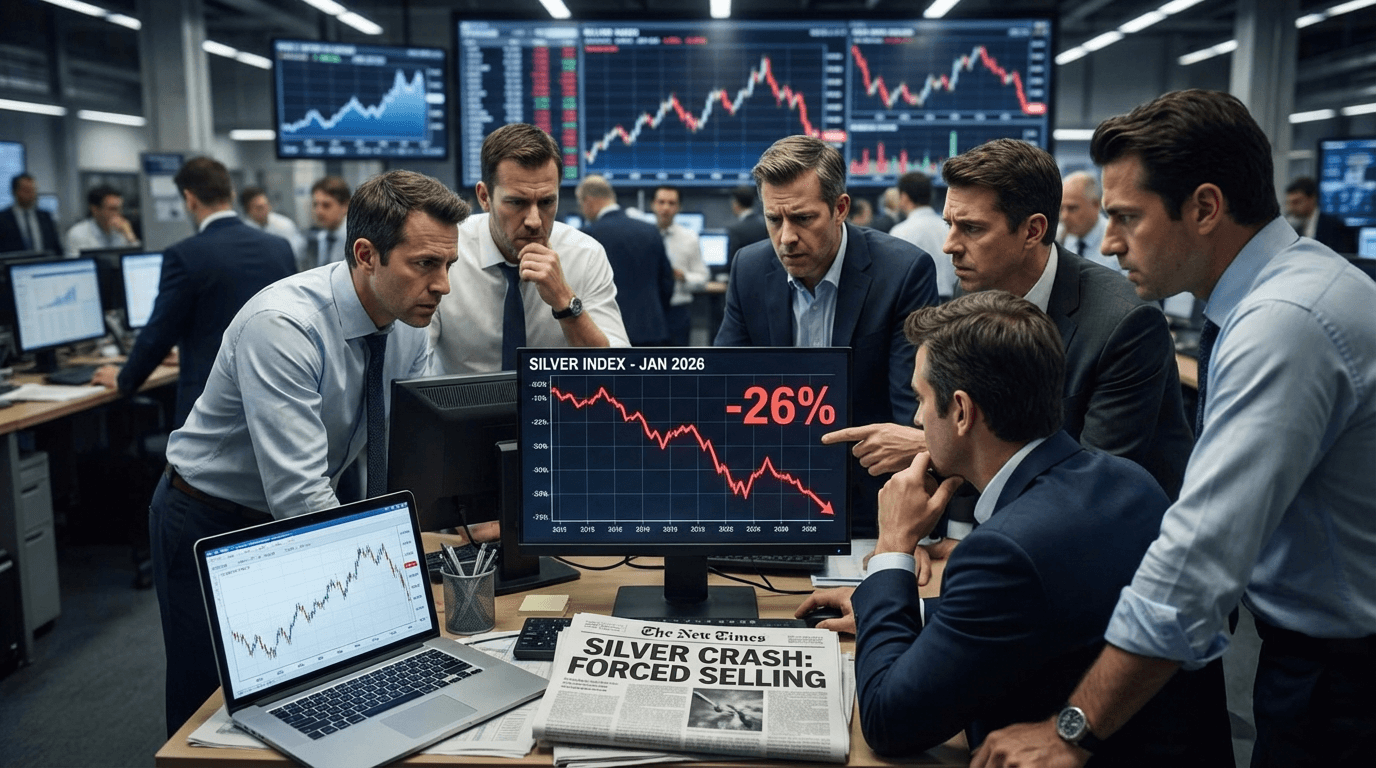
The depth of silver's nosedive is hard to exaggerate. On January 30 alone, silver plunged 35% intraday, marking its most significant single-day drop ever. It ended that session at roughly $85 per ounce, a striking 26% decrease from its starting price of $115. For perspective, silver had skyrocketed 278% in the year leading up to January 28, fostering an atmosphere of intense optimism and heavy speculation. Meanwhile, gold, though less volatile, faced its own turmoil with a 9% decline—the sharpest since the early 1980s—dropping from $5,390 to $4,895 per ounce.
The Timing Puzzle: What Truly Sparked the Crash
Initial reports pinned the crash on the announcement of Kevin Warsh as the next Federal Reserve Chair at 1:45 PM Eastern Time on January 30. The storyline was simple: markets feared a hawkish Fed leader would maintain higher interest rates, reducing the allure of non-yielding assets like gold and silver. Yet, a closer inspection of the day's price movements reveals a more intricate narrative. Silver's decline began around 10:30 AM, already at $88.50 by Warsh's announcement—a 27% drop from its high. This timing indicates pre-existing market disruptions, not a direct trigger. While the announcement may have intensified selling, other factors were already at play.
Liquidity Crises and Forced Liquidations
Analysts highlight a fundamental disconnect between the rapid price surge and the market's makeup. Both gold and silver were deemed "aggressively overbought" in early 2026, according to commodity experts. This led to substantial speculative positioning, especially in silver futures, where leverage magnified both the rally's gains and the selloff's losses. As volatility soared on January 30, a wave of forced selling began. Margin calls compelled traders to liquidate positions indiscriminately. Volatility-control strategies, designed to mitigate risk during turmoil, automatically triggered sell orders, sparking a vicious cycle: selling pressure lowered prices, prompting more margin calls and activating further volatility controls, accelerating the downfall.
Silver was particularly susceptible to this dynamic. As a thinner, less liquid market with concentrated speculative bets, silver amplified the stress. When everyone tries to exit the same crowded trade simultaneously, the market structure itself becomes the bottleneck. This wasn't driven by fundamentals—economic conditions hadn't shifted overnight, and the case for precious metals as safe havens remained intact.
The Diverging Fortunes of Gold and Silver
Gold's long-term bullish outlook endures, bolstered by factors like central bank purchases since 2022, geopolitical uncertainty, and currency debasement concerns. Silver, however, faces a precarious situation. Industrial demand has waned, with solar manufacturers cutting silver usage. Silver's rise was largely fueled by speculative fervor and the broader precious metals rally's momentum. For gold, analysts see the correction as a buying opportunity for long-term investors. A psychological floor at $4,000 per ounce is unlikely to be breached without a major economic shock. On the other hand, silver's disconnect from fundamentals leaves strategists wary. While the crash might signal a bottom for future gains, silver's immediate path remains unclear.
Key Takeaways for Investors
The January 2026 precious metals crash imparts crucial lessons. First, rapid price surges that detach from fundamentals set the stage for violent reversals. Second, even "defensive" assets can become perilously illiquid when leverage unwinds and volatility spikes. Third, market structure plays a crucial role—silver's thinner market made it significantly more vulnerable to cascade effects than gold.
For investors, the crash underscores the importance of position sizing and risk management. The metals rally attracted retail investors seeking safe-haven diversification, many enduring substantial losses amid forced liquidation. Looking ahead, volatility is expected to persist as leverage exits the system, though long-term structural factors supporting precious metals demand remain intact.