
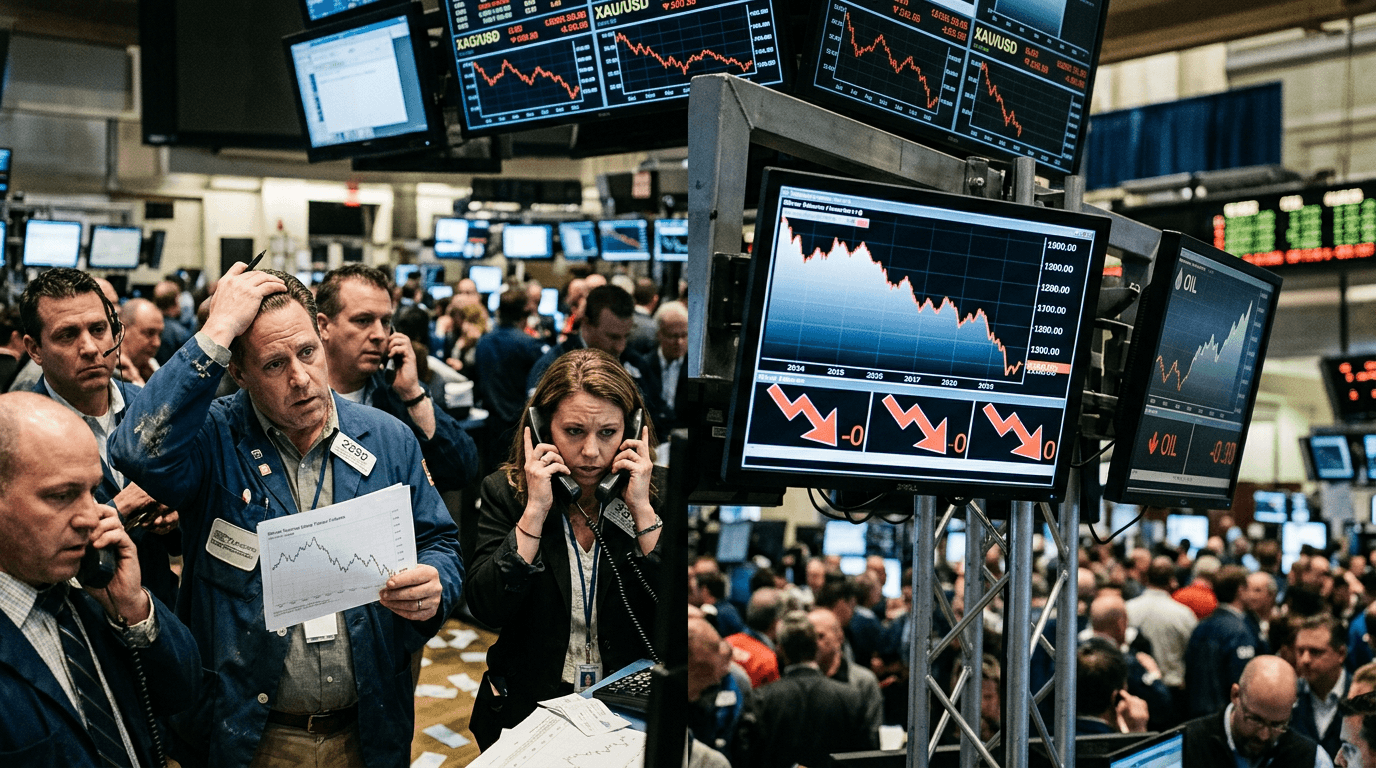
Silver and the broader precious metals complex are under pressure as renewed tensions around the Strait of Hormuz collide with a firmer US dollar and rising real yields, leaving traditional safe-haven assets struggling to keep their usual defensive role[4][5][6]. For traders who grew up expecting crises to automatically lift gold and silver, this environment is a reminder that macro conditions, not headlines alone, ultimately drive price action[6][11]. Understanding how these forces interact is crucial for anyone using simulated finance to build and test trading strategies around metals and FX.
Market Backdrop: Dollar Strength And Metal Weakness
In recent sessions, silver (XAG/USD) has slipped back below the $59/oz mark, trading near levels where rallies have repeatedly been sold as futures markets favor the dollar over metals for risk hedging[4][11]. This weakness is not occurring in isolation: gold and other precious metals are hovering near multi‑month lows, reflecting a sustained retreat from highs seen earlier in the year[6][8]. The key driver is the combination of elevated US Treasury yields and resilient dollar strength, both of which increase the opportunity cost of holding non-yielding bullion[6][9][10]. When real yields—the return on bonds after inflation—push higher, investors are paid more to hold cash and government debt, and that mechanically reduces the appeal of assets like gold and silver that do not generate income[6][9].
This macro backdrop explains why precious metals are under pressure even when fundamental demand looks relatively healthy. Silver, for example, still enjoys structural support from industrial uses in areas such as electronics, solar panels, and advanced communications, which typically amplify its price swings compared with gold[6][11]. Yet recent price action shows that monetary policy transmission—how rate expectations and dollar moves feed into asset prices—is dominating the narrative, compressing silver from its January all‑time highs above $120/oz into the $60–70/oz zone[11]. For traders, the message is clear: in the current regime, central bank expectations and yield dynamics matter more than simple supply/demand or safe‑haven stories.
The Hormuz Factor: Geopolitics, Oil And Inflation
Renewed frictions near the Strait of Hormuz—a chokepoint for global oil flows—have pushed energy prices higher at various points this year, reviving concerns that a lasting disruption could fuel another inflation wave[4][5][9]. Historically, such geopolitical flare‑ups have been textbook bullish catalysts for gold and silver, as investors look for insurance against both financial stress and rising prices[5][7]. This time, however, the mechanics are more nuanced: higher oil prices are feeding directly into stronger inflation expectations, which in turn reinforce the case for central banks, especially the Federal Reserve, to keep rates higher for longer[9][10][11]. That policy stance supports the dollar and real yields, which then weigh on metals despite the underlying tension[6][8][10].
The result is a paradox for silver and gold. On one side, Hormuz tensions should provide a floor for prices by maintaining some safe‑haven bid and supporting dips[4][5][6]. On the other side, markets increasingly treat the situation as an inflation‑and‑tight‑Fed story, not a pure flight to safety, leaving rallies capped as traders fade event‑driven spikes[4][6][11]. Over time, repeated headlines without a decisive escalation or resolution can even desensitize markets, reducing the impact of each new flare‑up on precious metal prices[6]. For simulated traders, this is a valuable lesson: the first-order intuition (“geopolitics = buy gold”) often needs to be filtered through second‑order effects on rates, inflation, and FX.
Why Safe-haven Flows Favor Cash Over Commodities
Recent moves show that in risk‑off episodes tied to Middle East tensions, capital has increasingly preferred the US dollar over metals as the primary hedge[5][7][10]. A stronger dollar index, pushed higher by rate expectations and robust US data, has coincided with sharp pullbacks in both gold and silver, even as geopolitical risks intensify[7][9][10]. This reflects a shift in behavior: many institutional portfolios now treat high‑quality government bonds and cash as their main defensive tools, with metals playing a secondary, more tactical role[6][9].
There are several reasons for this preference. First, dollar assets benefit directly from higher yields and easier liquidity, while metals face the headwind of storage costs and no coupon[6][9][10]. Second, risk models used by large funds often calibrate to recent performance, and the strong run in the dollar relative to gold and silver during past Middle East flare‑ups has reinforced confidence in currency hedges[7][9]. Third, event‑driven trades in metals can be crowded, increasing the risk of sharp reversals when the news flow quiets or when policy makers signal that inflation risks remain manageable[6][11]. For E8 Markets users, this environment underscores the importance of testing not just directional metal trades but also relative-value ideas, such as long USD versus short XAG or XAU in simulated portfolios.
Simulated Trading Strategies In A Strong-dollar World
In a SimFi environment, traders have the advantage of experimenting with different ways to position around these cross‑currents without real capital at risk. One approach is to treat silver’s current range below $59/oz as a learning ground for mean‑reversion versus trend‑following strategies[4][11]. For example, a trader might back‑test rules that fade short‑term spikes toward resistance when real yields are rising, while switching to breakout strategies if future data shifts the narrative toward Fed easing and a weaker dollar[6][9][11]. Similarly, simulated multi‑asset portfolios can explore how adding US dollar exposure or short‑duration bond proxies impacts overall volatility when metals sell off on rate surprises[6][9][10].
Another valuable exercise is stress‑testing event‑driven scenarios linked to Hormuz developments. Traders can design simulated shock paths where oil prices gap higher, inflation expectations jump, and the Fed repricing becomes more hawkish, then examine how gold and silver behave versus the dollar under each path[5][9][10]. Running these scenarios helps clarify whether one’s default instincts about safe‑haven performance match the empirical behavior shown in recent months[6][7][11]. For newer traders, this process builds intuition; for experienced ones, it challenges assumptions and reveals which strategies are robust across regimes.
Key Takeaways For Precious Metal Traders
For E8 Markets participants focusing on silver and precious metals, several practical lessons emerge from the current backdrop. First, treat dollar strength and real yields as primary drivers of metal pricing, especially when geopolitics and inflation are in the headlines[6][8][9]. Second, recognize that Hormuz tensions are currently being priced more through energy and policy expectations than through pure safe‑haven flows, which means metals can stay under pressure even during periods of elevated risk[4][5][11]. Third, avoid the “event‑driven trap” of buying every geopolitical scare; instead, anchor decisions in whether the macro data and central bank guidance genuinely change the rate path[6][11].
In practice, that means using simulated trading to build rules that integrate macro indicators—such as real yield levels, dollar indices, and key central bank speeches—into entry and exit criteria for metals[6][9][10]. It also means being open to relative-value and hedged structures, not just outright long positions in gold or silver, when the macro tide favors cash and bonds[6][9]. Above all, successful traders in this regime will be those who can separate signal from noise and distinguish short‑lived headline spikes from durable shifts in monetary policy and risk appetite.