
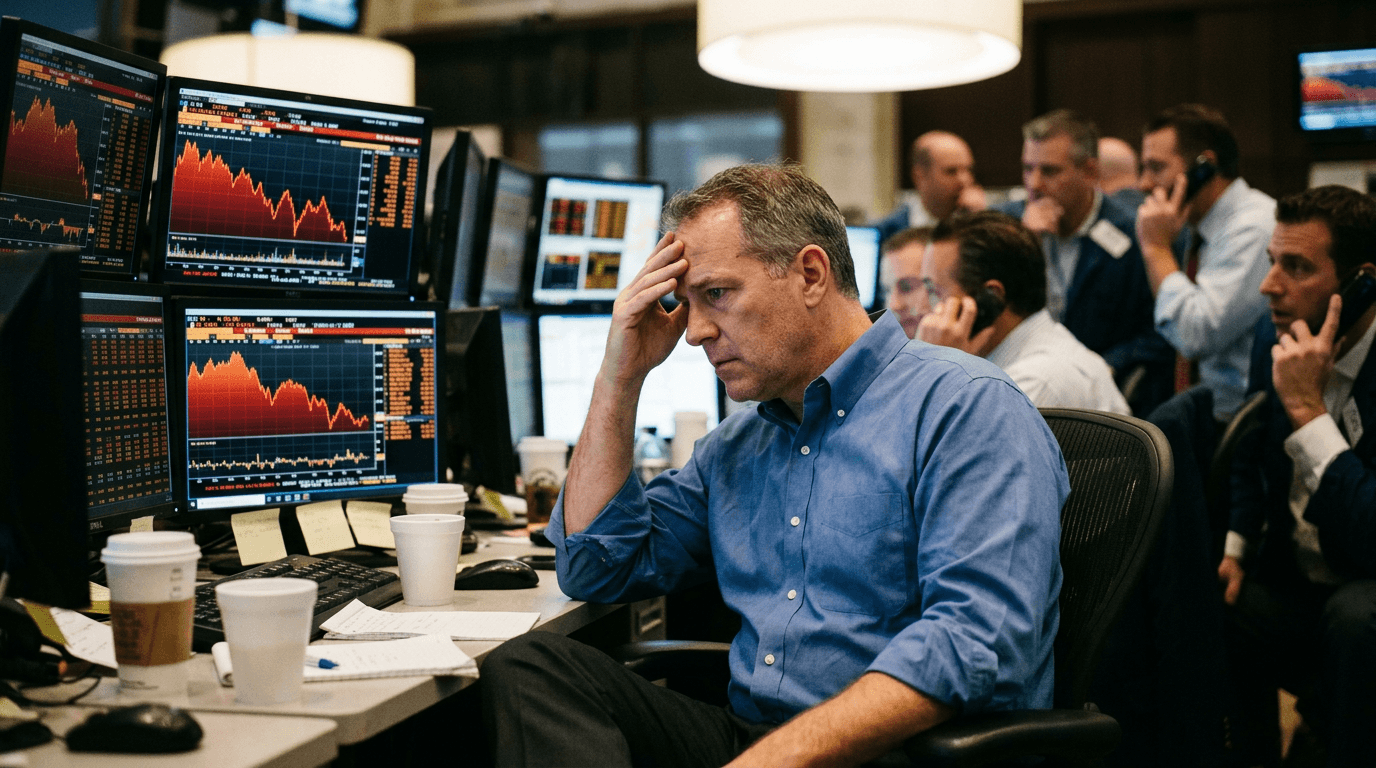
U.S. equity-index futures are pointing to a softer open, with S&P 500, Dow, and Nasdaq contracts all trading modestly in the red as traders grapple with lingering inflation worries and another round of tariff headlines[2][11]. Volatility futures are firmer, reflecting growing demand for short-term protection as investors reassess risk across equities, rates, and currencies[11][13]. In this environment, understanding how inflation data and trade policy interact is essential for traders looking to navigate the next session rather than react to it.
Market Snapshot: Futures, Yields And Volatility
The futures board tells a story of cautious risk appetite rather than outright panic. Equity-index futures are softer, but not sharply lower, suggesting a market that is consolidating after recent moves rather than repricing the macro outlook in a single session[2][11]. This kind of modest pullback is often a sign that investors are trimming exposure at the margins while they wait for the next data release or policy headline.
On the rates side, the U.S. 10-year Treasury yield hovering in the mid-4% range underscores how inflation and policy expectations remain central to the pricing of risk assets[2][9]. When yields hold near these levels, it signals that the bond market is not yet convinced that inflation is fully under control, even if some recent readings have cooled[9][13]. Elevated yields keep pressure on valuations for growth and long-duration assets, particularly in the technology and communication services sectors.
At the same time, front-month VIX futures trading higher point to increased demand for downside protection and hedging strategies[11]. Rising volatility alongside softer futures indicates not just concern about today’s open, but anxiety about the path of data and policy over the coming weeks[11][13]. For active traders, this backdrop favors disciplined risk management, tighter position sizing, and a clear framework for how futures, options, and hedges fit together in their playbook.
Key takeaway: Softer futures, firm yields, and higher volatility together describe a market that is cautious, not complacent—conditions that reward preparation and scenario planning over short-term bravado.
Inflation Worries: Cooling Data, Sticky Risks
Recent inflation data have provided some relief, with both CPI and PCE measures showing a gradual cooling from prior peaks, moving closer to levels the Federal Reserve considers consistent with its long-term target[1][4][9]. Headline PCE inflation has ticked down toward the mid-2% range, while core PCE has eased from earlier highs, helping to support expectations that rate cuts are on the horizon[9][13]. Futures markets are still pricing a meaningful probability of rate reductions over the coming quarters as growth moderates and price pressures ease[7][9].
Yet inflation worries persist because the story is more nuanced than a simple downtrend. Services inflation, driven by wages, rents, and labor-intensive industries, has been slower to decelerate than goods inflation[9][13]. Long-run inflation expectations, while off their highs, remain above the Fed’s 2% target, with survey measures such as the University of Michigan’s year-ahead expectations still in the mid-3% range[11][13]. This suggests that households and businesses have not fully internalized a return to pre-pandemic inflation norms.
Moreover, the interaction between tariffs and prices complicates the picture. Research from Federal Reserve economists shows that past tariff rounds contributed materially to core goods price increases, lifting core goods PCE by around 3.1% through early 2026 and adding nearly 1 percentage point to core PCE prices overall[6][15]. Other work highlights that tariffs have explained a non-trivial share of headline PCE inflation in recent periods, even as broader price pressures started to cool[14][15]. These findings reinforce why traders remain sensitive to any tariff-related headline.
Key takeaway: Inflation trends are improving, but not resolved. Traders must weigh cooling headline data against sticky services inflation, persistent expectations, and the inflationary footprint of tariffs.
Tariff Headlines: From Policy Noise To Portfolio Risk
Tariffs have returned to the forefront of market conversation as policymakers revisit levies on steel, aluminum, and a widening list of imported goods[1][4][10]. Recent measures and proposals—ranging from broad-based global tariff adjustments to targeted hikes on specific countries or products—have reintroduced uncertainty into global supply chains and cost structures[2][11][12]. Trading partners have signaled or implemented retaliatory measures, raising the risk of a tit-for-tat dynamic that affects exporters and importers alike[4][10][12].
From a pricing standpoint, tariffs tend to work their way through the economy via higher import costs, which can either compress corporate margins or be passed on to consumers in the form of higher prices[6][15]. Central bank research indicates that tariff changes have been a meaningful driver of core goods price pressures, even as other components of inflation moderated[6][14][15]. This means that tariff news is not just political noise—it has direct implications for inflation dynamics and, in turn, the path of interest rates.
For equity investors, sectors with heavy reliance on imported inputs—such as industrials, autos, machinery, and consumer discretionary firms with global supply chains—are particularly sensitive to tariff surprises[1][4][10]. Export-oriented companies can also face demand risks when trading partners respond with their own levies, cutting into volumes or forcing price adjustments[4][10][12]. These cross-currents help explain why futures tend to soften when tariff headlines hit the tape, even if macro data are otherwise constructive.
Key takeaway: Tariff headlines matter because they feed directly into inflation, margins, and global demand—turning policy noise into real portfolio risk for traders across asset classes.
What This Means For Active Traders
A softer futures open in the context of inflation uncertainty and tariff risk calls for a structured approach to intraday and swing trading. Index futures levels ahead of the cash open often act as an early barometer of risk sentiment, framing expectations for opening auctions, liquidity, and sector rotation. When futures are modestly lower rather than sharply down, it may indicate a day shaped by rotation and micro catalysts instead of a broad-based risk-off scramble[2][11].
Sector allocation becomes critical in this environment. Defensive groups such as utilities, staples, and certain healthcare names may act as relative outperformers when tariffs and inflation weigh on cyclical sectors, especially those with high import sensitivity or export exposure[4][10]. Growth and long-duration assets remain linked to rate expectations; any renewed upside surprise in inflation data or escalation in tariff-driven price pressures can push yields higher and pressure valuations[7][9][13].
Tactically, traders may consider: - Defining clear scenarios for inflation and tariffs and mapping how each scenario affects indices, sectors, and FX. - Using futures and options to hedge directional risk around key data releases or policy announcements. - Monitoring volatility futures and skew as signals of changing demand for downside protection[11][13]. - Tightening risk parameters, including stop levels and position sizing, during headline-sensitive sessions.
Key takeaway: This backdrop rewards traders who integrate macro awareness into their technical and tactical setups, aligning position size and risk tools with the day’s headline risk.
Simulated Finance: Practicing In A High-volatility World
For many traders, especially those still building experience, the combination of inflation uncertainty, tariff headlines, and shifting rate expectations can feel overwhelming. Simulated Finance (SimFi) environments offer a way to practice navigating these conditions without putting real capital at risk. By replaying historical periods of tariff escalations, inflation surprises, and volatility spikes, traders can stress-test playbooks and refine responses.
In a well-designed SimFi platform, participants can experiment with: - Running index futures and options strategies through multi-day stretches of tariff news and inflation releases. - Testing sector-rotation frameworks that shift exposure between cyclicals, defensives, and exporters as headlines evolve. - Applying risk-management rules—such as daily loss limits, dynamic hedging, and volatility-based position sizing—in a realistic yet risk-free setting. - Measuring performance not just by P&L but by adherence to process, including how faithfully they execute pre-defined scenarios.
These exercises build the muscle memory required to act decisively when real markets move. Instead of improvising when futures gap lower on a new tariff announcement or hotter inflation print, traders who have practiced scenarios in a simulated environment can lean on tested rules and responses. Over time, this preparation can help reduce emotional decision-making and improve consistency.
Key takeaway: SimFi tools allow traders to rehearse their responses to inflation and tariff shocks, turning today’s headline risk into tomorrow’s learning environment.
Conclusion
Softer U.S. futures, firmer volatility, and ongoing inflation and tariff concerns together define a market in a state of heightened but measured alert. Cooling headline inflation offers some relief, yet sticky services prices, persistent expectations, and tariff-driven goods inflation keep traders wary[6][9][13][15]. Tariff headlines are more than political theater; they feed directly into the cost structure of companies and the inflation outlook that central banks monitor closely[6][14][15].
For traders and investors, the message is clear: macro awareness, disciplined risk management, and scenario-based preparation are not optional in this environment. Leveraging tools like simulated trading to rehearse responses to inflation data and tariff shocks can help turn uncertainty into opportunity. As the next session unfolds and futures set the tone for the open, those who have prepared—rather than predicted—are best positioned to navigate whatever the tape delivers.