
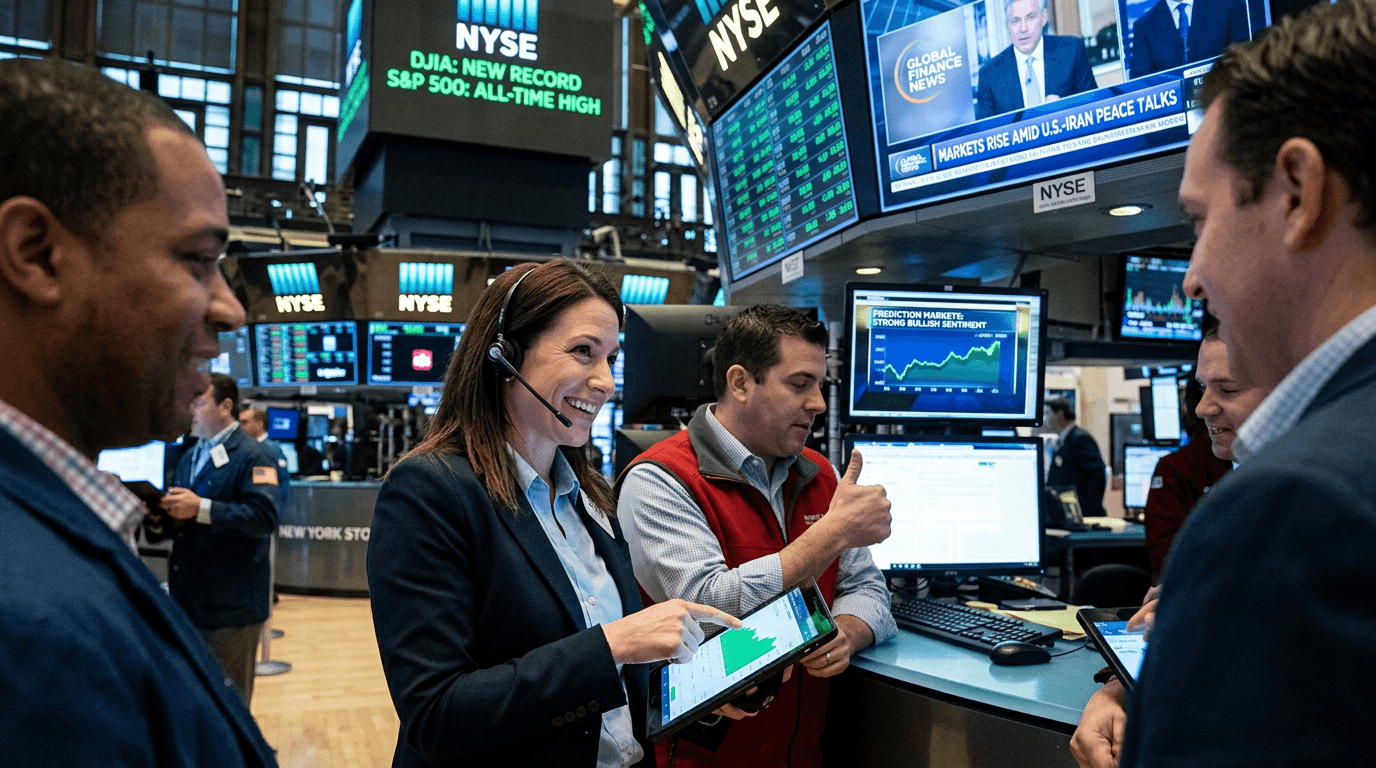
U.S. equities have continued their impressive rebound, with the S&P 500 and NASDAQ 100 both reaching new record highs. This surge has been fueled by growing optimism surrounding the potential for a prolonged ceasefire between the U.S. and Iran, paving the way for a more stable peace agreement. The dramatic market shift from the war-driven downturn in late March to the current rally highlights the rapid pivot in investor sentiment when geopolitical tensions ease and corporate earnings remain strong. With prediction markets indicating a 99.9 percent probability of continued market strength, traders are keenly rotating back into growth and technology stocks, presenting both opportunities and caution for those observing market dynamics.
Breaking Through The Ceiling
On Wednesday, the S&P 500 closed up 0.8 percent, surpassing its previous all-time high of 7,002.28 points set in late January. This milestone comes after a steep decline in late February and March, driven by escalating Middle East tensions. Meanwhile, the NASDAQ 100 surged 1.4 percent, reaching its own record high and significantly outpacing the broader market. The Dow Jones Industrial Average, however, was the only notable laggard, closing down 0.15 percent as industrial stocks struggled with concerns over U.S. metals tariffs. These mixed outcomes emphasize a key narrative: as geopolitical risk diminishes, investors are channeling capital toward growth and technology sectors while remaining wary of industrials facing trade-related challenges. Futures activity post-close demonstrated ongoing momentum, with S&P 500 futures rising 0.35 percent and NASDAQ 100 futures gaining 0.32 percent in evening trading.
The Peace Narrative Reshapes Markets
The primary driver of this explosive rally is the credible indication that Washington and Tehran are moving toward extending their ceasefire and engaging in renewed diplomatic talks. President Trump announced that the Iran war is "very close to being over" and suggested a permanent ceasefire could be established before King Charles's upcoming visit. Reports from the Associated Press indicate that the U.S. and Iran have tentatively agreed to extend their current ceasefire by two weeks, allowing more time for negotiations. These developments have been compelling enough for prediction market traders to assign a 99.9 percent probability to the S&P 500 opening higher. One Polymarket contract alone saw 65,683 dollars in USDC trading volume on April 16. A notable 12-point spike at 12:31 PM on the same day moved a related contract from 74 percent to 87 percent probability, showcasing the market's real-time responsiveness to negotiation progress.
Unwinding The War Premium
A key market dynamic currently unfolding is the comprehensive repricing of geopolitical risk premiums that have been in place since late February. As concerns mounted over potential disruptions to global energy supplies through the Strait of Hormuz, investors added significant hedging costs and risk buffers to their portfolios. With the risk of conflict diminishing, traders are now unwinding those defensive positions and aggressively rotating into growth and technology sectors that had been weighed down by inflation fears linked to high oil prices. Crude oil prices remain a focal point, with Brent hovering around 95 dollars per barrel as markets consider the impact of reduced geopolitical tension on energy supply and demand. Treasury yields have also shifted significantly, with the two-year yield rising to 3.76 percent as investor confidence in economic resilience grows and anxiety over immediate conflict risks diminishes. The dollar weakened while gold retreated toward 4,800 dollars per ounce, reflecting declining safe-haven demand as risk appetite returns to markets.
Corporate earnings have been a critical support to this narrative. Strong performances from JPMorgan Chase, Bank of America, and Morgan Stanley have demonstrated the financial sector's resilience and validated the strength of bank equities heading into the broader earnings season. When combined with excitement around artificial intelligence opportunities and technology sector momentum, these results create a powerful backdrop for equity strength.
Artificial Intelligence Fuels Optimism
Beyond geopolitical relief, the market remains deeply convinced by the themes of artificial intelligence and the overall resilience of corporate America. The Nasdaq's outperformance reflects investor appetite for technology and growth stocks that had been dampened by war-related risk premiums. With geopolitical tensions easing and inflation expectations improving due to lower oil-driven pressures, investors can now focus more on earnings quality and strategic positioning for the AI revolution. Interactive Brokers Chief Strategist Steve Sosnick noted that stocks are "basically expressing their view that the war in the Persian Gulf is all but over," allowing market participants to refocus on fundamental drivers rather than headline risks.
What This Means For Traders And Investors
The current market environment represents a pivotal moment. Prediction markets showing a 99.9 percent probability of continued strength indicate that most bullish scenarios are already priced into equities, limiting the potential for further gains without new positive catalysts. Traders seeking exposure at these levels face compressed risk-reward dynamics. However, the underlying narrative remains positive if geopolitical de-escalation is sustainable and corporate earnings continue to support equity valuations. The market has effectively transitioned from war-driven pessimism to peace-driven optimism while demonstrating resilience across earnings announcements. Risk management is crucial given the fragility of Middle East negotiations and unresolved tensions, particularly concerning nuclear issues and Hezbollah activities. The next significant inflection points are likely to arise from either developments in ceasefire extensions or unexpected earnings disappointments in the coming weeks.