
---
S&P 500's Surge Reflects Shift in Risk Appetite
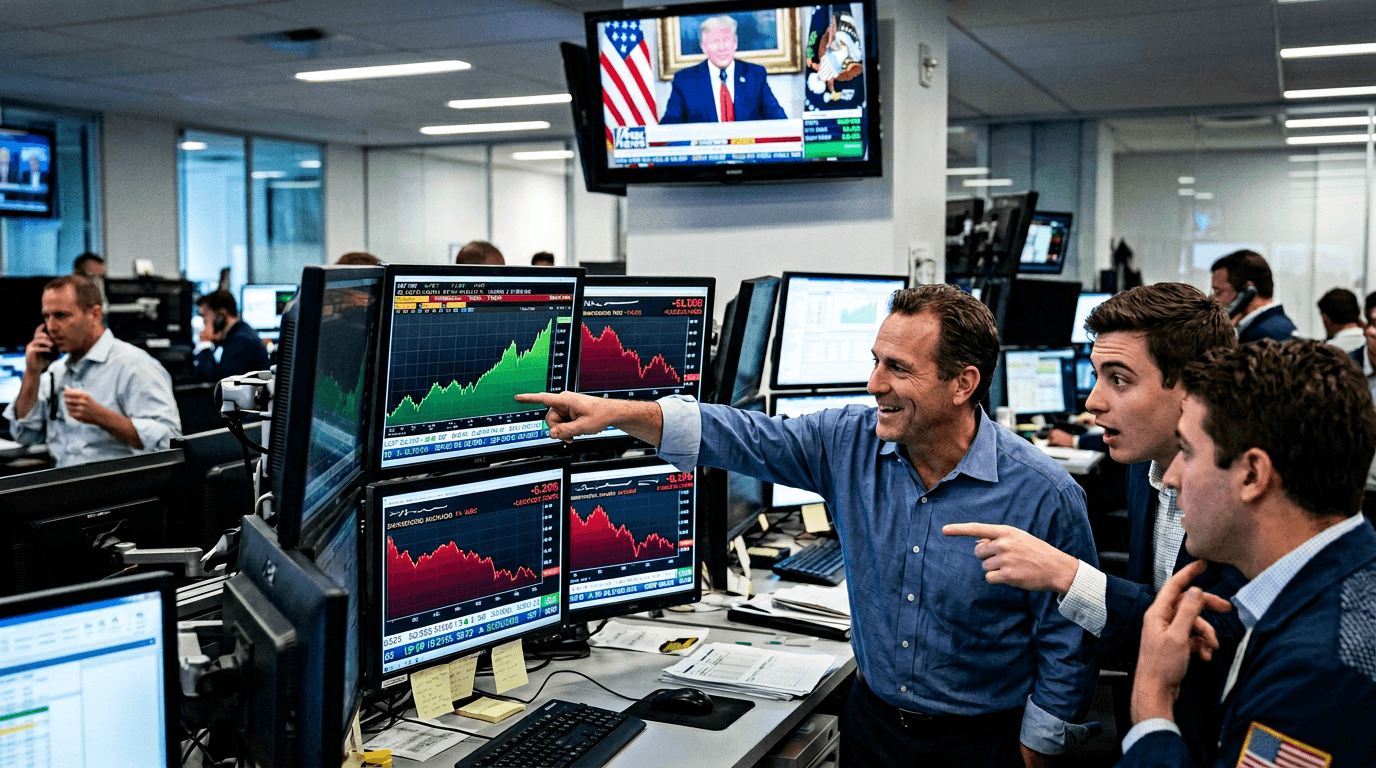
In a significant turn of events, the S&P 500 jumped 2.5% after President Trump's announcement of a two-week ceasefire with Iran. This marked a relief from weeks of escalating geopolitical tensions that had cast a shadow over investor sentiment and global financial markets. The rally highlighted a dramatic shift in risk appetite, as traders recalibrated their expectations towards a more stable Middle East and energy market. However, the underlying volatility remains a concern for investors who are cautiously observing the durability of this tentative de-escalation.
Broad-Based Rally Across Major Indices
The market's response to the ceasefire was swift and extensive. The S&P 500 added about 166 points, closing at 6,782.81. The Dow Jones Industrial Average surged 2.8%, gaining 1,325 points to reach 47,909.92, while the Nasdaq composite rose 617.15 points, settling at 22,635.00. The futures market reflected this sentiment early, with S&P 500 futures climbing over 2% before regular trading hours, adding around USD $900 billion in market capitalization, a testament to investor eagerness to reprice risk assets amid reduced geopolitical uncertainty.
Yet, it's important to note that despite this substantial rally, stock prices have not yet returned to pre-conflict levels, signaling a cautious optimism about the ceasefire's durability and the potential for sudden reversals if tensions flare up again. This reflects the market's historical sensitivity to sharp reversals during the recent conflict period.
Energy Market Relief and Inflation Stabilization
The ceasefire announcement brought significant relief to energy markets, with crude oil prices falling below $95 per barrel, down from recent highs around $104. This decline carries implications beyond the energy sector, potentially easing inflation pressures that have worried policymakers and investors and supporting broader economic activity.
Airlines and other fuel-intensive businesses responded positively to the prospect of lower energy costs. United Airlines surged 7.9%, Carnival rose 11.2%, and Delta Air Lines increased by 3.7%. CEO Ed Bastian noted strong flight demand and hinted at fee increases to manage any remaining fuel cost pressures, showing the industry is gearing up for sustained lower energy costs while optimizing pricing strategies.
The stabilization of oil prices benefits the broader economy by supporting economic activity and potentially easing recent pressure on interest rates and loan costs, creating a positive feedback loop for equity valuations and borrowing conditions.
Currency Markets and Yield Dynamics
In the bond market, Treasury yields fell as hopes rose that easing oil prices might enable the Federal Reserve to resume interest rate cuts later in 2026. The 10-year Treasury yield dropped to 4.29% from 4.33%, offering relief for borrowers and potentially supporting equity valuations through lower discount rates. This yield compression reflects growing expectations that the geopolitical premium on interest rates could dissipate if tensions genuinely de-escalate.
The ceasefire announcement led to a weakening of the US Dollar as investors moved away from safe-haven positioning into risk assets. Typically, when geopolitical tensions ease, demand for the defensive characteristics of the USD diminishes as investors rebalance toward higher-yielding equities and alternative assets. This currency weakness has implications for forex pairs like EUR/USD and GBP/USD, as the index likely faces pressure ahead of potential peace negotiations. A weaker dollar generally supports emerging market assets and commodities priced in dollars, creating additional headwinds for dollar strength.
Global Participation and Asset Class Rotation
The rally's reach extended globally, with significant gains across Asia and Europe reflecting the depth of geopolitical tensions affecting global investor sentiment. South Korea's Kospi surged 6.9%, Japan's Nikkei 225 jumped 5.4%, and Hong Kong's Hang Seng rose 3.1%, highlighting the particular vulnerability of Asian economies to Middle East oil supply disruptions. European markets followed suit, with Germany's DAX climbing 5.1% and France's CAC 40 rallying 4.5%.
Remarkably, traditional safe-haven assets also participated in the broader rally, suggesting genuine optimism about de-escalation rather than mere rotations into defensive positions. Bitcoin surged 4.9% to surpass $72,000, gold rose 2.3% to over $4,300 per troy ounce, and silver rallied nearly 5%. This unusual movement of safe havens alongside risk assets signals broad market confidence that tensions may be genuinely easing.
Forward-Looking Considerations
While the market's enthusiasm is justified by the near-term prospect of reduced geopolitical risk, traders should remain vigilant. The ceasefire already shows signs of strain, with Iran closing the Strait of Hormuz again in response to Israeli attacks in Lebanon, underscoring the fragility of the situation. Financial markets have demonstrated sharp vulnerability to sudden reversals since the conflict began, suggesting that positions should be sized with appropriate risk management in place.
For traders and investors, this rally offers meaningful but potentially temporary relief from the elevated uncertainty of recent weeks. The sustainability of gains will likely depend on whether the ceasefire holds and whether it signals genuine de-escalation or merely a temporary pause in hostilities. Monitoring developments around peace negotiations and any signals from Iranian officials will be critical for positioning decisions moving forward.