
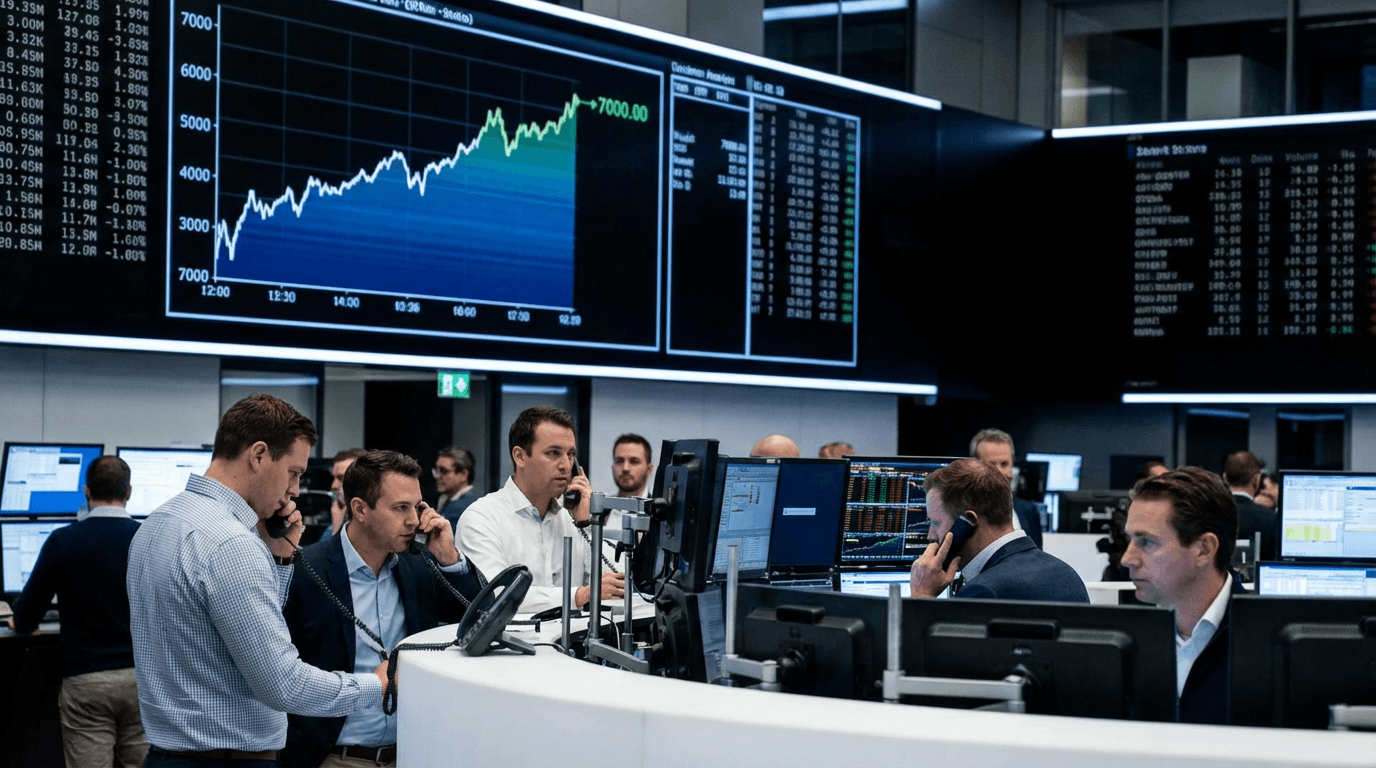
The S&P 500 has spent months consolidating in a narrow trading range, with the 7,000 level emerging as one of the most critical resistance points in the market today. After multiple failed attempts to break decisively above this psychologically important barrier since early January, the index now sits at a crossroads. For traders and investors monitoring equity index futures, the next move could set the tone for market direction in the months ahead. The question isn't whether the breakout will happen, but when, and more importantly, what comes after.
The Consolidation Trap
The S&P 500 has been caught in a holding pattern between roughly 6,800 and 7,000 for an extended period. This sideways action may seem frustrating to momentum traders, but it tells an important story about current market dynamics. The index tested the 7,000 level for the first time in early January and has made multiple attempts to break above it convincingly since then, yet each push higher has fizzled out without establishing a sustainable move.[2]
What's particularly telling is that the underlying trend remains fundamentally bullish. The index continues to hold above its 200-day moving average, consistently makes higher highs and higher lows, and has demonstrated strong upside potential. However, the loss of bullish momentum in recent days suggests that buyers are becoming cautious near the 7,000 resistance level, waiting for either confirmation of a breakout or a reason to step aside.[2]
Key Technical Levels To Watch
Understanding the technical landscape is essential for anyone positioned in or monitoring S&P 500 futures. The 7,000 level isn't just a round number—it represents both psychological and technical significance as a major resistance point that has repeatedly rejected higher prices.[3]
Below 7,000, traders should watch the 6,800-6,900 zone as initial support. If the index breaks below 6,800, the next critical support level sits around 6,500-6,525, which was previously tested back in November.[2] This lower zone also coincides with the 200-day moving average, making it an important area where buyers might step in to defend the longer-term uptrend.
On the upside, a clean daily close above 7,000 could open the door for significantly higher prices. According to technical analysis, the measured move based on the recent consolidation suggests potential targets at 7,200-7,300.[6] Some analysts even plot Fibonacci extension levels that point toward 7,122 and 7,223 as potential targets if the breakout gains traction.[2]
The Bullish Narrative Supporting Higher Prices
Several powerful fundamental factors are supporting the bull case for stocks and the eventual breakout above 7,000. Artificial intelligence infrastructure investment continues to drive corporate spending, with major technology companies announcing substantial capital commitments. Beyond the hardware boom, the AI trade is broadening into energy and productivity stocks, widening the growth narrative across the market.[3]
Corporate capital expenditure has been turbocharged by new tax legislation allowing companies to immediately deduct spending on equipment, machinery, and research and development. This policy support is opening the floodgates to business investment, offsetting some growth headwinds from tariffs and other economic concerns.[1] Additionally, a more dovish Federal Reserve stance combined with an expanding economy creates a backdrop where equities should perform well.[3]
These factors have already powered the S&P 500 to a 31% gain since April lows, representing the best five-month performance in roughly two decades outside of a recession.[1]
What Could Trigger The Breakout
The most critical catalyst for breaking above 7,000 will likely be further clarity on the economic trajectory, particularly regarding labor market strength and inflation. Jobs data and inflation prints directly influence Federal Reserve policy expectations, which in turn affects equity valuations and market sentiment.[3]
A softer labor market report or continued moderate inflation readings could reinvigorate expectations for earlier Fed rate cuts, potentially sparking the conviction buying needed to break through the 7,000 resistance. Conversely, surprisingly strong employment data or sticky inflation could cause the market to reprice lower and move back toward the 6,800 support level.[3]
Earnings seasons and corporate guidance also matter significantly. If major companies continue to validate elevated valuations with solid results and positive forward guidance, it provides fundamental cover for higher stock prices.
Investor Takeaways
The consolidation below 7,000 shouldn't be viewed as a failure of the bull case but rather as a period of gathering strength before the next leg higher. Markets need these consolidation periods to prevent overextension and to shake out weak hands.
For traders, a daily close above 7,000 represents the key inflection point. Such a breakout could trigger algorithmic buying and momentum strategies that accelerate the move higher toward 7,200 and beyond. Conversely, closing below 6,800 would suggest a more defensive posture is warranted.
The broader message is clear: the path of least resistance remains upward, but patience and proper risk management are essential while the market consolidates at this critical juncture. The breakout is coming—the real question is whether you'll be positioned to capitalize when it arrives.