
---
Navigating the S&P 500's Challenging Landscape
In early 2026, the S&P 500 finds itself at a crossroads, beset by geopolitical tensions and signs of market fatigue. Despite a strong start to the year, the index now faces a critical test as investors confront escalating conflict in Iran, looming stagflation risks, and overbought technical indicators. Understanding these intersecting forces is crucial for traders and investors strategizing for the weeks ahead.
Middle East Tensions: A Market Headwind
The escalating situation in the Middle East presents a formidable challenge for equity markets. Iran’s new Supreme Leader, Mojtaba Khamenei, has vowed to continue strikes on US bases and block the Strait of Hormuz, a vital artery for global oil supplies. These threats are far from empty; the Islamic Revolutionary Guard Corps targets civilian infrastructure and US commercial interests in Gulf nations, while US and Israeli military actions intensify in response.
The lack of diplomatic progress exacerbates the crisis. Despite fleeting hopes for negotiations, Iran's Parliament Speaker, Mohammad Bagher Qalibaf, firmly declared, "no negotiations have been held with the US," dampening market optimism. Military objectives suggest ongoing operations for weeks, offering little immediate relief for risk assets.
This uncertainty has weighed heavily on the S&P 500, which closed March 25 at 6,591.90, a modest 0.54% gain amid earlier hopes for diplomacy. The market’s ability to navigate uncertainty—a hallmark of early 2026—is now facing its toughest test yet.
Oil Prices and Inflation Pressures
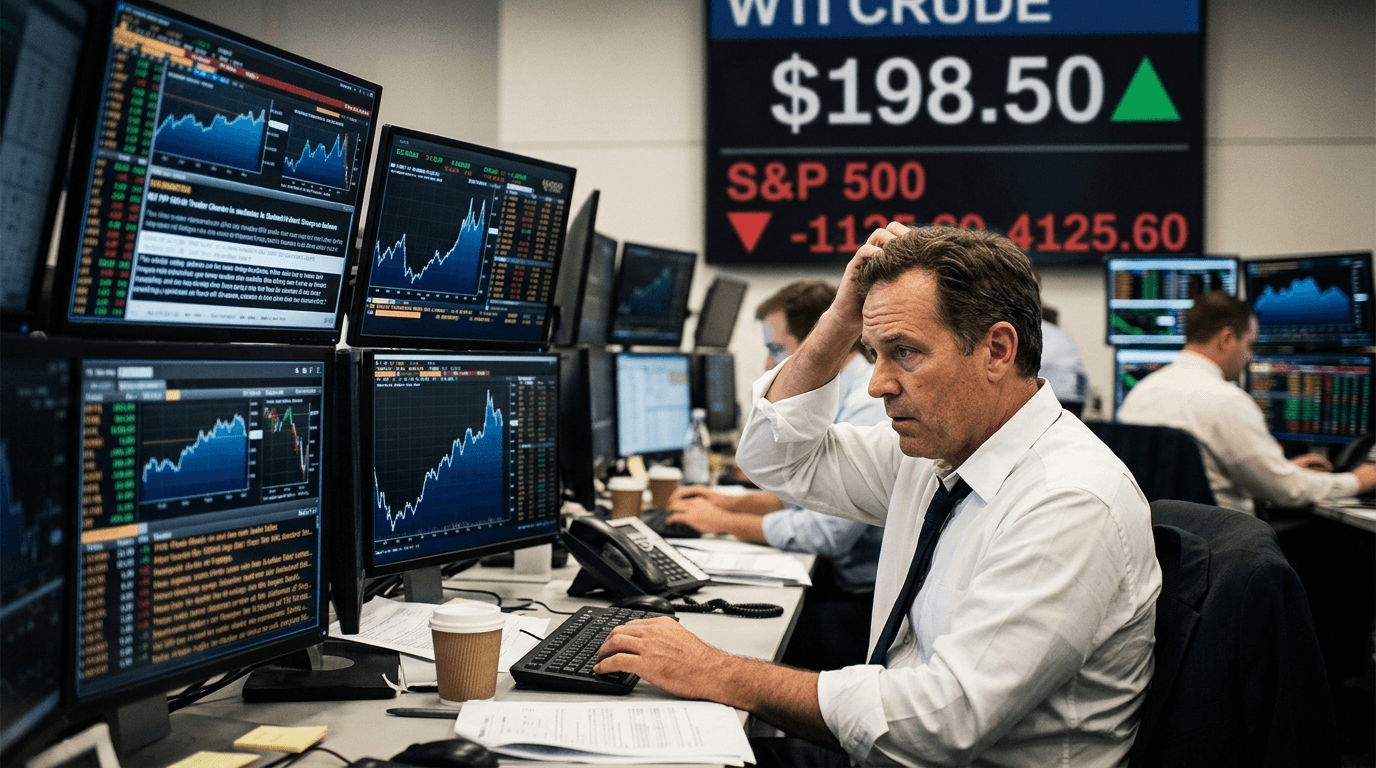
The economic threat extends beyond headlines, manifesting in commodity prices and inflation pressures. Citi analysts warn that oil could hit $200 per barrel if Middle East tensions persist through June, a shock reminiscent of past geopolitical upheavals.
Rising oil prices challenge the Federal Reserve's inflation-fighting stance. February’s Consumer Price Index was steady at 2.4% year-on-year, but March's data could reveal the energy price impact, posing significant challenges. The focus is not just on oil inflation but on "inflation transmission"—fuel surcharges, fertilizer disruptions, and gasoline pricing affecting the broader economy.
This stagflation risk has shifted the Federal Reserve's rate-cut timeline. As of mid-March 2026, the CME FedWatch tool showed only a 4.7% chance of a rate cut at the March FOMC meeting, with September now the earliest potential pivot. This delays near-term relief for equity valuations, which rely on lower rates for justification.
Technical Weakness and Overbought Markets
Technically, the S&P 500 shows signs of strain. The 14-day Relative Strength Index is at 35.9, near oversold territory, with MACD and momentum readings indicating a downside bias. This suggests that after a strong early-year performance, profit-taking and forced selling could accelerate if key support levels fail.
The index entered 2026 robustly, but macro and geopolitical pressures have led investors to buy equities on dips while also seeking safety in assets like gold. Gold's strong rally on March 25, despite stock gains, signals underlying market discomfort. This dual positioning—holding both growth and protection—is unsustainable long-term and often precedes decisive market moves.
Strategic Outlook Moving Forward
Despite current challenges, long-term forecasts remain optimistic. A Reuters survey of 44 strategists sets the median year-end 2026 target for the S&P 500 at 7,500, suggesting a 10% gain from early-year levels. Models predict recovery in the second and third quarters, assuming geopolitical risks subside.
Historical data shows the S&P 500 usually rises one, three, six, and twelve months after similar geopolitical shocks, indicating that short-term volatility may not undermine the medium-term investment case. However, this pattern offers little solace in a market already strained by inflation concerns, elevated rate expectations, and political risks.
For traders, the March 25 intraday range of 6,568 to 6,634 serves as a critical reference. A close above this range would stabilize technical conditions, while a drop below 6,500 could signal deeper support level deterioration.
Key Takeaways
The S&P 500's near-term trajectory hinges on three factors: Middle East conflict and oil prices, persistent inflation pressures, and market confidence in a late-year recovery. Until oil prices break lower or geopolitical risks fade, the market remains tradable but tense—a crucial distinction for strategic positioning.