
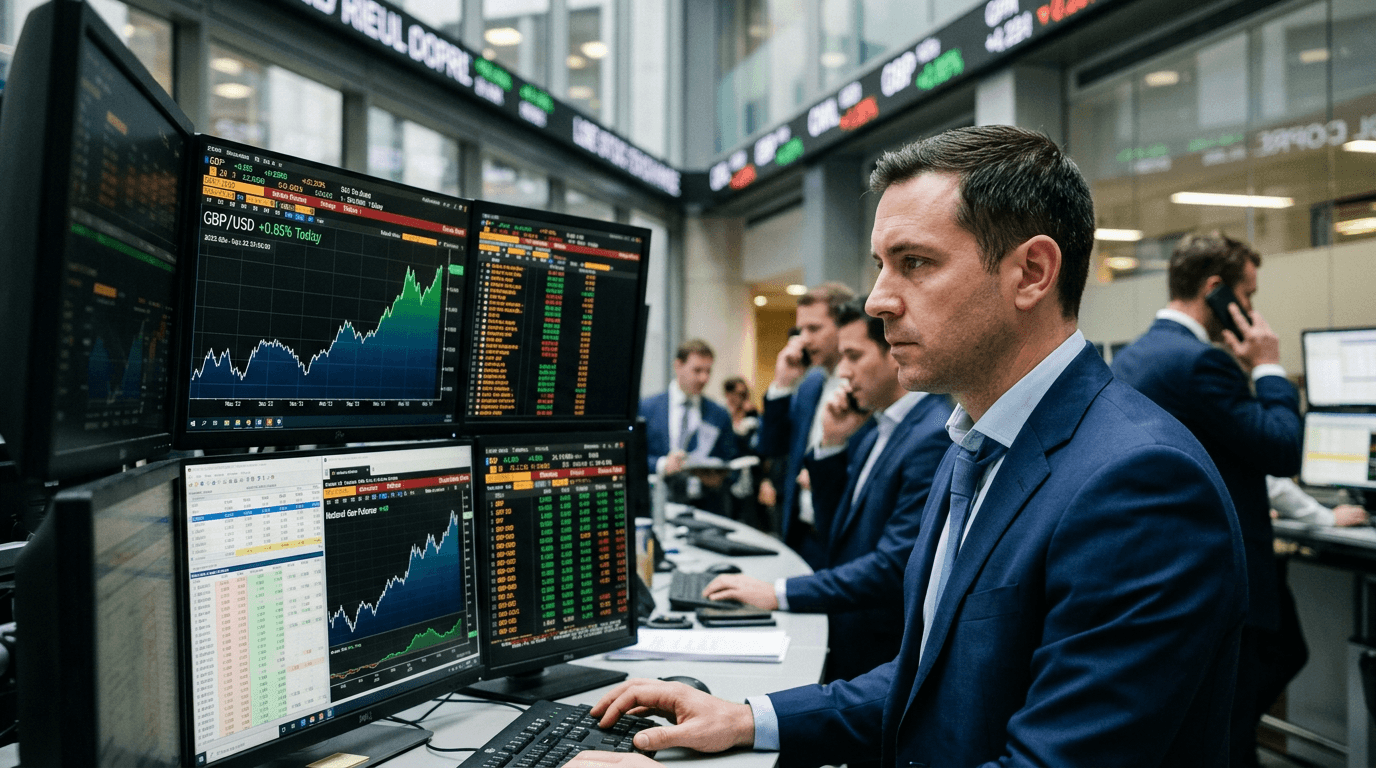
Sterling’s latest climb to a one‑month high against the dollar and a one‑year peak versus the euro is more than just a headline; it is a textbook example of how geopolitics, energy prices and interest‑rate expectations intersect in modern FX markets.[3][9][10] As traders reassess the Bank of England’s next moves amid an energy‑price shock linked to the U.S.–Israeli conflict with Iran, the pound is emerging as a beneficiary of rising rate‑hike expectations and renewed interest in carry trades.[9][10]
Markets Reprice Rate Paths As Energy Shock Hits
An energy‑price shock is one of the fastest ways to change the macro narrative and, by extension, the FX landscape. Higher oil and gas prices tend to push headline inflation up, squeeze real incomes and force central banks to revisit their policy paths. In the UK, where inflation has been stubbornly above target in recent years, a fresh surge in energy costs reinforces the argument for keeping rates higher for longer, or even hiking again if second‑round effects intensify.
FX markets have moved quickly to price this in. The pound has rallied to around the mid‑1.34 area against the dollar, close to recent monthly highs.[4][6][9] Against the euro, GBP has pushed to roughly 1.17, a level that marks a new one‑year peak in the pound‑euro cross.[3] These moves reflect changing relative expectations: traders are betting that the Bank of England could end up more hawkish than the European Central Bank in an environment where energy‑driven inflation risks look particularly acute for continental Europe.
At the same time, U.S. rate expectations are being reassessed, but the dollar’s safe‑haven role and the global impact of the conflict complicate the picture. The result is that sterling stands out within the G10 FX space as a currency where both yield and inflation dynamics justify a stronger profile, at least in the short term.[9][10]
Why Energy Prices Matter So Much For Fx
Energy is a global input, but its impact is uneven across economies. Net energy importers tend to suffer when prices rise: their trade balances deteriorate, inflation rises faster and growth prospects weaken. Net exporters, by contrast, receive a terms‑of‑trade boost that can support their currencies. The UK sits somewhere in between, with legacy North Sea production but a meaningful dependence on imported energy.
For FX traders, what matters most is how central banks respond. If higher energy prices threaten to de‑anchor inflation expectations, policymakers may signal more rate hikes or longer periods of restrictive policy. That shift in the expected policy path translates directly into bond yields and, ultimately, into currency valuations. In the current episode, rising oil and gas prices are lifting UK bond yields relative to euro‑area equivalents, enhancing sterling’s appeal.[3]
There is also an expectations channel. Markets are forward‑looking: even the perception that the Bank of England might tolerate higher market rates or delay future cuts is enough to move FX. This is why the pound can rally even before any official rate decision—pricing in anticipated moves based on data and geopolitical developments.
GBP, CARRY TRADES AND THE RATE‑HIKE PREMIUM
One key concept in this story is the FX carry trade. A carry trade involves borrowing in a low‑yielding currency and investing in a higher‑yielding one, aiming to earn the interest differential as profit. When investors expect a central bank to be more hawkish than its peers, that currency can become attractive as a “carry” destination.
With UK yields supported by elevated inflation risks and the prospect of further or prolonged tightening, sterling is benefiting from renewed carry‑trade interest.[9][10] Traders can fund positions in lower‑yielders and rotate into GBP‑denominated assets, especially short‑dated gilts and high‑quality credit, capturing the higher yield while also potentially gaining from FX appreciation if the pound continues to strengthen.
The current environment is particularly potent for carry trades because:
- Rate‑hike probabilities are being repriced almost daily as energy headlines evolve.
- Volatility has risen, but not yet to levels that fully deter carry strategies.
- The pound’s technical backdrop—one‑month highs versus the dollar and one‑year highs versus the euro—adds momentum to the fundamental story.[3][9][10]
Of course, carry trades are not risk‑free. If the energy shock morphs into a broader risk‑off episode, high‑yielding currencies can be sold aggressively as investors de‑leverage. That makes risk management and scenario analysis crucial.
Implications For Traders And Simulated Finance
For active traders and participants in Simulated Finance (SimFi) environments like E8 Markets, this episode offers a rich live case study. Rather than seeing the pound’s rally as a one‑off move, it can be used to practice building and testing macro‑driven FX strategies:
- Repricing central‑bank paths: Traders can simulate different rate scenarios for the Bank of England, Federal Reserve and ECB, and observe how GBP crosses respond under each path.
- Carry versus risk‑off: By toggling volatility and risk‑sentiment assumptions, traders can see when carry trades in GBP/EUR or GBP/USD thrive and when they break down.
- Cross‑market linkages: Energy futures, bond yields and FX rates can be integrated into multi‑asset strategies that reflect the real‑world transmission of an energy shock.
SimFi platforms allow traders to explore these dynamics without real capital at risk, building an intuitive understanding of how geopolitics can ripple through inflation expectations, yield curves and currency valuations. That experience can be invaluable when similar shocks occur in live markets.
What To Watch Next
Sterling’s rally raises an obvious question: is this the start of a sustained trend or a short‑term reaction that could reverse as conditions evolve? Several signposts are worth monitoring:
- Energy price trajectory: If oil and gas prices continue to rise or remain elevated, the inflation narrative will stay front‑and‑center, supporting the case for higher‑for‑longer rates in the UK and elsewhere.
- Central‑bank communication: Speeches and meeting minutes from the Bank of England, ECB and Fed will clarify whether policymakers see the energy shock as transient or as a structural risk to price stability.
- Inflation and wage data: UK CPI and labour‑market prints will determine whether the market’s rate‑hike expectations are validated or need to be scaled back.
- Risk sentiment: A major escalation in the U.S.–Israeli conflict with Iran could shift markets into a more pronounced risk‑off mode, potentially favouring the dollar’s safe‑haven status over carry considerations.
For traders, the takeaway is clear: FX markets are not moving in isolation. Sterling’s climb is a symptom of deeper macro forces at work, from energy geopolitics to inflation psychology and central‑bank credibility. Using simulated environments to stress‑test strategies under these conditions can help build the discipline and framework needed to navigate future shocks in real time.