
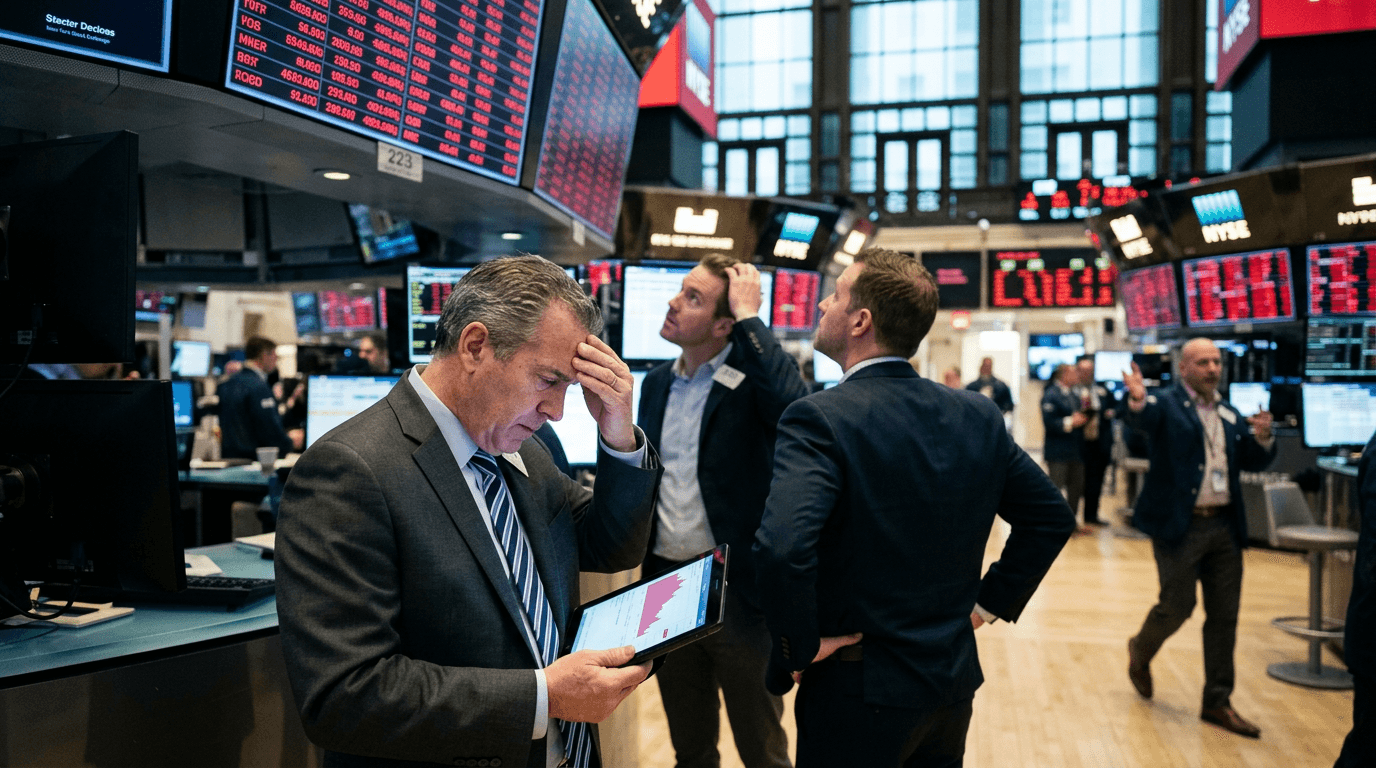
The US stock market is facing significant headwinds as geopolitical tensions between Washington and Iran continue to escalate, sending shockwaves through global financial markets. The Dow Jones, S&P 500, and Nasdaq have all retreated from their recent highs, with investors increasingly nervous about the implications of an extended conflict in the Middle East. Meanwhile, crude oil prices have surged dramatically, with West Texas Intermediate (WTI) hitting $81.64 per barrel and Brent crude reaching $85.85, representing substantial moves in energy markets that directly impact inflation expectations and corporate profitability across sectors.
The Energy Shock Ripples Through Equities
Oil markets are reacting sharply to the escalating military situation in the Strait of Hormuz, one of the world's most critical energy chokepoints. When tensions rise in this region, traders immediately price in supply disruption risk, which explains the aggressive rally in both WTI and Brent crude. A 9% surge in oil prices is not a minor move—it signals genuine concern about potential disruptions to global energy supply and represents a significant inflation headwind for the broader economy.
For equity investors, this oil spike creates a difficult environment. Energy companies may see profit margins expand, but most other sectors face headwinds from higher input costs and increased operating expenses. Airlines, shipping companies, transportation firms, and any business heavily dependent on fuel see their profitability pressures increase immediately. Additionally, higher oil prices feed into inflation expectations, which complicates the Federal Reserve's policy outlook and can weigh on valuations across the market.
What The Market Volatility Tells Us
The sharp pullback in US stock indices reflects a classic risk-off sentiment among traders and institutional investors. When geopolitical uncertainty spikes, markets typically rotate away from equities and toward safe-haven assets like US Treasury bonds, gold, and the US dollar. The volatility index (VIX) has jumped notably, indicating that traders are pricing in significantly more uncertainty about future market movements.
This volatility matters because it affects trading conditions across all asset classes. Higher VIX levels typically correlate with wider bid-ask spreads, making it more expensive for investors to enter or exit positions. For active traders on platforms like E8 Markets, this environment presents both challenges and opportunities—wider spreads increase transaction costs, but the increased price movements can offer more trading opportunities for those comfortable taking on additional risk.
Inflation Expectations And Monetary Policy
The surge in oil prices directly impacts inflation expectations, which has profound implications for central bank policy. Energy prices feed through to gasoline prices, which consumers see immediately, and oil is a critical input for countless industrial processes. If oil prices remain elevated for an extended period, we should expect to see higher headline inflation readings in coming months.
This creates a policy dilemma for the Federal Reserve. A supply-driven oil shock is somewhat different from demand-driven inflation, but the Fed's tools are blunt—raising interest rates in response to an external oil shock can slow economic growth without necessarily resolving the underlying energy constraint. Markets are already beginning to recalibrate expectations about the Fed's interest rate path, with some traders pricing in higher rates for longer if oil stays elevated.
The Critical Variable: What Happens In The Strait
The real question for markets is whether this conflict remains contained or escalates further. The Strait of Hormuz handles roughly one-third of global seaborne traded oil, making it the most critical energy chokepoint in the world. If significant portions of traffic through the Strait face disruption—whether through military action, insurance complications, or shipping company reluctance—global oil prices could spike much higher than current levels.
Market participants are watching diplomatic developments closely. Previous reports suggested ceasefire negotiations might be imminent, which triggered modest rallies in equities and selloffs in oil. However, more recent escalation rhetoric has reversed those gains, highlighting how fragile market sentiment has become around this situation.
Key Takeaways For Traders And Investors
First, understand that oil and equities are currently moving in opposite directions—a clear sign that geopolitical risk is the dominant driver. Second, watch the Strait of Hormuz developments like a hawk; any reports about actual supply disruptions would likely trigger aggressive oil rallies and equity selloffs. Third, recognize that this environment favors volatility strategies and makes timing difficult for directional positioning.
For investors with existing positions, this is a good moment to review portfolio hedges. For traders, the elevated volatility presents opportunities but also requires careful risk management. The current market environment demonstrates why diversification across uncorrelated asset classes remains essential during periods of geopolitical uncertainty.
The intersection of military escalation, energy markets, and inflation expectations creates a complex backdrop that demands constant monitoring. As this situation develops, expect continued market choppiness until clarity emerges about the conflict's trajectory and ultimate resolution.