
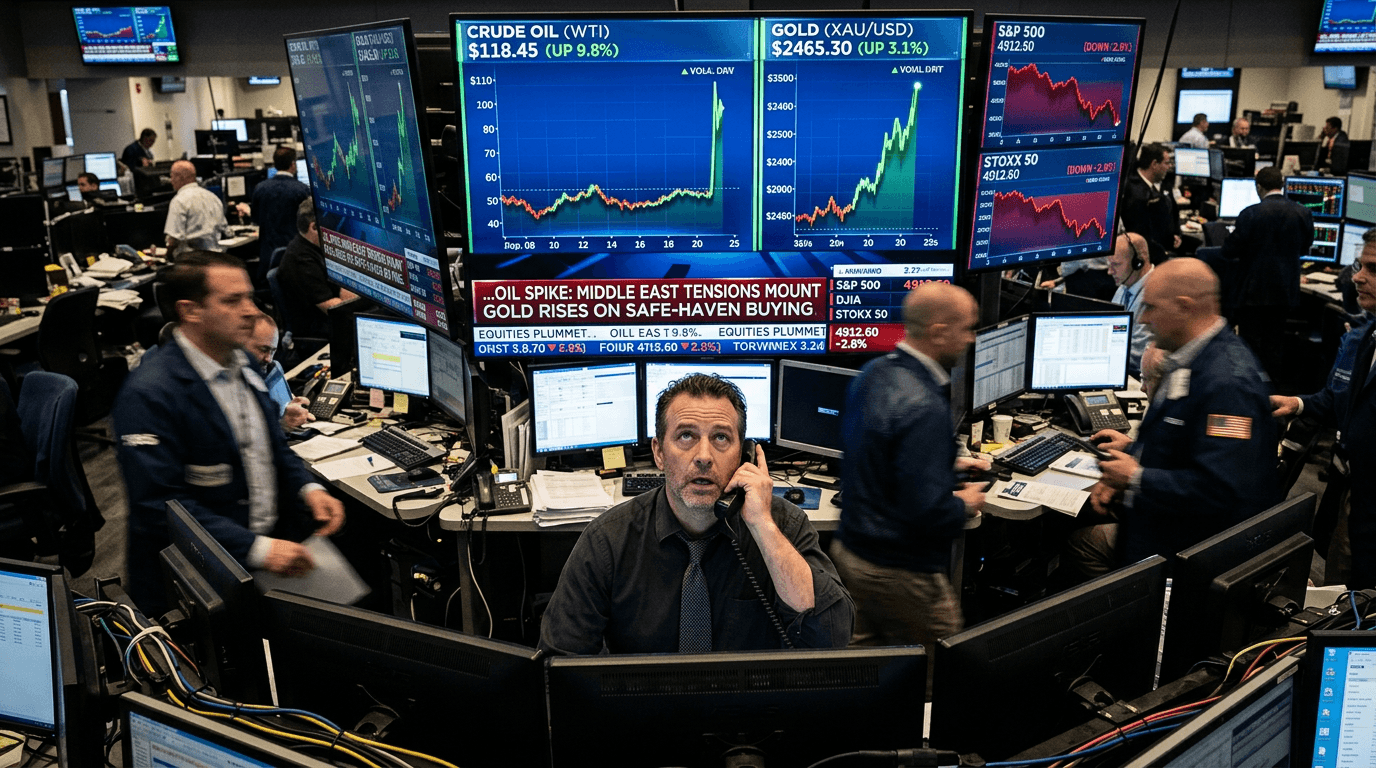
Gold is back on the front foot as investors reach for classic safe-haven assets in response to a sharp spike in oil prices and renewed geopolitical jitters. A roughly 9% jump in US crude linked to Middle East tensions has jolted risk sentiment, pushing some equity index futures lower, weighing on commodity-linked currencies, and helping gold recover the previous session’s losses as traders seek protection against tail risks and potential inflation surprises.[2][7]
WHAT IS DRIVING GOLD’S SAFE-HAVEN BID?
Gold’s move higher is being powered by a familiar dynamic: when geopolitical risk rises, investors look for assets that can hold value through uncertainty, and gold is often at the top of that list.[3][4] Unlike corporate bonds or equities, bullion carries no default risk and is not tied to a specific issuer or government, which makes it particularly attractive when headlines turn unsettling.[1][4]
Empirical work on geopolitical risk indices suggests that spikes in measured risk tend to be associated with positive short-term returns for gold, as investors quickly reprice the probability of adverse scenarios.[1][7] That “risk premium” gets embedded in the gold price as traders pay up for insurance against outcomes that are hard to model but potentially severe.
At the same time, recent years have seen central banks—especially in emerging markets—accumulate gold at an elevated pace as part of a broader hedge against geopolitical and currency risk.[1][7] Persistent official-sector demand can amplify safe-haven flows from private investors when tensions flare, helping to lift prices even when speculative positioning is already elevated.
Why An Oil Price Surge Matters For Gold
The roughly 9% surge in US oil prices does more than simply signal supply concerns; it feeds directly into the macroeconomic and market narrative that underpins gold’s appeal.[2][7] Higher energy prices can push up headline inflation and raise questions about how central banks will balance price stability against growth risks.
For investors, that creates a two-pronged worry:
First, an oil shock can erode real incomes and corporate margins, which tends to pressure risk assets such as equities and high-yield credit. When volatility rises and risk appetite falls, capital often rotates into perceived safe havens including gold, high-quality government bonds, and reserve currencies.[3][4]
Second, if oil-driven inflation proves sticky, it may alter expectations for real interest rates. Gold, which does not pay a coupon or dividend, tends to struggle when real yields are rising but can outperform when investors fear that inflation will outpace nominal rates over time.[4][7] An oil spike tied to geopolitical risk therefore reinforces the narrative that inflation may be more volatile and less controllable than recent disinflationary trends suggested—another argument in favor of holding some allocation to gold.
The impact is not confined to gold and oil. Risk-sensitive, commodity-linked currencies like the Australian dollar and Canadian dollar can come under pressure when markets simultaneously fear growth slowdown and geopolitical escalation, even if their terms of trade benefit from higher resource prices. Equity index futures, particularly in cyclical and energy-intensive sectors, often reflect this unease through lower pricing and wider implied volatility.
Gold, Oil And Geopolitical Risk: Lessons From History
History shows that gold often responds positively when geopolitical tensions flare, but the pattern is more nuanced than a simple “crisis equals gold rally” rule.[3] The metal typically behaves as an immediate “reflex” trade in the first hours and days after a major shock, as investors rush to de-risk portfolios.[1]
Several studies and market episodes highlight a three-phase pattern around conflicts: an initial spike on panic buying, a period of consolidation as policymakers respond and markets reassess, and then a second, more durable leg higher if the conflict embeds a lasting risk or inflation premium into the global system.[1][7] That longer-term phase was visible around recent conflicts that disrupted energy markets, trade routes, or sanction regimes, all of which increased the structural demand for hedges.
However, the importance of geopolitical risk for gold is sometimes overstated.[3] Not all crises escalate, and when tensions ease faster than feared, the “geopolitical premium” in gold can fade quickly, leading to retracements as seen after some Middle East flare-ups when diplomatic channels re-opened.[2][3] Traders who chase gold purely on the headline spike risk buying the top of a short-lived move if the underlying macro trend—especially real rates and the dollar—does not support sustained strength.
For longer-term investors, this means geopolitics should be one input among many rather than the sole driver of allocation decisions. Structural factors like central bank demand, de-globalisation, and fiscal sustainability concerns have arguably been more important in setting gold’s multi-year trajectory, with geopolitical events acting as accelerants rather than the root cause.[1][7]
Implications For Traders And Simulated Finance Participants
For active traders—and for those honing their skills in a SimFi environment—the current backdrop is a valuable case study in cross-asset risk dynamics. Gold’s rebound alongside an oil spike and softer equity futures shows how quickly capital can shift when the narrative turns from “soft landing” to “geopolitical shock plus inflation risk.”
A few practical takeaways
- Watch correlations, not just individual charts. When gold, oil, and volatility indices rise together while equity futures and high-beta currencies weaken, it is a clue that markets are moving into a risk-off regime.
- Distinguish between “headline spikes” and “trend shifts.” Short-lived rallies often follow dramatic news but may fade as the information is digested. More durable moves tend to be accompanied by sustained changes in positioning, rate expectations, or central bank behavior.[1][3]
- Use scenarios. In a simulated trading environment, you can map out playbooks for different paths: further escalation pushing oil and gold higher; a quick de-escalation that unwinds the safe-haven bid; or a muddle-through outcome where prices consolidate as macro data retake the driver’s seat.[1][7]
- Manage risk first. Geopolitical markets can be thin and volatile. Position sizing, clear stop-loss levels, and diversified strategies are more important than trying to predict every headline.
For investors, the episode reinforces common guidance around portfolio construction. Many analysts suggest a modest allocation to gold—often in the 5–10% range of a liquid portfolio for conservative investors, and somewhat higher for those particularly concerned about war or sanction risks—as a hedge rather than a speculative bet.[1] The goal is not to time every geopolitical flare-up, but to have an asset that may help offset drawdowns in risk assets during periods of severe stress.
Looking Ahead: What To Watch Next
Whether this latest safe-haven bid in gold extends into a larger move will depend on how the interplay between geopolitics, oil, and monetary policy evolves. If Middle East tensions persist or escalate, keeping oil elevated and volatility high, markets are likely to maintain or even expand the geopolitical risk premium embedded in gold.[1][7]
On the other hand, a rapid easing of tensions could see some of that premium reverse, especially if central banks remain focused on containing inflation and real yields stay firm.[2][3] In that scenario, gold’s performance would once again hinge on the broader macro narrative rather than crisis hedging alone.
For now, the combination of a sharp oil price spike, heightened geopolitical uncertainty, and ongoing structural support from central banks and de-globalisation keeps gold squarely in focus for traders and investors looking to navigate an increasingly complex risk landscape.[1][4][7] Whether you are allocating real capital or practicing in a simulated environment, this episode underscores a timeless lesson: in markets, shocks rarely travel alone, and understanding how assets like gold and oil interact can be just as important as predicting where they go next.