
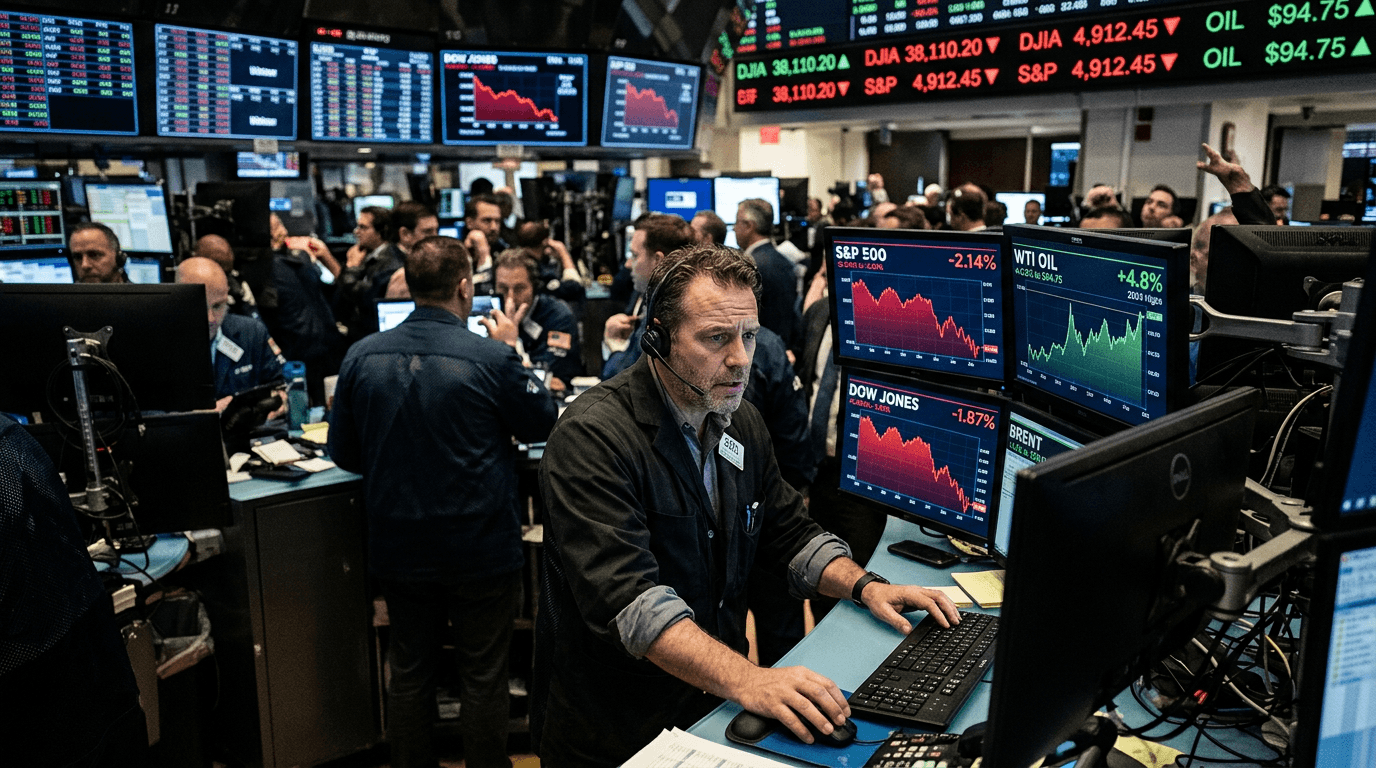
The US stock market reversed course Thursday as geopolitical tensions in the Middle East sent oil prices surging nearly 9% higher, reigniting inflation concerns and forcing investors to reassess their risk appetite. The Dow Jones Industrial Average fell 2.25%, while the S&P 500 and NASDAQ both declined more than 1%, as traders grappled with the economic implications of an escalating US-Iran conflict now in its sixth day. West Texas Intermediate crude reached $81.64, marking its highest level since summer 2024, while Brent crude climbed to $85.85, signaling that energy markets are pricing in meaningful supply disruption risks.
The Catalyst: Geopolitical Risk In The Strait Of Hormuz
The catalyst for Thursday's sharp selloff was an Iranian missile attack on a US-flagged oil tanker in the Strait of Hormuz. The strike caused a fire aboard the vessel, forcing the crew to evacuate. This incident isn't merely symbolic—the Strait of Hormuz represents one of the world's most critical chokepoints, with approximately 20% of global oil passing through its waters daily. Any disruption here sends shockwaves across energy markets and beyond. The conflict, which began on February 28, is now showing signs of extended duration. While initial White House estimates suggested "weeks," more recent indicators suggest the situation could persist into September, fundamentally altering the supply-demand calculus for energy markets through the summer months.
Why Oil Spikes Matter More Than Most Think
When oil surges, it's not just energy companies that feel the pain. Higher crude prices flow directly to consumers through elevated gasoline prices and heating costs, reducing disposable income and pressuring consumer spending, which drives roughly 70% of US economic activity. Historically, economists point to the $100-per-barrel threshold as the level where oil prices become painful enough to trigger recession risks. While WTI hasn't reached that level yet, the 20% increase since the conflict began should concern investors watching inflation trajectories. The bond market is already reacting—Treasury yields have risen as traders anticipate the Federal Reserve will need to maintain higher interest rates for longer if energy-driven inflation reemerges.
For traders in simulated markets and real ones alike, Thursday's action highlighted the critical importance of understanding energy's outsized influence on equity valuations. When oil rises, companies that depend on transportation and logistics see margin compression. Airlines, shipping companies, and retailers all become less attractive on a risk-adjusted basis. This reality was on full display Thursday, as transport stocks got particularly hammered, losing nearly 5% as traders fled positions vulnerable to fuel cost pressures.
Supply Concerns Extend Beyond Crude
The situation is complicated by growing evidence that this isn't a temporary blip. China has ordered its two major energy companies—Sinopec and PetroChina—to halt gasoline and diesel exports entirely, signaling official concern about domestic supply constraints. OPEC announced it would increase output by more than 200,000 barrels per day in April and has committed to raising production further, but such adjustments take weeks to materialize. Meanwhile, Exxon Mobil shipped its first emergency cargo of gasoline to Australia, another sign that the market is bracing for tighter global supply. These real-world logistics tell us that financial markets are correctly pricing in genuine disruption risk rather than speculation.
Sector Divergence Reveals Market Psychology
Not all sectors suffered equally Thursday. Technology stocks, particularly mega-cap companies, proved more resilient because their business models are less energy-intensive than industrial manufacturers or consumer discretionary retailers. This divergence is instructive. Market psychology shifted from viewing energy disruption as a broad systemic risk to seeing it as a sector-specific challenge. South Korea's stock market, however, tells a different story. Falling 20% this week, Korean equities are under pressure partly because higher electricity costs threaten the semiconductor industry—a critical export sector. This reminder that energy disruptions create cascading effects across global supply chains is worth remembering as traders monitor this situation.
What Traders Should Monitor Going Forward
The key level to watch remains $100 per barrel for crude. If WTI breaks above that threshold, recession anxiety will likely intensify, potentially triggering a broader equity selloff. Equally important to monitor are updates on negotiation timelines and any indication that ceasefire talks are progressing. The White House's latest estimate of "four to five weeks" versus Pentagon planning for scenarios extending to September suggests significant uncertainty about duration and severity. Finally, traders should pay attention to inflation data releases. If core inflation begins accelerating due to energy costs, bond yields will rise further, pressuring valuations across equities regardless of sector.
Takeaway For Traders
Thursday's selloff reminds us that in markets—simulated or real—geopolitical risk isn't something you can ignore in favor of earnings fundamentals. Energy prices remain one of the economy's most powerful transmission mechanisms, capable of reshaping economic expectations and forcing portfolio rebalancing. Smart traders are using this volatility as a reminder to stress-test their portfolios against energy shocks and to maintain positions that benefit from or hedge against rising commodity prices. In uncertain times, optionality and diversification aren't just prudent—they're essential.