
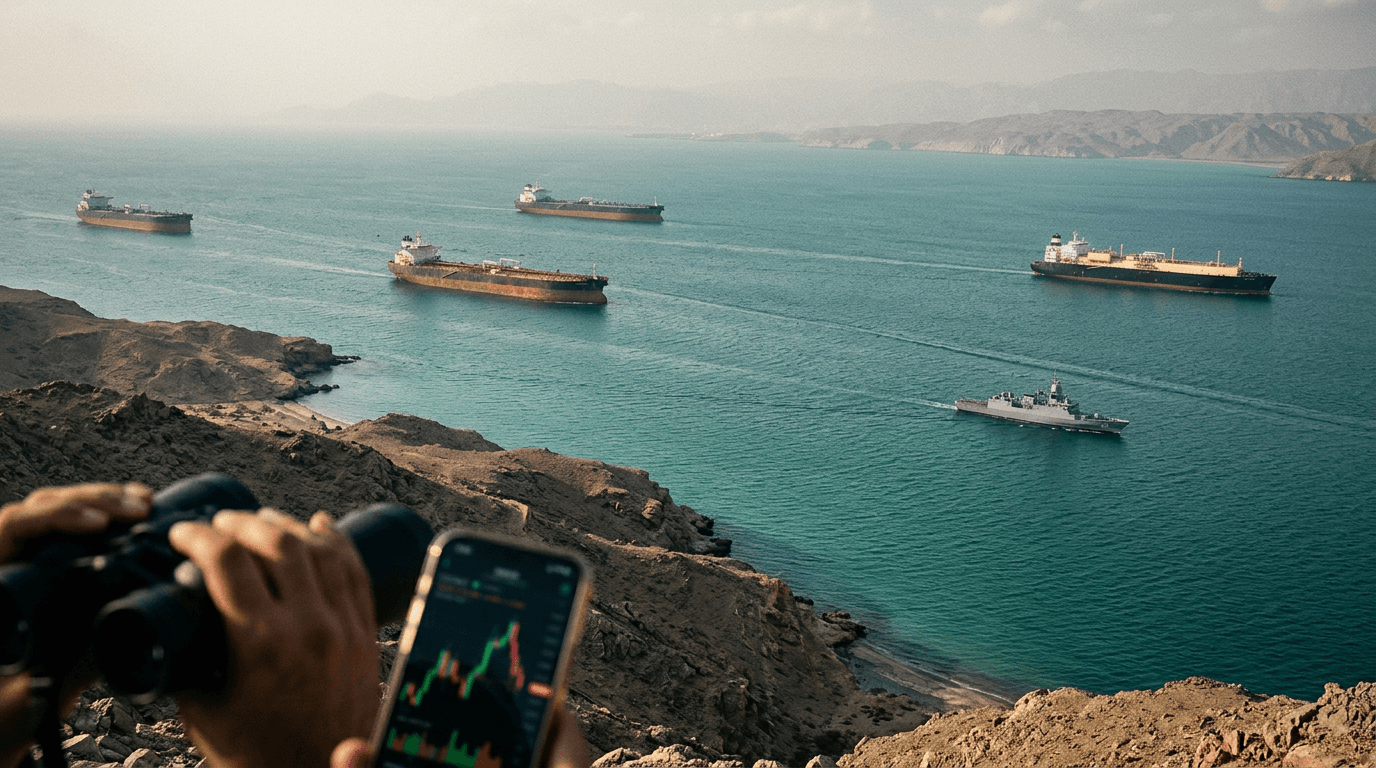
The Strait of Hormuz has effectively ground to a halt following escalating tensions between the United States, Israel, and Iran, marking one of the most severe disruptions to global energy trade in recent years. As of early March 2026, shipping through this critical waterway has collapsed by over 94%, dropping from a typical 138 vessels per day to just two to eight ships navigating the narrow passage. This unprecedented disruption is reshaping energy markets, supply chains, and financial positions across the globe, creating both immediate crises and significant trading opportunities for those monitoring the situation closely.
The magnitude of this disruption cannot be overstated. The Strait of Hormuz serves as a crucial chokepoint for roughly 20% of the world's crude oil and crude supplies, making it one of the most strategically important waterways on the planet. When traffic through such a critical passage suddenly drops by 94%, the ripple effects are felt instantly across energy markets, transportation networks, and financial portfolios worldwide. What started as regional military tensions has rapidly escalated into a genuine threat to global economic stability.
Immediate Market Impact And Energy Prices
The halting of Strait of Hormuz traffic has sent shockwaves through crude oil markets. With only Iran-linked vessels able to transit the waterway, oil and gas exports from the Persian Gulf have been virtually strangled. The last commercial vessel without Iranian connections to cross the strait was a Chinese-owned bulk carrier on Saturday morning, after which the passage became dominated exclusively by Iranian vessels. This development has triggered immediate action from major oil producers attempting to mitigate the crisis. Saudi Arabia has responded by maximizing shipments through Red Sea export terminals, while Iraq, Kuwait, and the United Arab Emirates have begun cutting their production rates due to export constraints.
The inability to move crude through the strait has created an unprecedented storage crisis. As of early March, roughly 76 million barrels of stored crude have accumulated across the region, with approximately 46 million barrels stored on tankers, 22 million in refineries, and 8 million in commercial storage facilities. This buildup is concentrating heavily in Saudi Arabia and represents a crucial metric for traders monitoring global energy supply dynamics. With storage capacity becoming increasingly constrained, the pressure on oil prices will likely intensify if the disruption persists beyond the near term.
Shipping Logistics And Stranded Assets
The human impact of this disruption extends far beyond oil prices. Approximately 411 tankers are currently stuck in the Persian Gulf, with the composition of stranded vessels shifting ominously from mostly empty ships to increasingly loaded tankers. Additionally, around 750 commercial ships of all types remain trapped in the Gulf, including roughly 170 container ships carrying approximately 450,000 TEUs (twenty-foot equivalent units). These stranded vessels represent billions of dollars in inventory, delayed cargo, and economic opportunity cost for shipping companies, importers, and exporters worldwide.
The shipping industry faces additional complications from widespread signal interference and vessels intentionally disabling their automatic identification system transponders. This means actual vessel movements may exceed what official tracking data indicates, creating information asymmetries that traders must account for when positioning themselves. Some tankers are reportedly transiting during nighttime hours without broadcasting their positions, suggesting the true volume of traffic may be somewhat higher than confirmed numbers indicate.
Financial Implications For Traders And Investors
From a broader financial perspective, the Strait of Hormuz disruption creates a complex set of opportunities and risks. Higher crude oil prices typically support the US Dollar as a commodity currency, while simultaneously pressuring risk assets including equities and cryptocurrencies. The disruption also carries inflationary implications, as energy costs ripple through transportation, manufacturing, and consumer prices. Insurance coverage has become a critical issue, with war insurance for shipping being pulled from the market and government-backed insurance programs announced but not yet implemented. This insurance gap creates friction in already-strained logistics networks and represents a material cost for any shipping entity attempting to move cargo through contested waters.
Energy traders should be closely monitoring producer responses and storage capacity levels, as these metrics will determine how long prices can remain elevated before alternatives or de-escalation become necessary. The situation has prompted the US government to grant sanction waivers to Indian buyers of crude oil, allowing them to absorb Russian supplies currently sitting on tankers in Asian waters. These policy interventions create shifting dynamics that traders must incorporate into their analysis.
What Comes Next
The current situation remains highly fluid, with no confirmed indicators of de-escalation reported by maritime authorities. The Joint Maritime Information Center has assessed the regional maritime risk environment as critical for at least the next 48 hours, suggesting this disruption is not a temporary blip but potentially a sustained crisis. Traders should prepare for continued volatility across energy markets, shipping stocks, and inflation-sensitive assets while monitoring any announcements regarding negotiations or de-escalation efforts.
The Strait of Hormuz traffic halt represents a rare geopolitical event with immediate, measurable impacts on global markets. Whether this becomes a weeks-long crisis or escalates further depends heavily on developments that remain beyond market control but entirely within the scope of trader attention and positioning.