
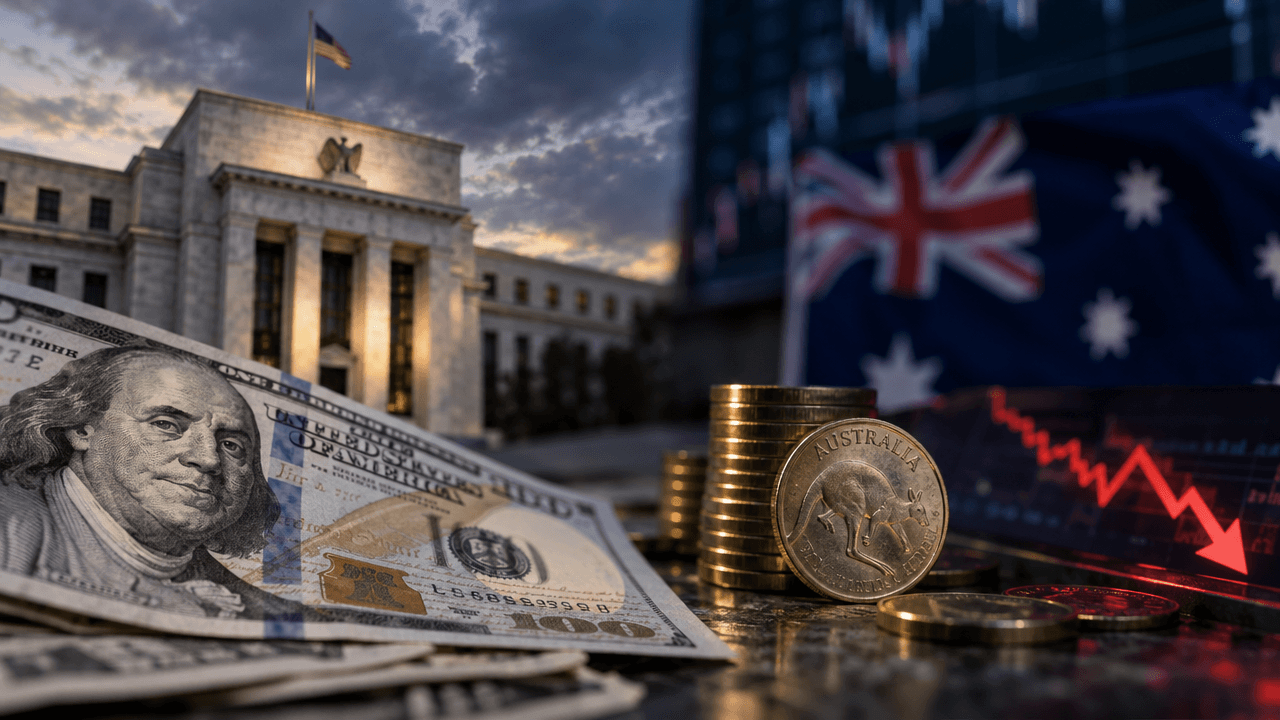
A stronger-than-expected U.S. jobs report has revived expectations that the Federal Reserve may raise interest rates again in December, changing the tone across global markets. October nonfarm payrolls increased by 165,000, more than double the 65,000 increase economists had expected, while the unemployment rate edged down to 4.1%. [11] The report suggested that the American labor market remains resilient enough to withstand tighter monetary policy.
Markets responded quickly. Traders lifted the implied probability of a quarter-point Federal Reserve rate increase at the December 8–9 meeting to around 80%, up from approximately 67% before the employment data was released. [12] The shift strengthened the U.S. dollar, pushed Treasury yields higher, and placed additional pressure on currencies and risk assets that are sensitive to interest-rate expectations.
Why The Jobs Report Matters
Employment data is one of the most important inputs in the Federal Reserve’s policy decisions. When job creation remains strong, households generally have more income to spend, businesses may continue hiring, and economic activity can remain firm. That strength can also make it harder for inflation to cool quickly.
For the Fed, the report reinforces the argument that the economy may tolerate another increase in borrowing costs. A 25-basis-point hike would raise the federal funds rate and make financing more expensive for consumers, companies, and investors. The objective would be to reduce demand gradually and maintain downward pressure on inflation.
The size of the payrolls surprise was particularly important. A gain of 165,000 jobs compared with a 65,000 forecast gave traders a clear reason to reassess the path of policy. September payroll growth was also revised higher, to 60,000 from an earlier estimate of 29,000. [11] Together, the figures painted a stronger picture of employment momentum than many investors had anticipated.
Still, one jobs report does not guarantee a rate increase. The Fed will also consider inflation, wages, consumer spending, financial conditions, and future employment releases. Markets can change their expectations quickly if incoming data shows that economic growth is losing momentum.
Why The Dollar And Treasury Yields Rose
The dollar typically benefits when markets expect higher U.S. interest rates. Higher yields can make dollar-denominated assets more attractive to international investors, particularly when comparable returns elsewhere are lower or when economic uncertainty encourages demand for perceived safety.
Following the payrolls release, the dollar index rose about 0.63% to 102.12. The euro declined approximately 0.55% to $1.1157. [11] These moves reflected a broader repricing of interest-rate expectations rather than a change in currency fundamentals alone.
Treasury yields also moved higher. The two-year yield, which is especially sensitive to expectations for Federal Reserve policy, climbed by roughly 5.5 basis points to 4.532%. The 10-year yield increased about 3.1 basis points to 4.868%. [11]
Rising yields can create challenges for equities and other risk-sensitive assets because future earnings are discounted at a higher rate. Growth companies, whose valuations often depend heavily on profits expected years in the future, can be particularly vulnerable. Higher bond yields may also encourage investors to shift capital away from riskier assets and toward fixed-income securities.
What It Means For The Australian Dollar
The Australian dollar was among the currencies weakened by the stronger U.S. employment data. Traders often treat the Australian dollar as a barometer of global growth and risk appetite because Australia is closely linked to commodity demand, Chinese economic activity, and international investment flows.
When U.S. yields rise and the dollar strengthens, the AUD/USD exchange rate can come under pressure. The Australian dollar fell to its lowest level since March after the payrolls report, while traders priced in roughly an 80% chance of a December Federal Reserve hike. [2]
The currency also faces a complicated domestic backdrop. The Reserve Bank of Australia had raised its cash rate by 25 basis points to 4.85%, taking borrowing costs to their highest level since 2008. [2] Although a higher Australian interest rate can support the currency, it may not be enough to offset a sharp increase in U.S. rate expectations, especially if global investors become more cautious.
For traders, the key lesson is that interest-rate differentials matter, but so does market sentiment. Even when Australia offers relatively high yields, the Australian dollar can weaken if investors prefer the liquidity and perceived safety of U.S. assets.
Practical Takeaways For Traders
The first takeaway is to watch the entire data trend rather than reacting to one headline. Payroll growth, unemployment, wage inflation, and revisions can tell different parts of the story. A strong headline number paired with cooling wages may produce a different policy reaction than strong employment and accelerating pay growth.
Second, monitor the two-year Treasury yield and Fed funds futures. These instruments provide useful information about how markets are interpreting upcoming Federal Reserve decisions. A continued rise in short-term yields would indicate that traders are becoming even more confident in a December hike.
Third, expect volatility around inflation data and Federal Reserve communications. The jobs report has raised expectations, but the final decision will depend on whether inflation remains persistent and whether policymakers believe additional tightening is necessary.
Finally, manage risk carefully in currency and index markets. Strong U.S. data can support the dollar while pressuring AUD/USD, equity indices, and other risk-sensitive trades. Position sizing, stop-loss planning, and awareness of scheduled economic releases are essential when markets are repricing policy expectations.
The latest jobs report has not guaranteed a Federal Reserve hike, but it has clearly made one more likely in the eyes of investors. With payroll growth exceeding forecasts and unemployment remaining relatively low, markets are preparing for U.S. interest rates to stay higher for longer. The dollar and Treasury yields are reflecting that view, while the Australian dollar and other risk-sensitive assets face renewed pressure. Traders should focus less on the headline probability alone and more on whether future inflation and employment data continue to support the Fed’s tightening case.